Ingredients
Method
Rinse and Cook the Rice
- Rinse the 300g basmati rice in a bowl in several changes of cold water, swirling it with your fingers, until the water runs mostly clear, then drain well in a sieve. Tip the rice into a medium saucepan with 540–600ml water, the ½ tsp fine salt and the 1 tsp neutral oil or butter, if using — 540ml for firmer, drier grains, or up to 600ml if your rice tends to cook harder. Bring to a boil over medium-high heat, stir once, then reduce the heat to low, cover tightly and cook for 12 minutes. Turn off the heat and leave the rice to rest, still covered, for 10 minutes while the sauce finishes, without lifting the lid at any point. That sealed cooking and resting time is what lets the trapped steam finish the grains evenly, keeping them long, separate and fluffy rather than wet underneath and firm on top.
Soften the Onion and Aromatics
- While the rice comes to the boil, heat the 2 tbsp neutral oil and 2 tbsp unsalted butter in a sauté pan or wide saucepan over medium heat until the butter foams. Add the sliced onion and cook for 6–8 minutes, stirring often, until it is genuinely soft, translucent and lightly golden at the edges. Add the sliced garlic, ginger and green chilli, if using, and cook for 1 minute, just until fragrant. The garlic should stay pale; if the pan starts to catch, lower the heat and add a small splash of the measured water. That gentle softening is what builds a sweet, mellow onion base, since browned or scorched garlic would carry its bitterness straight through the blended sauce.
Cook Down the Tomato Masala
- Add the 450g tomato passata, 2 tbsp tomato paste, 15g raw cashews, 1½ tsp ground coriander, 1 tsp ground cumin, 1 tsp Kashmiri chilli powder, the hot chilli powder if using, ¼ tsp turmeric, 1 tsp garam masala, 1 tsp of the fine salt and the 1 tsp sugar or honey. Stir well and cook for 8–10 minutes over medium to medium-low heat, stirring regularly and scraping the base of the pan, until the mixture thickens, darkens slightly and looks glossy, with small pools of butter at the edges. The sharp, raw tomato smell should be genuinely gone. If the masala spits hard or sticks, lower the heat rather than adding water. That full reduction is what drives off the raw acidity and concentrates the tomato, because a masala blended too early leaves the finished bowl tasting flat and sour.
Blend Until Smooth
- Let the masala cool for a minute, then transfer it carefully to a blender, filling the jar no more than halfway. Remove the centre cap of the lid and cover the opening with a folded kitchen towel so steam can escape. Blend for 1–2 minutes, until completely smooth, adding 60–120ml of the water only as needed to keep the blades turning. No flecks of onion, ginger fibre or cashew should remain, and the sauce should look velvety and thick, like a loose purée rather than a soup. Scrape every bit back into the pan with a spatula. That thorough blending is what turns the softened cashews and aromatics into the silky, butter-style texture the whole bowl is built on.
Simmer the Chickpeas
- Return the pan with the blended sauce to medium-low heat and add the drained chickpeas and 60ml of the water. Simmer for 8–10 minutes, stirring occasionally, until the chickpeas are heated through and the sauce genuinely clings to them. Partway through, press about a quarter of the chickpeas against the side of the pan with the back of a spoon until they burst and crumble into the sauce. Keep the heat gentle so the sauce bubbles lazily rather than splattering and reducing too fast. That partial crushing is what releases starch into the sauce, thickening it from within and giving the bowl a cohesive, buttery texture where sauce and chickpeas hold together.
Finish with Methi, Cream and Butter
- Rub the 1 tsp kasuri methi between your palms directly over the pan so it falls in as a fine, fragrant powder. Stir in the 60–80ml heavy cream and the 1 tbsp butter, and simmer for 1–2 minutes more, just until the sauce looks glossy and unified. Taste and add the remaining ¼ tsp fine salt only if needed. The finished sauce should be spoonable and thick enough to sit on rice without running thin. If it is too thick, loosen it with a little of any remaining water, 1 tbsp at a time; if it is too loose, simmer it uncovered for a few minutes more. Turn off the heat and stir in the 2–3 tbsp chopped cilantro. That short, gentle finish is what keeps the cream silky and the fenugreek fragrant, since a hard boil dulls both.
Assemble the Bowls
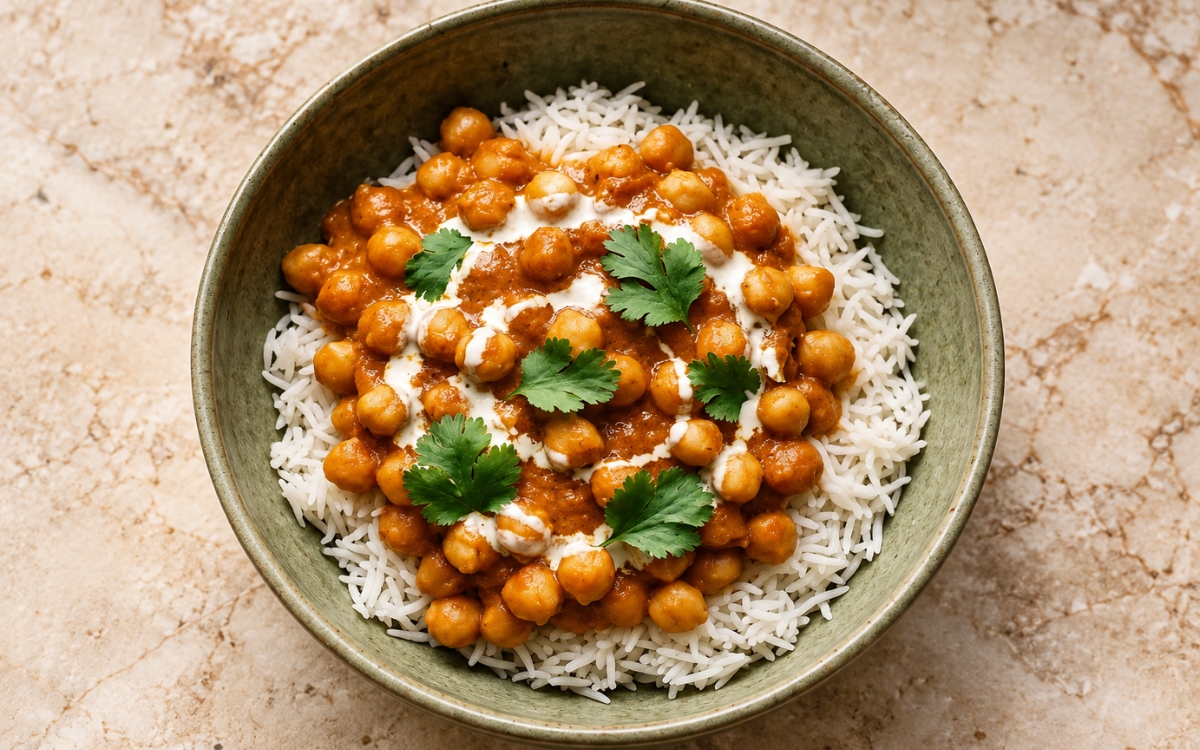
- Fluff the rested rice gently with a fork, lifting from the bottom of the pan so the long grains stay whole. Divide the rice among 4 warm bowls, then spoon the butter chickpeas over or slightly beside it, giving each bowl an even share of chickpeas and sauce. Finish each bowl with a small drizzle of the extra heavy cream and a few extra cilantro leaves. The bowls should look glossy and deep orange-red, with white ribbons of cream, bright green herbs and fluffy white rice at the edge. Serve straight away while the sauce is hot. That last-minute cream drizzle is what keeps a cool, fresh contrast on top of the rich, warm sauce instead of letting it melt in.
Notes
Cooking the tomato masala until it reduces and turns glossy deserves genuine recognition as the technique most directly responsible for whether this bowl tastes deep or merely tomatoey. The recipe's own warning that "If the tomato base still tastes raw, the finished bowl will taste flat and acidic" holds because passata needs 8–10 minutes of steady heat to evaporate its water and concentrate its sugars — cream added later cannot repair a raw base.
The partial crushing of the chickpeas deserves the same attention this technique receives throughout this collection's other legume curries, because it decides whether the sauce coats the chickpeas or pools beneath them. Pressing about a quarter of them releases their starchy interiors into the sauce, while the recipe's own note that "Chickpeas should simmer in the sauce long enough to absorb flavor, but not so long that the sauce reduces excessively" sets the 8–10 minute window.
The kasuri methi deserves genuine respect as the detail most directly responsible for the dish tasting like a butter masala rather than a plain tomato curry. The recipe's own note that "Kasuri methi is important for the classic butter curry profile" reflects how its savoury, faintly bitter fenugreek aroma cuts through the butter and cream, which is why it is rubbed to a powder and added only in the final minutes.
The final sauce consistency deserves attention as a genuine, checkable readiness cue rather than a loose approximation. The recipe's own line that "The final consistency should be spoonable and thick enough to sit over rice without running thin" matters because a loose sauce soaks straight into the basmati and turns it soggy, so loosen it 1 tbsp of water at a time or simmer it uncovered until it holds.