Ingredients
Method
Brew the Espresso
- Brew 120ml espresso total, equal to 4 standard 30ml shots. Let it stand for 30–60 seconds only if it is extremely hot, but do not let it go stale. The espresso should be fresh, dark, and aromatic. This drink is sweet by design, so the coffee needs enough strength to keep the final balance from becoming flat and overly milky. Given how much sweetness the condensed milk contributes on its own, a genuinely bold, fresh espresso is what keeps that sweetness in check — a weaker shot would let the condensed milk dominate the drink entirely rather than staying in balance with real coffee character.
Build the Condensed Milk Base
- Divide the sweetened condensed milk evenly between 2 tall glasses, 40g per glass. Leave it undisturbed at the bottom. The condensed milk should sit as a thick white base. That is one of the defining visual cues of a proper iced Spanish latte before stirring. Condensed milk's naturally thick, dense consistency is what allows it to settle and stay put at the bottom of the glass without any special technique required — that inherent density is the entire reason this drink can achieve such a clean, defined base layer.
Add the Ice and Milk
- Fill each glass generously with ice. Pour 120ml cold whole milk into each glass over the ice. Pour slowly so the condensed milk stays mostly at the base rather than mixing in immediately. The glasses should now show a clearly pale body above the thick white condensed milk, with the ice helping keep the layers separated. The milk must be cold and the glasses must already contain ice. Warm milk or no ice makes the condensed milk dissolve too fast and weakens the layered effect. The ice functions here as more than a chilling agent — positioned between the condensed milk base and the milk poured on top of it, it physically slows how quickly the two would otherwise mix, which is part of what preserves the layered structure this drink is built around.
Pour in the Espresso
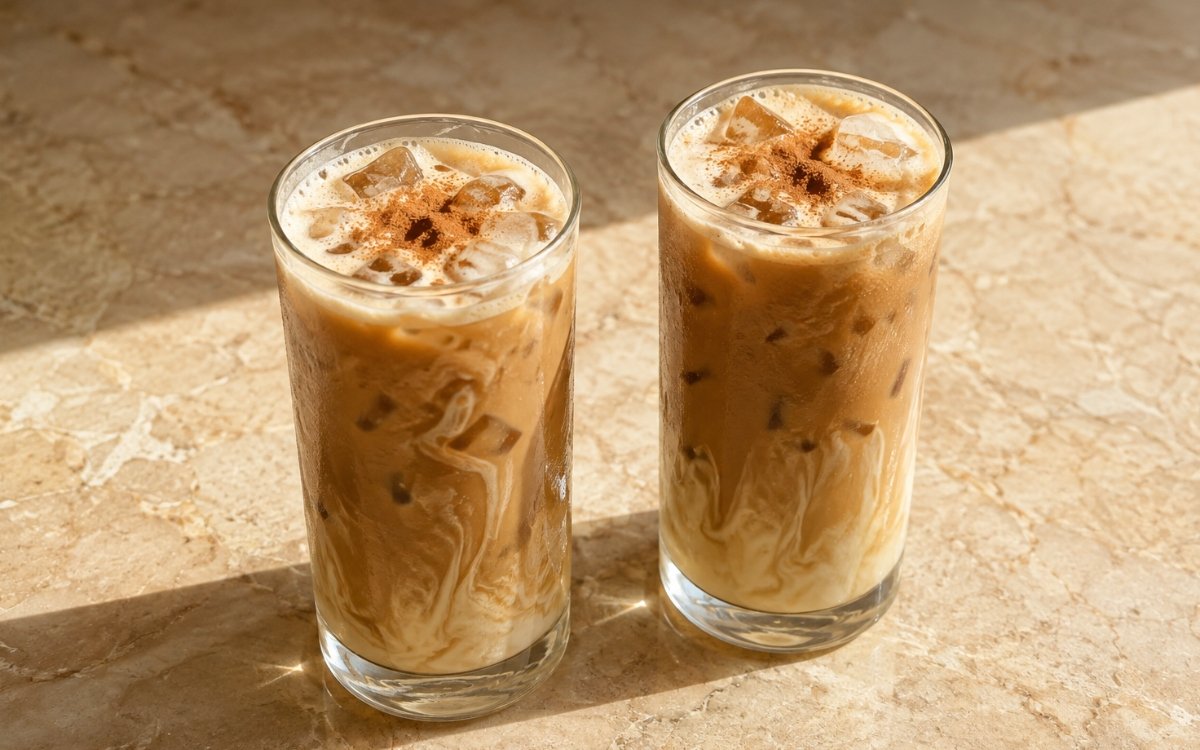
- Slowly pour 60ml espresso into each glass over the milk and ice. Pour gently so the espresso forms a darker upper layer and visible swirls through the pale milk without immediately fully mixing into the condensed milk. Before stirring, you should see the layered structure clearly through the glass: condensed milk at the base, ice through the middle, and darker espresso-tinted liquid above. The espresso must go in last. If it goes in earlier, you lose the classic Spanish latte layering. This final pour, done gently rather than forcefully, is what completes the drink's full three-layer presentation — reversing the order at any earlier stage would collapse that structure before it ever had the chance to form.
Serve
- Serve immediately as layered, then stir before drinking so the condensed milk fully blends into the espresso and milk. Once stirred, the drink should become a smooth pale caramel-beige colour, richer and sweeter than a regular iced latte, but still clearly coffee-based. The layered presentation is genuinely brief once the drink is poured — serving right away and stirring only right before drinking preserves both that visual moment and the fresh, cold quality of every component.
Notes
The condensed milk base's tendency to settle and hold its shape at the bottom of the glass is worth understanding as a genuine property of the ingredient itself, not a technique that requires special handling to achieve. Sweetened condensed milk's thick, dense consistency naturally resists dispersing into a lighter liquid poured carefully on top of it — this is precisely why the recipe explicitly warns against evaporated milk as a substitute, since that considerably thinner product lacks the same density and simply wouldn't hold a defined layer the same way.
The ice layer's role in this drink extends meaningfully beyond basic chilling, much like it does in other layered iced espresso drinks throughout this collection. Positioned between the condensed milk base and the cold milk poured on top, it physically interrupts and slows the natural tendency of those two liquids to blend together on contact — without that structural buffer, the drink would lose its layered definition considerably faster, even with careful, slow pouring.
Keeping the espresso genuinely strong and fresh matters more in this particular drink than it might in a milder one, precisely because of how much inherent sweetness the condensed milk already contributes. A weak or flat shot would leave the sweetness with nothing substantial to balance against, tipping the whole drink toward tasting like sweetened milk with only a faint coffee note rather than a properly balanced Spanish latte.
The explicit warning against substituting evaporated milk for condensed milk deserves to be taken seriously rather than treated as a minor ingredient note. These are genuinely different products — evaporated milk is unsweetened and considerably thinner, lacking both the sugar content and the dense, settling texture that define this drink's entire character. Using it in place of condensed milk wouldn't produce a slightly less sweet version of the same drink; it would produce something fundamentally different.