Ingredients
Method
Brew the Espresso
- Brew 120ml espresso total, equal to 4 standard 30ml shots. Let it stand for 1–2 minutes so it is still fresh and aromatic, but not aggressively hot when poured over the ice. The espresso should taste clean and concentrated. Because oat milk is naturally a little sweeter and softer than dairy milk, weak espresso gets lost fast. Oat milk's own natural sweetness and softer character mean a weak or thin espresso has considerably less presence against it than the same shot would have against dairy milk — genuinely concentrated espresso is what keeps the coffee flavour clearly present rather than fading into the background.
Build the Iced Base
- Divide the ice between 2 glasses. Pour about 60ml espresso into each glass. Add about 60–70ml chilled oat milk to each glass. Stir briefly so the espresso and oat milk combine into a pale caramel-beige base. The drink base should already look lighter and warmer in tone than a standard iced coffee, but still clearly darker and more concentrated than a latte base. Building and combining this base fully before any foam is added establishes the drink's core colour and strength as its own distinct layer — the foam that follows is meant to sit visibly on top of this base rather than being stirred through it from the start.
Foam the Remaining Oat Milk
- Use the remaining chilled oat milk to make the cappuccino foam. Froth it until it becomes thick, airy, and dry-leaning, with a substantial cap rather than a thin silky surface. This can be done with a milk frother, a steam wand used carefully on cold milk if your setup allows it, or a handheld frother. The goal is a generous cappuccino-style foam, not a flat white sheen and not a latte-style minimal froth. The oat milk foam should be noticeably voluminous and stable, slightly beige-cream rather than pure white, and airy enough to sit high above the drink rather than disappearing into it immediately. Barista-style oat milk works best here. Standard oat milk often foams poorly and collapses faster. Barista-style oat milk is specifically formulated with additional stabilisers and fat content to hold air and structure under frothing — standard oat milk lacks that formulation and tends to produce a foam that's both less voluminous and considerably less stable once poured.
Top the Drinks
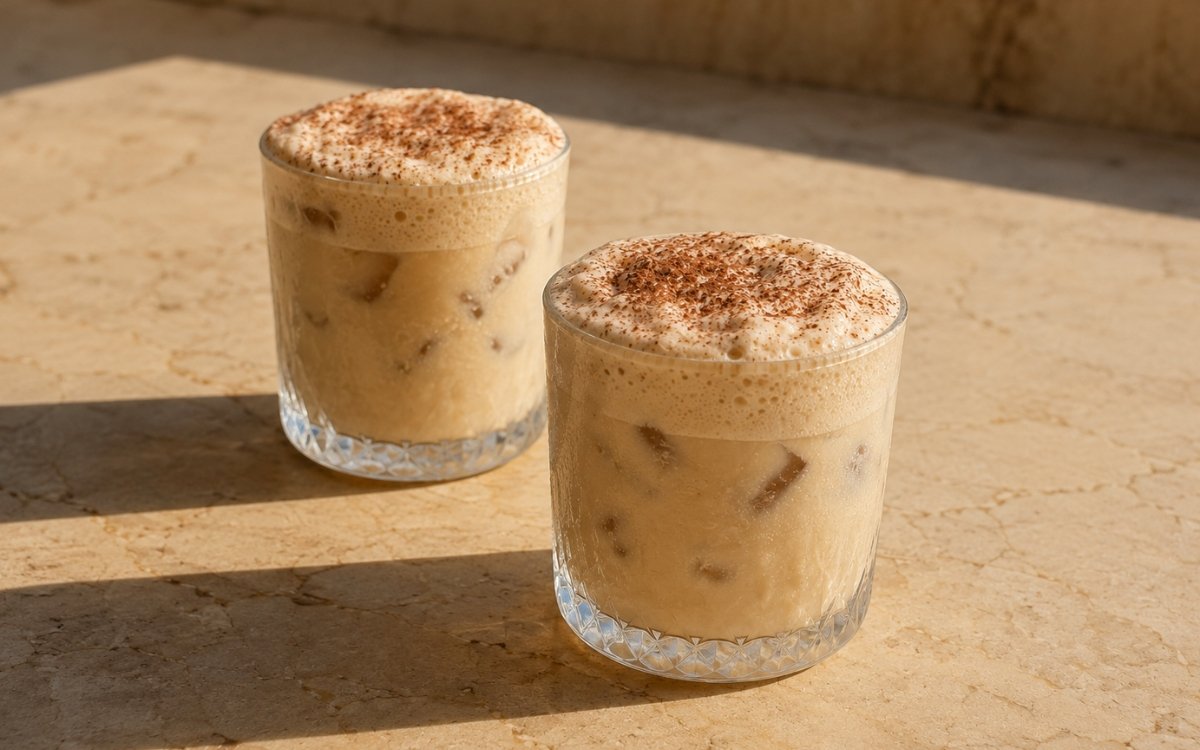
- Spoon or pour the thick oat milk foam over each glass, dividing it evenly and creating a generous cappuccino cap. The ice should still be visible through the lower sides of the glass, while the upper portion is crowned with thick foam. This is what makes it a cappuccino. If the top layer is only a thin froth, it reads more like an iced latte. The foam should feel substantial and sit visibly above the liquid. The visible contrast between clear ice below and thick, opaque foam above is the drink's defining visual signature — a thin, sparse foam layer collapses that contrast and pushes the presentation toward a latte's more uniform look instead.
Finish and Serve
- Dust the top of each drink lightly with unsweetened cocoa powder. Serve immediately. The final drink should have three clear visual cues: a pale caramel oat-milk coffee base, visible ice below, and a thick cream-coloured foam cap with a light cocoa finish. A light dusting rather than a heavy cocoa layer is what finishes the drink without masking the foam's own colour and texture — too much cocoa would turn the visual focus toward the chocolate dusting rather than the foam itself.
Notes
The distinction between this drink's thick, dry-leaning foam and the thin microfoam sheen used in other iced espresso drinks throughout this collection is worth understanding clearly, since it's the entire reason this reads as a cappuccino rather than a latte or flat white. A cappuccino's identity depends specifically on a substantial, visible foam cap sitting above the liquid — frothing the oat milk only lightly, the way a flat white's finish calls for, would produce a genuinely different drink despite using the same base ingredients.
Choosing barista-style oat milk specifically over a standard version is worth treating as a real ingredient decision rather than a minor brand preference. Barista blends are formulated with additional fat and stabilisers precisely to hold air and structure under frothing in a way standard oat milk, designed primarily for drinking rather than foaming, simply doesn't sustain. Using standard oat milk here risks a foam that both lacks the volume this drink needs and collapses considerably faster once poured.
Building the espresso-and-oat-milk base fully, stirring it into a cohesive, pale caramel-beige liquid before any foam is added, protects the drink's two-layer structure. That base is meant to exist as its own distinct component beneath the foam, not blended through it from the start — keeping those two stages separate is what preserves the visible contrast between the colder liquid base and the thick foam cap that defines a proper cappuccino's presentation.
The instruction to serve immediately after foaming reflects a genuine, time-sensitive characteristic of oat milk foam specifically. While oat milk can produce a genuinely good foam, especially in a barista formulation, that foam still settles and softens meaningfully faster than dairy milk foam would under the same conditions — the window between foaming and serving matters more here than it might for a dairy-based cappuccino.