Ingredients
Method
Make the Chocolate Sauce
- In a small saucepan, whisk together the cocoa powder, sugar, and water. Place over medium heat and stir until smooth and fully dissolved. Add the chopped dark chocolate and the pinch of salt. Stir until melted and glossy, then remove from the heat and stir in the vanilla. Let the sauce cool slightly. The sauce should be smooth, shiny, and pourable — not grainy and not thick like fudge. If it is too thick, it will sit in clumps at the bottom of the drink instead of blending properly. Building the sauce from cocoa powder dissolved in warm water first, then finishing with chopped dark chocolate melted into that base, produces a considerably smoother, more pourable result than melting chocolate alone — the cocoa-and-sugar base carries enough liquid to keep the whole sauce fluid rather than seizing into something thick.
Brew the Espresso
- Brew 120ml espresso total, equal to 4 standard 30ml shots. While still hot, stir 40ml of the chocolate sauce into the espresso until fully combined. The hot espresso should dissolve and loosen the chocolate sauce into a unified dark mocha base. If the sauce is added only to cold milk later, it blends less cleanly. Combine the chocolate and espresso while the coffee is still hot. That is what gives the drink a smooth base rather than separate chocolate streaks floating through it. Hot espresso has considerably more capacity to loosen and fully dissolve the sauce than cold milk would — stirring the chocolate in at this stage, while the temperature and liquid are working in the sauce's favour, is what produces a genuinely unified, streak-free mocha base.
Prepare the Glasses
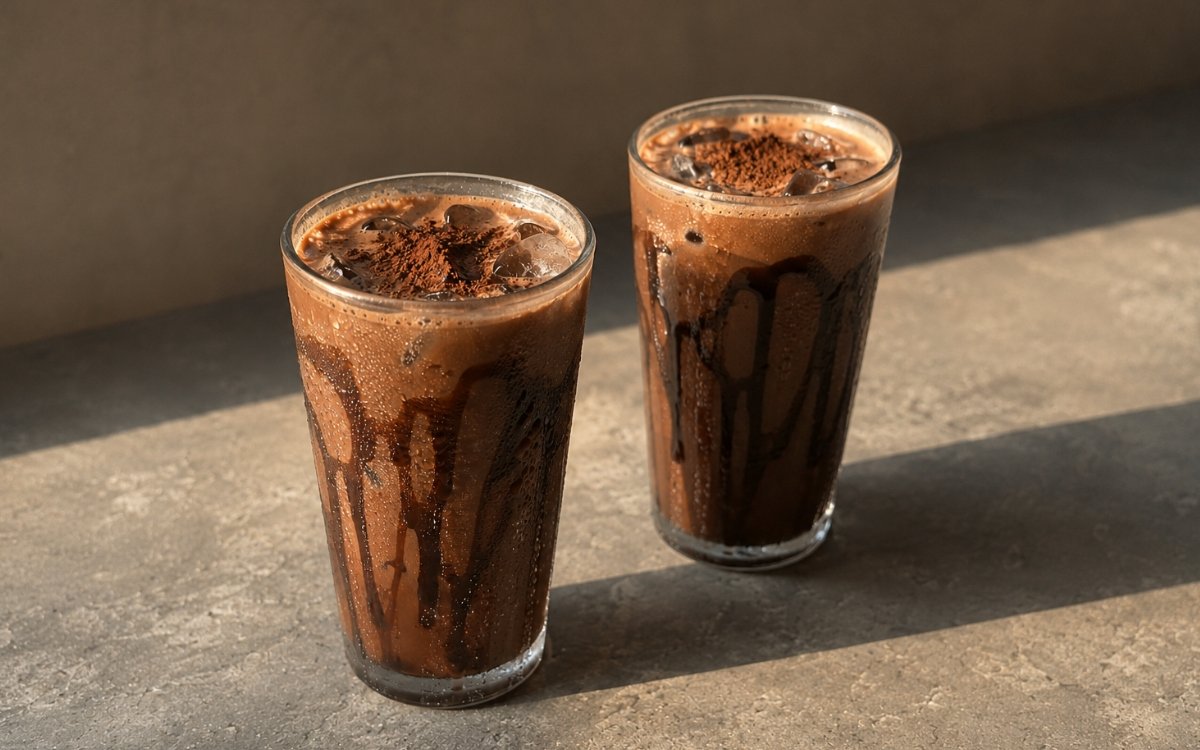
- Drizzle a little chocolate sauce around the inside walls of 2 glasses in a loose pattern so it stays visible from the outside. Fill each glass generously with ice. The chocolate drizzle should cling visibly to the glass without pooling into a thick heavy layer at the bottom. It is there for the classic visual and a little extra chocolate impact, not to overload the drink. Applying this drizzle to the empty, dry glass before any liquid is added is what allows it to cling directly to the glass walls — added later, once the glass already holds ice or milk, that same sauce would slide down and disappear rather than remaining a visible accent.
Build the Drink
- Divide the mocha-espresso mixture evenly between the 2 glasses. Pour about 120ml cold milk into each glass, holding back roughly 40ml milk total for the top foam. Stir each glass briefly so the milk and mocha base combine. The drink should become a deep chocolate-brown colour, clearly darker than a regular iced latte. If it looks too pale, the coffee-chocolate base is too weak or there is too much milk. Holding back a small, specific amount of milk at this stage rather than using it all in the main pour is what makes the separate, lightly frothed foam topping possible in the next step — that reserved portion is deliberately set aside for a different job than the rest of the milk.
Make the Thin Chocolate Milk Foam
- Combine the reserved cold milk with 1 tsp chocolate sauce. Froth lightly using a handheld frother, small milk frother, or by shaking briefly in a sealed jar. You only want a thin, light foam, not a thick cappuccino cap. The foam should be soft, lightly aerated, and chocolate-tinted, with fine bubbles and a thin spoonable texture. If it is thick and dry, it is over-frothed for an iced mocha. This restrained, brief frothing is a genuinely different target than the thick, dry foam a cappuccino calls for — stopping well short of that fuller aeration is what keeps this foam reading as a light finishing touch rather than a substantial topping layer.
Finish and Serve
- Spoon or pour the thin chocolate milk foam over the top of each drink. Dust lightly with cocoa powder and serve immediately. The final drink should show three clear visual cues: deep dark chocolate-coffee colour, visible chocolate swirls on the inside of the glass, and a thin dark chocolate milk foam with a light cocoa dusting on top. Serving without delay is what preserves all three of those visual cues together — the foam's light texture softens and the chocolate swirls on the glass begin to blur into the drink the longer it sits.
Notes
Building the chocolate sauce from a cocoa-and-sugar base dissolved in warm water, then finishing with melted dark chocolate, is worth understanding as a deliberate structural choice rather than an unnecessarily complicated method. Melting chopped chocolate on its own, without that liquid base already established, risks a thicker, less pourable result that behaves more like ganache than a proper drizzling sauce. The cocoa-water base carries enough liquid throughout to keep the finished sauce genuinely fluid even once the chocolate is melted into it.
Combining the chocolate sauce with the espresso while it's still hot, rather than waiting to mix everything with cold milk later, is the single technique most responsible for this drink's smooth, unified base. Hot espresso has real capacity to loosen and fully dissolve the sauce on contact; cold milk added afterward doesn't have that same effect, and sauce combined only at that later, cooler stage tends to leave visible separate streaks rather than blending into one cohesive mocha colour and flavour throughout.
The distinction between this drink's thin, lightly aerated foam and a cappuccino's thick, dry cap deserves the same attention given to it in this collection's other foam-topped drinks. An iced mocha's foam exists as a light finishing touch — soft, fine-bubbled, and thin enough to spoon easily — rather than a substantial structural layer. Over-frothing past that point pushes the drink toward a different format entirely, working against the specific, more restrained finish an iced mocha calls for.
Reserving a specific, modest amount of milk for the foam rather than using all of it in the main pour is a small planning detail worth getting right. That reserved portion needs to be genuinely available and cold when the foaming stage arrives — building the drink without holding any milk back would leave nothing to work with for the separate, lightly frothed topping this drink's final presentation depends on.