Ingredients
Method
Prepare the Glasses
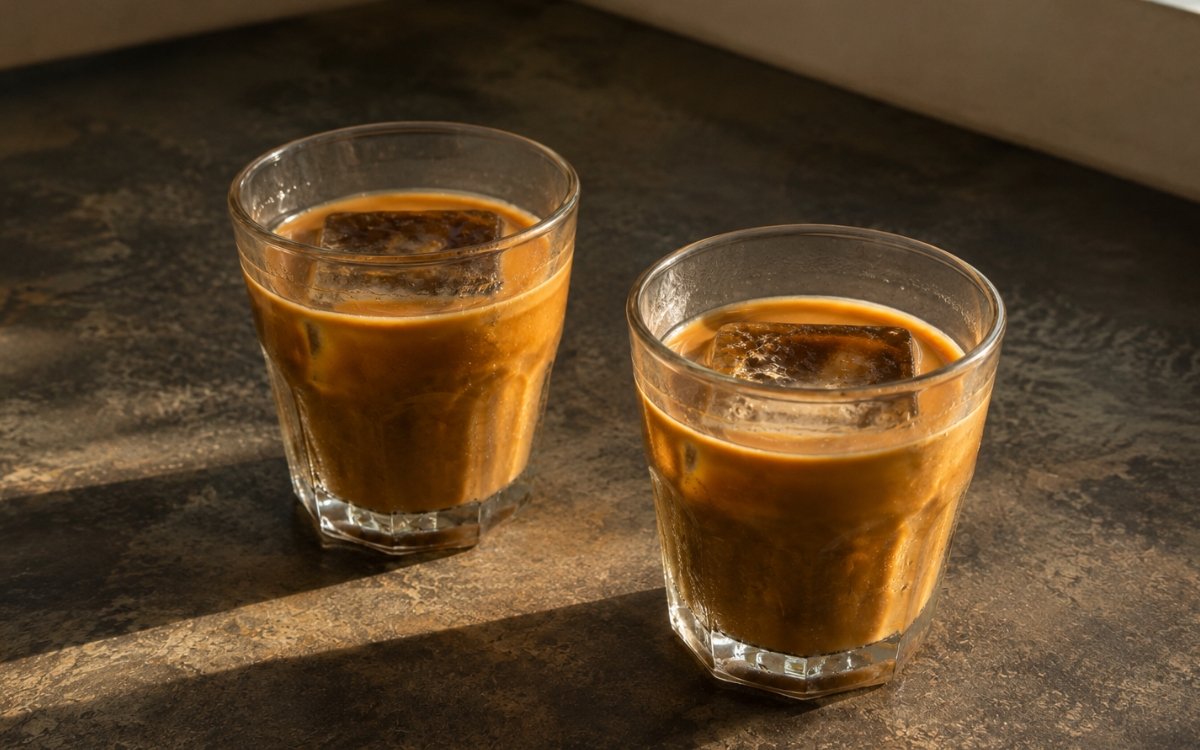
- Place 1 large ice cube into each glass. The large cube is important here. It chills the drink without watering it down too quickly, which matters more in a concentrated drink like a cortado than in a longer milk drink. A single large cube's low surface-area-to-volume ratio is what slows the melt rate specifically — several smaller cubes with the same total volume would present far more melting surface to the drink, diluting a cortado's already-concentrated ratio much faster than this format is meant to allow.
Brew the Espresso
- Brew 180ml espresso total, equal to 6 standard 30ml shots. Let the espresso sit for 30–60 seconds only if it is extremely hot, but do not let it go stale. The espresso should taste clean, bold, and balanced. Because the milk ratio is much lower than in a latte, weak or harsh espresso shows immediately. With equal parts milk to espresso rather than a latte's heavier milk proportion, there's simply nowhere for a flawed shot to hide — this drink's concentrated ratio makes espresso quality far more noticeable than it would be in a more diluted, milk-forward drink.
Add the Milk
- Pour 90ml cold milk into each glass over the large ice cube. The milk must be properly cold before the espresso goes in. This helps keep the drink crisp and stops the ice from melting too fast. Cold milk added directly onto the large cube begins working alongside that slow-melting ice from the very start, rather than needing the ice alone to do all the chilling work once the espresso is added on top.
Pour in the Espresso
- Pour 90ml espresso into each glass. You can pour it directly over the milk for a layered look, then stir, or pour and stir immediately. The finished drink should be a deep warm caramel-brown, clearly darker and more concentrated-looking than an iced latte. If it looks too pale, the milk ratio is too high. This equal-parts pour is what distinguishes a cortado's colour and strength from a latte's much paler, more diluted appearance — the ratio itself, not any technique beyond measuring correctly, is what produces that deeper caramel-brown result.
Stir and Serve
- Stir each glass briefly just until the milk and espresso are fully combined. Serve immediately. Once stirred, the drink should be smooth, balanced, and intense — equal parts milk and espresso, with neither one dominating too aggressively. A brief stir is sufficient here specifically because the ratio itself is already correctly balanced by measurement — this isn't a drink relying on gradual dissolving or layering to find its final balance, so only a short mix is needed to bring the two already-proportioned liquids together.
Notes
The single large ice cube is worth understanding as a genuine structural choice rather than simply a stylistic preference for this drink. A cortado's whole identity depends on staying concentrated — equal parts milk and espresso, without excessive dilution softening that ratio. A large cube's comparatively small surface area relative to its volume melts considerably more slowly than an equivalent volume of smaller ice would, which is specifically what protects the drink's concentration through the time it takes to build, serve, and drink it.
Because this drink uses such a low milk ratio compared to a latte, the quality of the espresso itself becomes far more exposed and noticeable. A latte's generous milk proportion has real capacity to soften or mask a slightly flawed shot; a cortado's equal-parts ratio offers no such cover. This is a drink where paying real attention to the espresso brewing stage pays off more directly and visibly than it would in a more milk-forward format.
Keeping strictly to the classic equal-parts ratio, rather than adjusting it toward more milk out of habit from making lattes, is worth respecting as the defining characteristic of a cortado specifically. Increasing the milk proportion, even modestly, would produce a paler, gentler drink that reads more like a small iced latte than a genuine cortado — the ratio itself is not a minor detail here but the entire point of the format.
The instruction against oversweetening reflects the same underlying philosophy as the ratio itself. A cortado is built around balance between two concentrated components, milk and espresso, meeting on genuinely equal terms. Adding syrup or sugar shifts that balance toward sweetness in a way that works against what makes this specific drink distinct from other iced espresso formats.