Ingredients
Method
Prepare the Espresso
- Brew 120ml espresso total, equal to 4 standard 30ml shots. Let it stand for 30–60 seconds only if it is extremely hot, but do not let it sit long enough to go flat. The espresso should be fresh, dark, and aromatic. This drink depends on the espresso keeping enough intensity to sit visually and flavour-wise above the milk. Espresso that's fresh and genuinely dark is what allows it to remain visually distinct as it falls through the milk — flat, tired espresso lacks the same colour intensity and would disperse into a duller, less defined layer.
Drizzle the Glasses
- Take 2 tall glasses and drizzle caramel sauce around the inside walls in a loose spiral pattern, mainly on the upper interior of each glass. Do not flood the glass with caramel. The drizzle should stay visible as a defined accent, not become a thick sticky pool at the bottom. The caramel should cling to the inside walls and remain visible through the glass. Too much sauce makes the drink overly sweet and muddies the clean layered look. Applying the caramel to the empty, dry glass first is what allows it to cling directly to the glass walls rather than sliding down into whatever liquid is already there — drizzling caramel into a glass that's already partly filled would produce a messier, less defined result.
Build the Vanilla Milk Base
- Divide the vanilla syrup evenly between the 2 glasses, 15ml per glass. Pour 150ml cold milk into each glass and stir briefly just to combine the vanilla syrup with the milk. The base should be evenly sweetened before the ice goes in. If the syrup is not mixed at this stage, it can settle and leave the drink unevenly sweet from top to bottom. Combining the syrup and milk fully while the glass still has plenty of room to stir freely is considerably more effective than trying to mix it once ice, and later espresso, have already been added on top.
Add the Ice
- Fill each glass generously with ice. The ice should sit between the milk base and the espresso top layer, helping the espresso disperse slowly rather than dropping straight to the bottom. The glasses should be filled enough with ice to support the layered effect, but still leave room for the espresso and final caramel drizzle. The ice functions here as a genuine structural layer rather than simply a chilling agent — it physically slows and redirects the espresso as it's poured, which is part of what produces the visible swirling and dispersion this drink's presentation depends on.
Pour in the Espresso
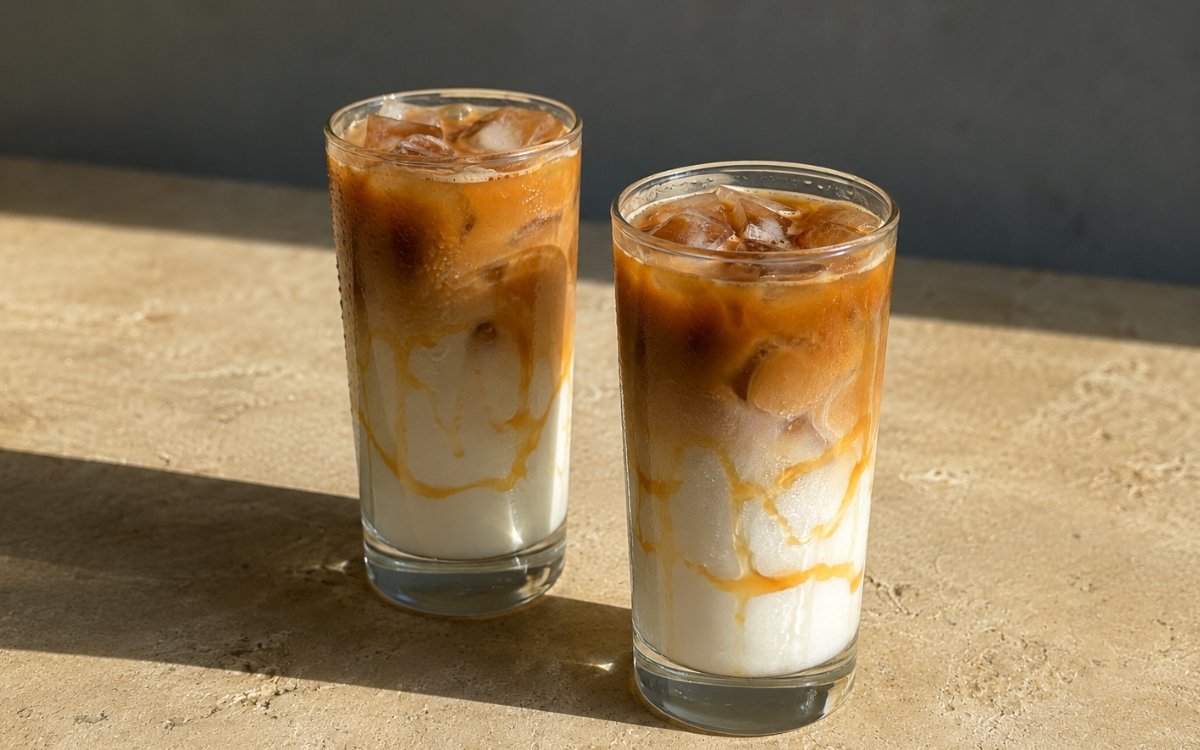
- Slowly pour 60ml espresso into each glass over the top of the ice. Pour gently so the espresso falls through the drink in visible dark ribbons and cloud-like swirls rather than mixing in immediately. You should see the classic gradient: pale vanilla milk below, dark espresso concentration at the top, and visible swirling in between. That layered look is one of the defining characteristics of a proper iced caramel macchiato. The espresso must be poured last. If it goes in before the milk, you lose the macchiato-style layered visual. This build order — milk base, then ice, then espresso last — is the entire mechanism behind the drink's signature gradient; reversing any part of that sequence collapses the layers into a more uniformly mixed drink from the start.
Finish with Caramel
- Drizzle a little more caramel sauce across the top of each drink. Serve immediately as layered, then stir before drinking if desired. The final drink should have visible caramel, a pale milk base, and a darker espresso top layer. Once stirred, it should become a smooth light caramel-beige colour with balanced vanilla, espresso, milk, and caramel flavour. Presenting the drink in its layered state before stirring, rather than mixing everything together immediately, is what showcases the visual effect the whole build was designed to create — that moment is genuinely brief, so serving right away matters for the presentation as much as for freshness.
Notes
Drizzling the caramel sauce into the empty glass first, before any liquid is added, deserves to be understood as a deliberate presentation technique rather than a minor garnish step. Applied to a dry glass, the sauce clings directly to the walls and stays visible as a defined spiral through every layer that's built afterward. Added later, once the glass already holds milk or ice, that same caramel would slide down and pool at the bottom rather than remaining a visible accent against the glass — the order here is what preserves the drink's layered, visually striking appearance.
Mixing the vanilla syrup into the milk before the ice ever goes in is worth treating as more consequential than it might initially seem. Syrup added directly to a glass already holding ice, or left unmixed at the bottom, doesn't distribute evenly through the drink — it tends to settle, producing a sip sequence that starts weak and turns cloyingly sweet by the final mouthfuls. Mixing thoroughly while the glass is still simple and mostly empty avoids that unevenness from ever developing.
The ice layer's role in this drink extends well beyond basic chilling, and it's worth understanding that dual function. Positioned between the milk base and the point where espresso is poured in, the ice physically interrupts and redirects the falling espresso, which is a real part of what produces the visible dark ribbons and cloud-like dispersion this drink is known for — a glass without enough ice in that middle position would let the espresso reach the milk more directly, producing a flatter, less dramatic visual.
The build order overall — caramel, then vanilla milk, then ice, then espresso poured last — functions as a single connected sequence rather than several independent steps, and disrupting any part of it undermines the whole presentation. Pouring the espresso earlier in the process, even by one step, collapses the layered gradient this recipe is specifically built to produce, regardless of how carefully every other stage was executed.