Ingredients
Method
Chill the Serving Glasses
- If possible, place 2 serving glasses or dessert cups in the freezer for 5–10 minutes before assembling. A chilled glass slows the melt slightly and gives you a cleaner affogato moment. A warm glass makes the gelato collapse too quickly before the espresso is poured. Even a glass at ordinary room temperature carries enough ambient warmth to begin working against the gelato from the moment it's scooped — a properly chilled glass removes that source of premature softening entirely.
Scoop the Gelato
- Place 100g vanilla gelato or vanilla ice cream into each glass, ideally as 2 compact scoops per serving. Work quickly so the scoops stay defined and hold their shape. The gelato should be firm enough to sit as a clear mound in the glass, not already soft and slumped. If it is melting before the espresso goes on, the final contrast is lost. Gelato is the most classical choice because it is denser and melts more elegantly into the espresso. Vanilla ice cream works well too, but it softens faster and is usually a bit sweeter. Gelato's lower fat and air content compared to standard ice cream give it a denser structure that resists melting and holds a defined scoop shape considerably longer — that same density is also what lets it melt into something closer to a smooth, cohesive sauce rather than a looser, more diluted puddle once the hot espresso arrives.
Brew the Espresso
- Brew 120ml espresso total, equal to 4 standard 30ml shots. You need 60ml espresso per serving. The espresso must be fresh, hot, and strong. This is one of the main structural points of the recipe. The hot espresso is what partly melts the gelato and creates the affogato texture. Do not brew the espresso too early. Affogato works best when the espresso is poured immediately after brewing. This entire dessert depends on a genuine, sustained temperature contrast between two components — espresso that's had time to cool even partially before pouring has lost some of the very heat responsible for producing the affogato's signature partial melt.
Pour the Espresso Over the Gelato
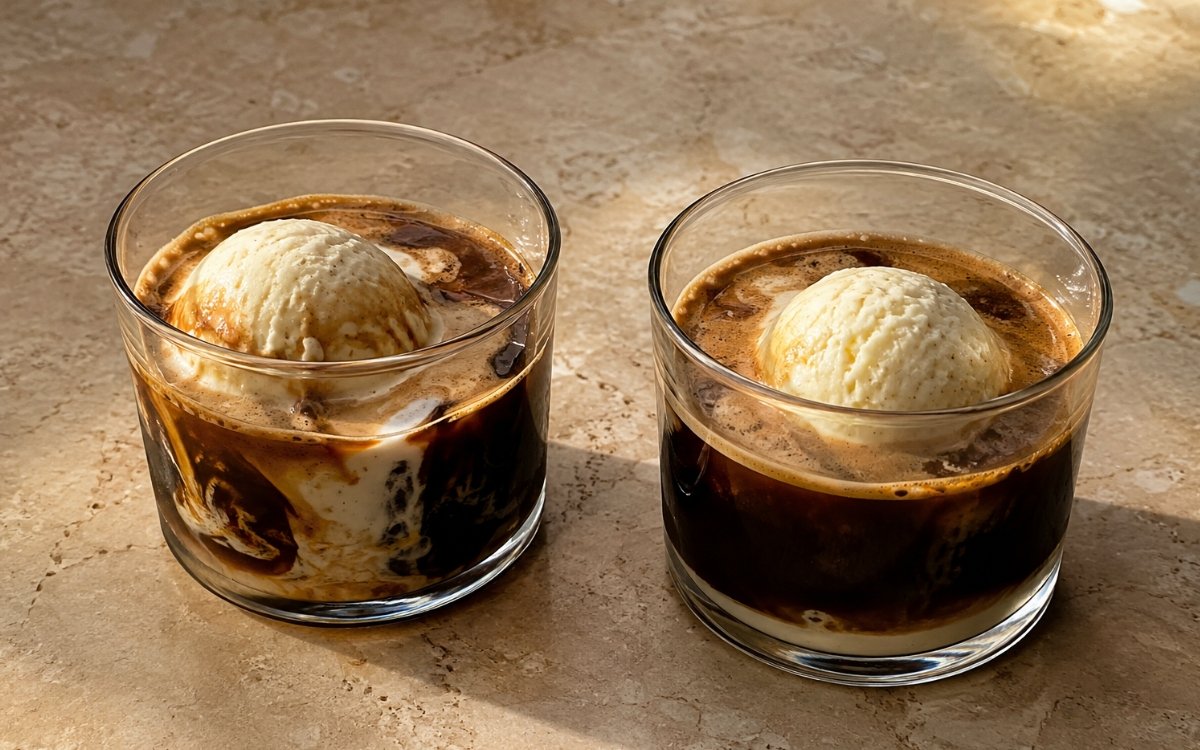
- Pour 60ml hot espresso directly over each serving of gelato. Aim partly over the top of the scoops and partly around their base so some of the gelato melts into the coffee while some remains intact. The correct result is partial melting, not total collapse. The edges should begin softening into a creamy coffee pool while the centre of the scoops still holds shape. Distributing the pour across both the top and the base, rather than concentrating it in a single spot, is what produces even, controlled softening around the gelato's exterior surface — a pour aimed entirely at one point would melt that specific area through completely while leaving the rest of the scoop untouched by any heat at all.
Serve Immediately
- Serve immediately with a spoon. Affogato has a very short ideal serving window. The best texture is right after pouring, when you still have the contrast between hot espresso, cold gelato, and the beginning of that creamy melted edge. This dessert's entire appeal is built around a moment that's genuinely fleeting — the hot-cold contrast and the specific partial-melt texture both continue changing from the instant the espresso is poured, and any delay in serving simply lets the drink move past its ideal point.
Notes
Working quickly through the scooping stage deserves real attention, since it's easy to underestimate how much a few extra minutes of exposure to room-temperature air can affect gelato's readiness for the espresso that follows. A scoop that's already begun softening and slumping before the espresso is even poured has lost part of its structural definition before the drink's actual defining moment has even happened — the whole point of the chilled glass and the quick scooping is to preserve that firm starting structure for as long as possible.
The distinction between gelato and standard vanilla ice cream, while both are workable, is worth understanding as a genuine textural difference rather than simply a matter of quality branding. Gelato's typically lower fat and air content produce a denser product that both holds its shape longer at room temperature and melts into something closer to a smooth, integrated sauce once heat is applied — ice cream's higher air content tends to produce a softer, quicker melt that's somewhat less controlled and often noticeably sweeter as well.
Pouring the espresso to hit both the top and the base of the scoops, rather than a single concentrated point, reflects real thought about how heat and melting actually spread across a solid, cold mass. A pour aimed only at the top would create a deep, isolated melt pocket right where it landed while leaving much of the rest of the scoop's surface completely untouched — distributing the pour is what produces the more even, all-around softened edge this recipe describes as the correct result.
The dessert's genuinely brief ideal serving window is worth respecting rather than treated as a loose suggestion. Every component of this recipe — the chilled glass, the quick scooping, the freshly brewed and immediately poured espresso — exists specifically to buy the finished affogato as much time as possible within that fleeting window, and serving it without any further delay is what actually cashes in on all of that careful preparation.