Ingredients
Method
Macerate the Shallot in Dual Vinegar
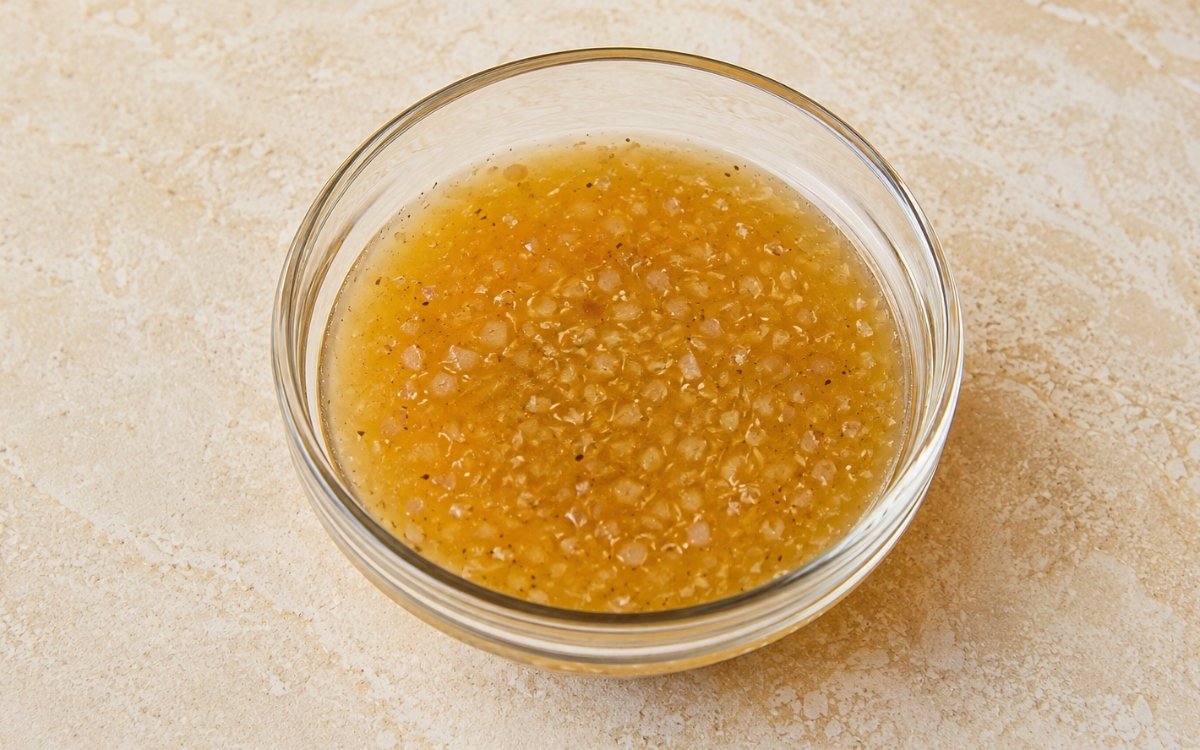
- Place the finely minced shallot in a small bowl with apple cider vinegar, white wine vinegar, and salt. Let rest for 5–7 minutes. This step softens the shallot’s raw bite while allowing its natural sweetness to infuse into the balanced, fruity-sharp acid blend.
Understand the Acid Balance
- Apple cider vinegar provides body, gentle fruitiness, and mild sweetness, while white wine vinegar adds a cleaner, brighter edge. Together they prevent the dressing from tasting flat or overly sweet.
Whisk in Honey and Mustard
- Add raw honey and Dijon mustard to the macerated mixture. Whisk until fully smooth. Honey contributes layered sweetness, while Dijon stabilizes the dressing and adds savory fermented depth.
Emulsify with Olive Oil
- Slowly drizzle in the olive oil while whisking continuously, or seal everything in a jar and shake for about 30 seconds. The vinaigrette should become slightly creamy and cohesive.
Finish and Adjust the Flavor
- Stir in optional dried thyme for subtle warmth. Taste carefully — add a splash more white wine vinegar if too sweet, or a touch more honey if too sharp. Season with salt and freshly ground black pepper before serving.
Notes
Apple cider vinegar has experienced significant popularity as a health food, but its culinary application is the primary focus here. High-quality, unfiltered apple cider vinegar with the 'mother' — the colony of beneficial bacteria that forms during fermentation, visible as cloudiness or sediment — has a more complex, less sharp acidity than filtered versions. For cooking, the difference in flavor between unfiltered and filtered is subtle but present.
The sweetness calibration in this recipe requires attention. Different honey varieties vary significantly in sweetness and flavor intensity — light, mild clover honey produces a more neutral sweetness, while darker honeys like buckwheat or manuka contribute distinctive, assertive flavors that significantly alter the dressing's character. Choose honey appropriate to the flavor profile you want.
Finely minced shallot is critical — large pieces create unpleasant bites in a dressing that should be smooth-flowing. Mince as finely as possible, ideally so fine that individual pieces are barely visible. After maceration, the shallot pieces will soften further and integrate into the dressing more naturally.