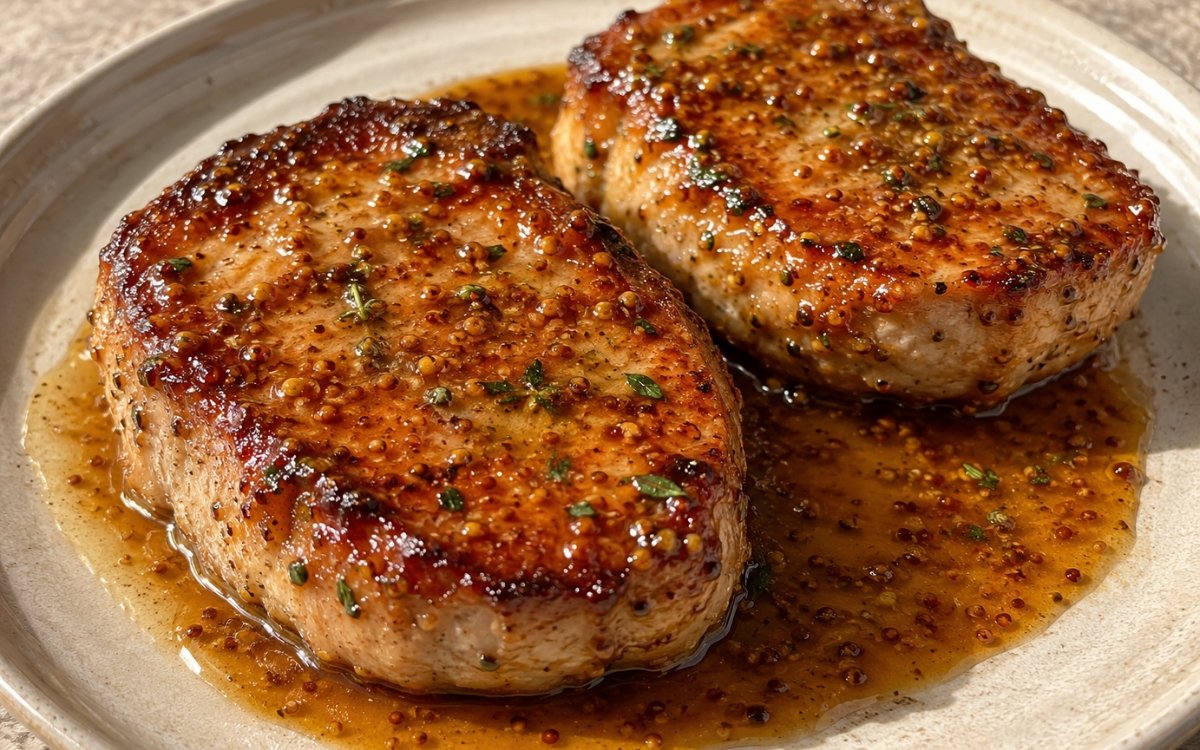
Ingredients
Method
Prepare the Pork Chops
- Remove the 900g pork chops from refrigerator and let stand at room temperature for 20 minutes. Pat dry with paper towels and season both sides generously with 8g salt and 4g black pepper.
Make the Honey Mustard Glaze
- In a medium bowl, whisk together 80g honey, 60g whole grain mustard, 30g Dijon mustard, 30ml apple cider vinegar, minced garlic, and 3g fresh thyme leaves until well combined. Set aside.
Sear the Pork Chops
- Heat 25ml vegetable oil in a large skillet over medium-high heat until shimmering. Add pork chops and sear for 3 minutes without moving them until a deep golden-brown crust forms on the bottom.
Add the Glaze
- Flip the chops to the second side. Immediately pour the honey mustard glaze over and around the pork chops, ensuring they're well coated.
Cook and Baste
- Reduce heat to medium. Continue cooking for 6 to 8 minutes, spooning the glaze over the chops every 2 minutes, until the internal temperature reaches 63°C (145°F) and the glaze becomes sticky and caramelized.
Thicken the Glaze
- Transfer the cooked pork chops to a serving plate. If the remaining glaze in the skillet appears thin, simmer over medium heat for 2 minutes until it thickens to a syrupy consistency.
Rest and Serve
- Let the pork chops rest for 5 minutes to allow juices to redistribute. Spoon the thickened glaze over the chops and serve immediately.
Notes
Adding the glaze only after the first sear, rather than at the start, is a deliberate sequencing decision. Honey's sugar content burns quickly at the higher heat needed for an initial sear, so introducing the glaze at the flip — once the heat has been reduced to medium — allows it to caramelize gradually into the sticky, glossy finish this dish is known for, rather than scorching on contact.
The dual mustard approach provides two genuinely different textural and flavor contributions. Whole grain mustard's intact seeds add visible texture and a milder, more rounded tang, while Dijon mustard's smooth, concentrated sharpness fills in the flavor gap whole grain alone would leave. Together they produce more depth than either mustard could provide on its own.
Basting every 2 minutes during the second cooking stage is what builds the glaze's characteristic thickness and shine. Each pass adds another thin layer that reduces slightly before the next spoonful, gradually concentrating the sauce's sugars and building toward the syrupy consistency the finished dish depends on.