Ingredients
Method
Extract the Lemon Oils into the Honey
- Finely zest 3 lemons, taking only the yellow outer peel and leaving all white pith behind. Place the zest in a bowl with the honey and stir well. Let it sit for 15–20 minutes so the honey pulls in the lemon oils and aroma. If your honey is very thick, set the bowl over barely warm water for a few minutes just to loosen it slightly. Do not let it get hot — keep it low temperature, just warm enough to make it fluid and easy to mix. Honey's own natural viscosity is actually what makes it an effective medium for this infusion — its thick, slow-moving texture holds the zest in close, sustained contact, letting the lemon oils steep directly into it over that resting time.
Juice the Lemons
- Juice the lemons until you have 280ml fresh lemon juice. Strain out the seeds. Add the lemon juice to the lemon-honey mixture and whisk until the honey loosens and blends in. The lemon juice's own acidity and liquid volume are what actually loosen the honey into something pourable and mixable — that combination transforms the thick, infused honey into a genuine liquid base ready to be built into the full lemonade.
Build the Lemonade
- Pour the lemon-honey base into a large pitcher. Add the cold water and stir very well until fully combined. For a cleaner, brighter lemonade, strain the mixture through a fine-mesh sieve into the pitcher, pressing lightly on the zest, then discard the solids. Straining at this stage removes the spent zest pieces after they've already given up their aromatic oils to the honey, producing a cleaner final drink without losing any of the flavour that zest already contributed.
Chill
- Refrigerate for 30 minutes, or until fully cold. That resting period lets the honey, lemon, and water fully integrate together, producing a more unified flavour than serving the drink immediately after mixing.
Serve
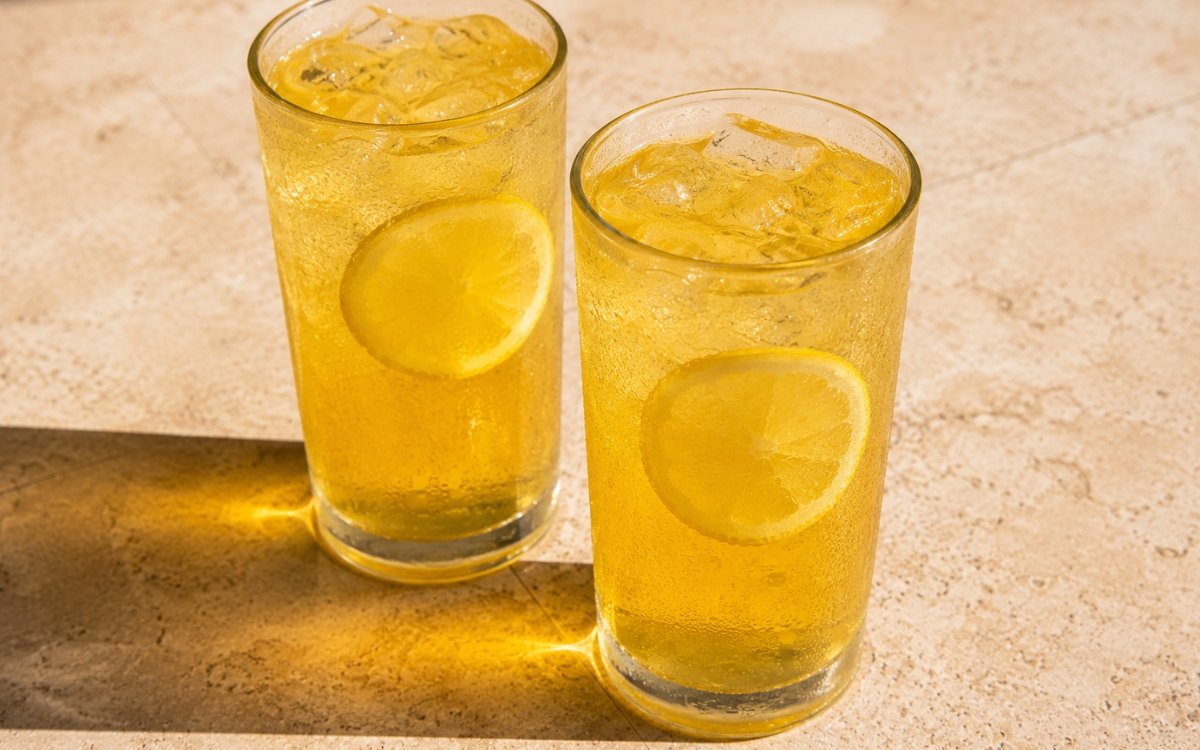
- Place ice in tall glasses and slide a thin lemon wheel inside each glass. Pour in the honey lemonade and serve immediately. Serving right after chilling, rather than letting the pitcher sit out, keeps the drink at its coldest and most refreshing right when it's poured.
Notes
The strict avoidance of white pith throughout zesting deserves the same careful attention it receives across every citrus-forward drink in this collection. Lemon pith carries a real, distinct bitterness entirely separate from the fruit's natural tartness — even a small amount worked accidentally into the zest can introduce a flavour that lingers through the whole finished pitcher, working directly against honey's own gentle sweetness.
Steeping the zest directly in honey, rather than in a separate sugar syrup, is worth understanding as a deliberate technique choice specific to this recipe. Honey's naturally thick, viscous texture holds the zest in prolonged, close contact in a way a thinner liquid wouldn't as effectively, letting the lemon oils infuse directly into the honey itself over that resting period rather than needing a separate infusion step.
Keeping the honey's temperature genuinely low throughout, warming it only if strictly necessary to loosen thick honey, protects a real and specific quality this recipe depends on. Honey carries its own delicate floral aromatics that heat can diminish or flatten, similar to how heat affects lemon zest's own volatile oils — the low-temperature handling specified here is what keeps that floral character intact rather than cooking it into something duller and less distinct.
Choosing a mild, floral honey specifically, as the recipe's own notes recommend, deserves real attention rather than being treated as a flexible substitution. Very dark, robust honey varieties carry considerably stronger, more assertive flavours that can dominate this drink's delicate balance between lemon brightness and honey sweetness — a mild honey is what lets both components come through in proper proportion.