Ingredients
Method
Mix the Masa Dough
- In a medium bowl, combine the masa harina and fine sea salt and stir briefly to distribute the salt evenly through the dry masa before any liquid is added. Gradually pour in the warm water while mixing with your hand, working from the edges of the bowl inward. Mix continuously as you add the water, pressing the masa harina into the liquid with your palm rather than stirring — the pressing motion hydrates the masa more efficiently than stirring and produces a more uniform dough more quickly. Continue until the dough comes together into a cohesive, soft mass with no dry masa remaining at the bottom of the bowl. Masa harina is made from nixtamalised corn — dried corn that has been treated with an alkali solution (typically limewater), dried, and ground to a fine powder. The nixtamalisation process transforms the corn's chemical structure in multiple ways: it releases niacin for nutritional availability, it produces the characteristic slightly earthy, slightly alkaline flavour that makes corn tortillas taste like corn tortillas rather than plain corn, and it creates a starch structure that hydrates into the pliable, cohesive masa that is impossible to achieve with regular corn flour or cornmeal. Masa harina and cornmeal are not interchangeable — only masa harina produces corn tortillas.
Knead and Assess Consistency
- Knead the dough briefly for 1–2 minutes — fold it over itself, press, rotate, and repeat — until it is completely smooth with no rough patches or dry spots. The texture assessment at this stage determines everything about the tortillas that follow. The correctly hydrated masa dough should feel soft, smooth, and slightly tacky — the consistency of warm modelling clay or a firm playdough, slightly moist to the touch but not wet. Perform the crack test: take a small ball of dough and press it firmly between your palms. If the edge of the flattened disc shows cracks, the dough is too dry and needs more water — add 5ml at a time, kneading it in and testing again after each addition. If the dough sticks heavily to your hands and leaves significant residue, it is too wet — dust lightly with masa harina, knead it in, and test again. Getting this consistency right is the only real technique in this recipe. An under-hydrated dough cracks during pressing, tears when peeled from the plastic, and produces brittle, stiff tortillas. A correctly hydrated dough presses cleanly, peels easily, and cooks into the soft, pliable tortillas the recipe is designed to produce.
Rest the Dough
- Cover the bowl tightly with plastic wrap or a damp kitchen towel and allow the masa dough to rest at room temperature for 20 minutes. This rest period is not a fermentation rest — masa harina contains no active yeast and nothing is leavening. It is a hydration rest during which the masa harina's starch granules absorb the water more completely and evenly than they could during the brief mixing period. After the 20-minute rest, the dough feels noticeably smoother and more uniform — it has a more cohesive structure and is less likely to crack at the edges when pressed. Skipping this rest is the second most common cause of cracking tortillas after under-hydration. Do not rush it.
Divide and Ball
- Divide the rested dough into 8 equal portions, each approximately 65–70g — weigh them for consistency, as unequal portions produce tortillas of different thickness when pressed to the same target diameter. Roll each piece into a smooth, tight ball by rolling in the cupped palm of your hand in a circular motion, applying light pressure. Surface smoothness in the ball directly translates to a clean edge and even surface in the pressed tortilla — a rough or cracked ball surface will produce corresponding cracks and rough edges in the finished disc. Cover all the balls immediately with a damp cloth or plastic wrap as you work — masa dough at this hydration dries out quickly when left exposed to air, and dried surface areas crack during pressing.
Press the Tortillas
- Place a sheet of plastic — cut from a zip-top bag is the most common and practical material — on the bottom plate of a tortilla press, or on your pressing surface if using an alternative flat weight. Place a dough ball in the centre of the plastic sheet and cover with a second plastic sheet. If using a tortilla press: close the press firmly and apply even, steady pressure on the handle, pressing to approximately 2mm thickness. Open, rotate the tortilla 180 degrees between the plastic sheets, close, and press again — the double-press with a rotation produces more even thickness than a single press which typically produces a slightly thicker centre and thinner edges. If no tortilla press is available: use a flat-bottomed heavy skillet, a cutting board with firm hand pressure, or a large book pressed down evenly. The tortilla should be approximately 2mm thick and 20cm in diameter. Peel the top plastic sheet away carefully from the tortilla rather than peeling the tortilla from the plastic — the tortilla is fragile at this stage and is less likely to tear if the plastic is removed from it rather than it from the plastic. Transfer to your free hand by inverting the bottom plastic over your palm and peeling that sheet away too.
Cook on a Dry, Hot Surface
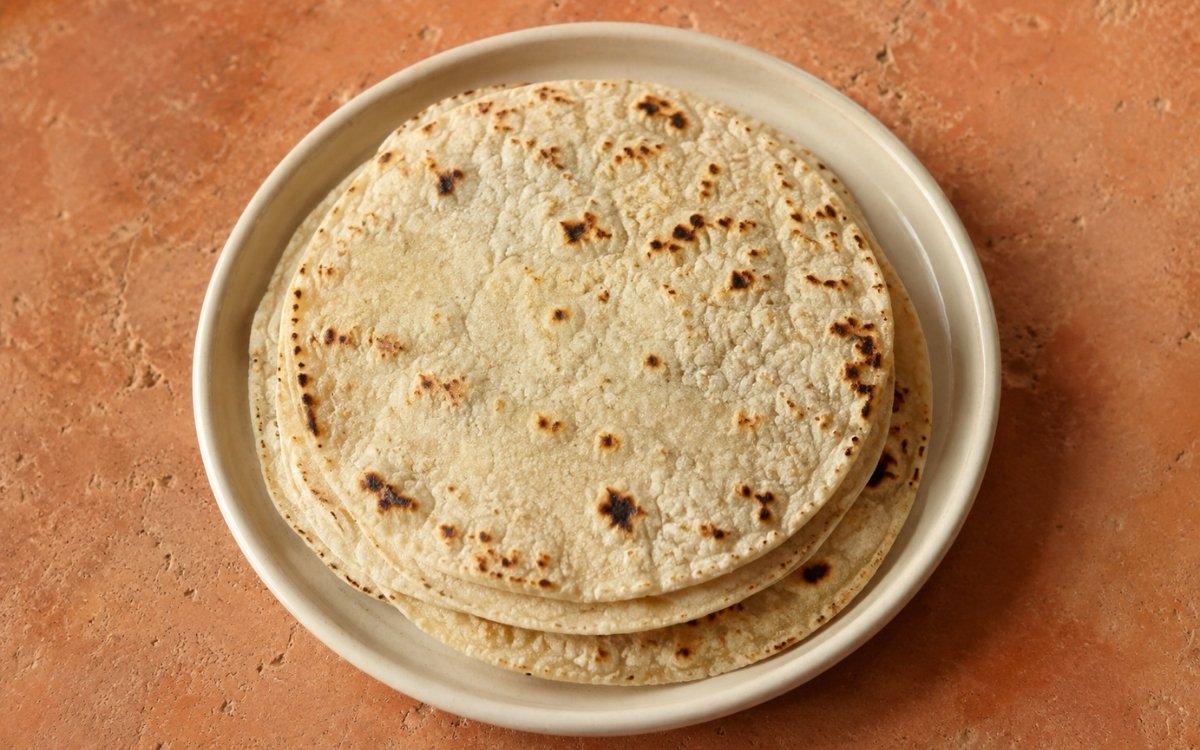
- Heat a cast iron skillet, flat griddle, or heavy-bottomed pan over medium-high heat until genuinely hot — a drop of water flicked onto the surface should evaporate immediately on contact. No oil. The dry surface is essential: oil produces fried tortillas rather than the characteristic dry, slightly charred surface of a proper corn tortilla. Lay the tortilla carefully flat on the hot, dry surface — the tortilla is still fragile when raw and should be placed rather than dropped. Cook the first side for 30–45 seconds without moving. The underside should develop irregular, pale golden to light brown char spots where the masa's starch is caramelising in direct contact with the hot surface — these spots are the visual marker of correct heat. Flip with a thin spatula and cook the second side for 30 seconds. Flip once more — back to the first side — for a final 15–20 seconds. On this third side, the tortilla should puff slightly as steam trapped between the cooked outer layers expands and separates them. This puffing is a sign of correct dough hydration and cooking technique — it indicates that the layers have cooked separately enough to trap steam. The total cook time is approximately 1.5 minutes per tortilla, which produces a soft, pliable tortilla that can be folded without cracking. A tortilla cooked for significantly longer than this — past 2 minutes at the same heat — will become progressively drier, stiffer, and more likely to crack when folded. Corn tortillas cook quickly and the cooking time should not be extended in the hope of developing more colour.
Stack and Steam Under a Cloth
- Transfer each cooked tortilla directly from the pan to a towel-lined plate or a tortilla warmer. Cover immediately with the towel or close the warmer. The stack of cooling tortillas generates its own steam environment — the heat and moisture from each tortilla above creates a humid microclimate within the covered stack that keeps every tortilla below soft and pliable. This stacking and covering step is not optional comfort — it is the technique that makes the difference between corn tortillas that fold cleanly and ones that crack and split when bent. Allow the stack to steam for at least 5 minutes before serving.
Notes
Masa harina is the only ingredient that produces corn tortillas and there is no substitute. It is made from dried nixtamal — corn treated with calcium hydroxide (cal) in a process called nixtamalisation — that is then dried and ground to a fine powder. The nixtamalisation is what produces masa harina's distinctive flavour and its unique starch structure that hydrates into the pliable, cohesive masa impossible to achieve with regular corn flour or polenta. Masa harina is widely available in supermarkets in the Mexican foods section and online. Maseca is the most commonly available brand globally and produces consistent, reliable results. Do not attempt to substitute cornmeal, polenta, corn flour, or any other corn-based product — the result is an entirely different, unusable material.
The 125% hydration is the standard for masa tortilla dough and is significantly higher than the hydration of flour-based doughs because masa harina absorbs water differently from wheat flour. The nixtamalised corn's starch structure is more absorbent and requires more water to achieve the soft, workable consistency necessary for pressing and cooking. First-time masa dough makers often under-hydrate because the initial dough consistency looks correct before the 20-minute rest allows full starch hydration — always check the consistency after the rest period rather than immediately after mixing.
The four most common causes of cracking tortillas, in order of frequency: dough is too dry; dough was not rested long enough; dough balls were not kept covered while waiting to be pressed; and pressing was too aggressive and produced tortillas thinner than 2mm at the edges. Address any one of these and the problem usually resolves.