Ingredients
Method
Prepare the Marinade
- Combine Greek yogurt, olive oil, lemon juice, and minced garlic in a large bowl, then add all the spices and whisk until fully smooth. The marinade should be thick enough to cling to the chicken without sliding off. This consistency is important because it ensures the spices stay in direct contact with the meat instead of pooling at the bottom.
Marinate the Chicken
- Add the chicken thighs and coat each piece thoroughly, pressing the marinade into every surface. Cover tightly and refrigerate for at least 2 hours, ideally longer if time allows. During this time, the yogurt and spices begin penetrating the outer layers of the meat, seasoning it beyond the surface and improving texture as it sits.
Bring to Room Temperature
- Remove the chicken from the refrigerator 30 minutes before cooking. This step reduces the temperature gap between the cold interior and hot cooking surface, allowing the chicken to cook more evenly and preventing the exterior from overcooking before the inside is done.
Prepare for Cooking
- Lift each piece of chicken from the marinade and let excess drip off naturally for about 20–30 seconds. Do not wipe it clean — you want a thin coating to remain. Too much marinade will burn before it caramelizes, but too little will reduce flavor and limit char formation.
Cook the Chicken
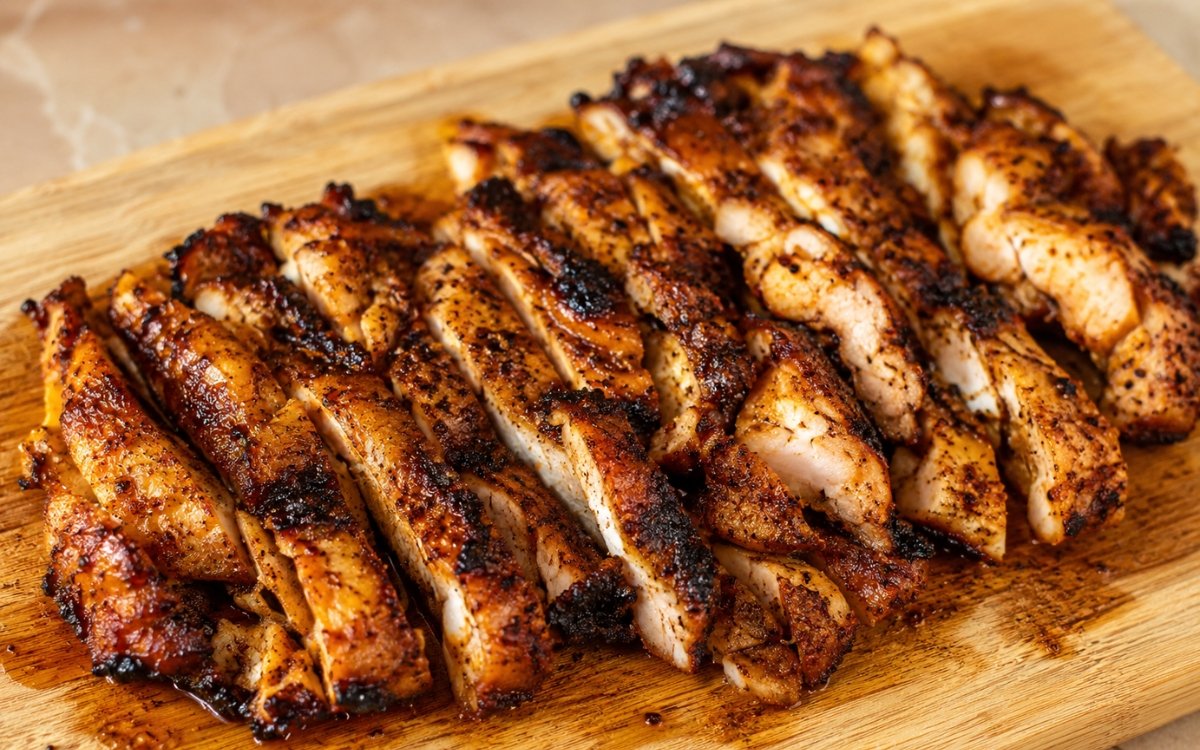
- Place the chicken onto a preheated grill or grill pan over high heat and leave it undisturbed for 6–7 minutes per side. Movement at this stage will interrupt browning and prevent proper char from forming. The marinade will begin to caramelize on contact with heat, creating dark, flavorful edges while the interior cooks through. Continue cooking until the internal temperature reaches 74°C (165°F), ensuring both safety and proper doneness.
Rest and Slice
- Transfer the cooked chicken to a cutting board and let it rest for 5 minutes. Slice against the grain into strips approximately 1cm wide. This cutting direction shortens muscle fibers, making the chicken feel more tender and closer to traditional shawarma texture.
Notes
The marinade's thickness is a deliberate structural choice, not just a texture preference. A thinner, more liquid marinade would drip off the chicken during both refrigeration and grilling, meaning less of the cumin, paprika, and warm spice blend would actually stay in contact with the meat long enough to season it deeply.
Yogurt's role here goes beyond flavor. Its mild acidity and enzymatic activity gently tenderize the chicken over the marinating period without the harsher, more aggressive breakdown a purely acidic marinade (like one built entirely on lemon or vinegar) would cause if left too long — this is part of why yogurt-based marinades tolerate longer marinating times without turning the meat mushy.
The amount of marinade left clinging to the chicken before grilling is a genuine balancing act. Too thick a layer of residual marinade burns in the sugar- and dairy-rich coating before it has a chance to properly caramelize; too little leaves the chicken under-seasoned on the surface and produces less char. The 20–30 second drip time specified is calibrated to hit that middle point.