Ingredients
Method
Brew the Hibiscus Concentrate
- Add the 20g of dried hibiscus flowers and 500ml of water to a medium saucepan and set it over medium heat, which takes about 5 minutes. Watch closely, as the water turns a deep red within the first minute from the hibiscus anthocyanin pigments, and the moment it reaches a gentle simmer — small bubbles at the edge, no rolling boil — remove the saucepan from the heat. Let the flowers steep off the heat for 10–15 minutes: at 10 minutes the concentrate is brighter and more delicate, and at 15 minutes it is deeper in colour and more assertively tart. That just-to-simmer, off-the-heat steep is what keeps the volatile floral aromatics in the liquid rather than driving them off into a cooked, jammy flatness.
Add the Honey
- While the concentrate is still hot from steeping, stir in the 60g of honey until it has dissolved completely and no streaks remain at the bottom of the pan. The residual heat is enough, so the saucepan does not go back on the burner. Leave the sweetened concentrate to cool for 5–8 minutes, until it reaches roughly 50–60°C and feels warm to the touch but no longer hot. That warm stir-in is what gives even sweetness throughout, because honey added to cold liquid sinks and dissolves in pockets, and it avoids the extra heating that would dull the hibiscus.
Infuse the Lime Zest
- Once the concentrate has cooled to roughly 50–60°C, add the zest of ½ lime and let it infuse for 5–10 minutes, stirring once or twice, until the liquid smells clearly of lime above the hibiscus. At this temperature the zest’s aromatic oils release into the liquid but do not evaporate on contact. That is what gives the concentrate a fragrant citrus thread that is separate from the sharp acidity of the juice, since the zest provides the fragrance and the juice provides the brightness.
Cool and Add the Lime Juice
- Leave the concentrate to cool fully to room temperature, which takes a further 10–20 minutes, until the side of the saucepan feels neutral to the touch. Only then stir in the 60ml of fresh lime juice and taste, looking for a vivid, tart, floral concentrate with the honey rounding the edge and the lime sitting clearly on top. If it still feels warm, wait a few minutes more rather than adding the juice early. That room-temperature addition is what preserves the juice’s clean acidity, because warm liquid dulls fresh lime within the first minute of contact.
Strain and Chill
- Strain the concentrate through a fine-mesh sieve into a clean jug, pressing gently on the flowers and zest to extract as much liquid as possible, and discard the solids. You should have roughly 500ml of concentrate, of which the four glasses use about 320–340ml. Cover the jug and refrigerate for at least 30 minutes, until thoroughly cold. That thorough chill is what stops the concentrate from melting the ice and flattening the club soda on contact.
Assemble and Serve
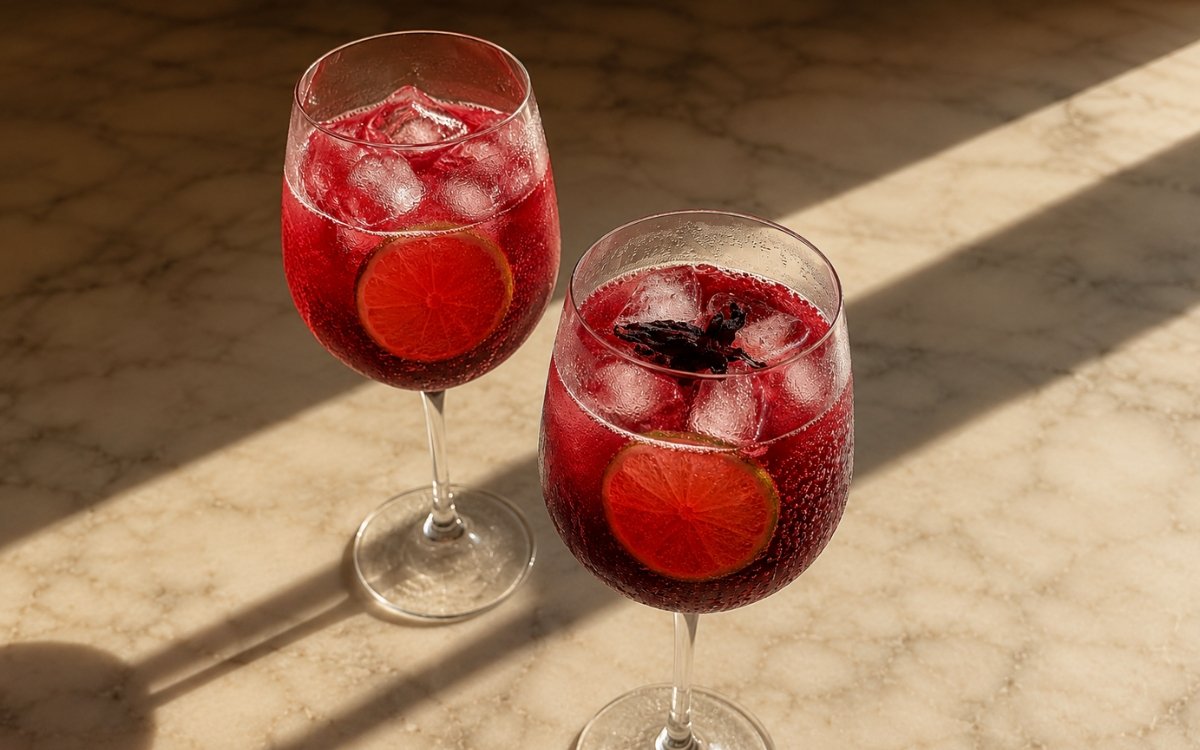
- Fill four large wine glasses generously with ice cubes, then divide the chilled concentrate evenly among them, about 80–85ml per glass, and stir each briefly with a long spoon. Top each glass with about 125ml of chilled club soda, pouring gently down the inner side of the glass, and stir once or twice. Press a thin lime slice against the inside of each glass so it shows through the ruby liquid, and float a dried hibiscus flower on the ice if using. Keep the leftover concentrate, roughly 150–200ml, refrigerated. Serve immediately. That gentle pour, with the club soda added only at the glass, is what keeps the carbonation at full intensity.
Notes
The just-to-simmer steep deserves genuine recognition as the technique most directly responsible for the drink’s floral brightness. Dried hibiscus owes its colour and tartness to anthocyanin-rich calyces, and sustained boiling drives off the volatile aromatics behind its floral quality while developing a cooked, jammy note that no later addition can cover.
The temperature of each addition deserves the same attention that any careful infusion needs, because honey, zest and juice each behave differently as the concentrate cools. Honey dissolves in the residual heat, the zest releases its oils at 50–60°C, and the juice joins at room temperature, so every ingredient meets the liquid at the point that protects its character.
The concentrate’s strength deserves genuine respect as the detail most directly responsible for the drink keeping its ruby colour once diluted. Only 80–85ml of the batch goes into each glass, so the concentrate must taste assertively tart on its own before the 125ml of club soda and melting ice soften it.
The carbonation step deserves attention as a genuine, checkable stage rather than a loose habit, because the club soda goes in only at the glass, after the concentrate is thoroughly cold. Pouring it gently down the inner side of the glass and stirring just once or twice keeps the bubbles, whereas a warm concentrate or a forceful central pour releases them on contact.