Ingredients
Method
Brew the White Tea Gently
- Heat the 1.65 litres of water to 75–80°C. Do not allow the water to reach a full boil — white tea is fragile, and high temperatures extract an unwanted bitterness that will compete with the hibiscus and ginger that follow. Add the 6 white tea bags and steep for 3–4 minutes. Remove the bags carefully without squeezing, and allow the tea to cool to lukewarm before proceeding.
Infuse Hibiscus and Ginger Together
- Add the dried hibiscus flowers and ginger slices directly to the warm tea. Allow both to infuse together for 6–8 minutes, checking the colour and aroma at the 6-minute mark. You're looking for a deep, clear ruby colour and a gentle warming spice aroma — present but not aggressive. Strain out both the hibiscus and ginger promptly once that balance is reached. Hibiscus becomes sharply sour with extended infusion, and ginger shifts from fragrant to throaty and hot. Neither outcome serves this drink, and there's no correcting either after the fact.
Sweeten While Warm
- While the tea is still warm from the infusion, stir in 2 tablespoons of mild honey until fully dissolved. Taste and consider the balance — the hibiscus tartness should feel softened but still clearly present, not erased. Add up to 1 additional tablespoon of honey only if the drink tastes aggressively sour at this stage. Allow the sweetened tea to cool to room temperature before adding the citrus.
Add the Orange Juice
- Stir in the ¾ cup (180ml) of freshly squeezed, strained orange juice. Orange plays a specific structural role here, not just a flavouring one — it contributes natural sweetness, mild acidity, and a soft fruit roundness that bridges the sharpness of hibiscus and the heat of ginger into a single, cohesive, balanced profile. Do not substitute lemon or lime juice, which would push the acidity too high and throw the entire drink out of balance.
Chill Fully
- Refrigerate the finished tea for 1–2 hours until completely cold and the flavours are fully integrated. This step is essential, not optional — served warm or only partially chilled, the hibiscus acidity feels sharp and the ginger feels aggressive. Full chilling softens both and allows the white tea base to come forward, giving the drink its elegant, refined character.
Serve
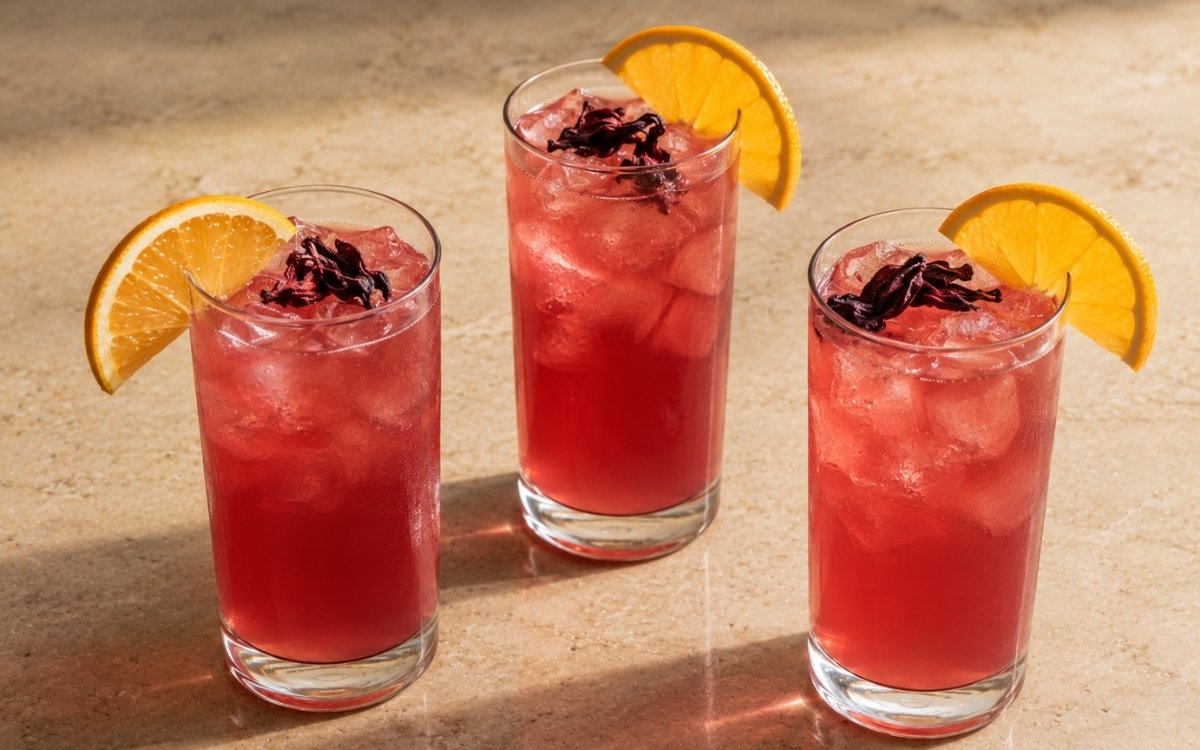
- Fill glasses generously with ice. Pour the chilled cooler over the ice and garnish with orange wedges and a few dried hibiscus flowers if desired. Serve immediately for the best colour, aroma, and structure.
Notes
Hibiscus is one of the most potent botanicals used in cold drinks and must be treated with respect. Even a few extra minutes of infusion pushes the flavour from bright and tart into aggressively sour and one-dimensional. Always strain promptly and taste as you go — the 6-minute mark is a reliable starting point, but hibiscus flowers vary in intensity depending on brand and freshness.
Ginger in this recipe is used for fragrance and gentle warmth, not heat. Thin slices kept in contact with the tea for only 6–8 minutes release their aromatic compounds without the throat-warming intensity that comes from longer infusion or more aggressive preparation. If the finished drink tastes noticeably spicy rather than gently warming, the ginger infused too long — reduce contact time on the next batch.
White tea must remain a detectable presence in the finished drink. If the hibiscus completely dominates and the tea base has disappeared into the background, the botanical infusion went too far. Pai Mu Tan is specifically recommended here because it has enough body and natural sweetness to hold its own alongside assertive flavours — lighter white teas may struggle to remain present at all.
Orange juice is not interchangeable with other citrus in this recipe. Its natural sweetness and mild acidity are precisely what softens both the hibiscus tartness and the ginger heat into something balanced and approachable. Fresh-squeezed juice also contributes aromatic compounds that bottled juice entirely lacks — always use fresh fruit for the best result.
This cooler is best consumed within 24 hours. The hibiscus colour remains vivid and the flavour stays bright and clean on the first day. By the second day, the colour can deepen and the flavour may turn slightly flatter and more muted.