Ingredients
Method
Prep the Pears
- Peel the pears, cut them in half lengthwise, and use a melon baller or small spoon to remove the cores neatly. Rub the cut surfaces lightly with lemon to limit browning while you finish prepping the rest. Use pears that are still firm. If they are too ripe, they will collapse during poaching instead of holding clean, elegant halves. That genuine firmness is exactly what gives the pears the structural integrity to survive real, sustained simmering without breaking down into something soft and shapeless.
Build the Poaching Liquid
- In a wide saucepan or deep sauté pan, combine the water, dried hibiscus, sugar, orange juice, orange zest, cinnamon stick, and vanilla bean plus seeds if using. Bring just to a simmer, then reduce the heat and simmer gently for 5 minutes so the hibiscus fully infuses and the sugar dissolves. Taste the liquid. It should be bright, floral, citrusy, and clearly sweet. Add 1–2 tbsp lemon juice if it needs more sharpness. The liquid should already be a vivid ruby-red before the pears go in. That specific, checkable colour confirms the hibiscus has fully released its own real pigment into the liquid before the pears ever join it — a paler liquid at this stage simply hasn't extracted enough colour yet.
Poach the Pears Gently
- Lower the pear halves into the liquid in a single snug layer if possible. The cut side can face down or sideways, but the pears should be mostly submerged. Cover the surface with a round of parchment paper if needed to keep them under the liquid, then simmer very gently for 15–25 minutes, turning once or twice for even colouring. The pears are done when a knife slips in with light resistance at the thickest part. Do not boil hard. A fast boil breaks the fruit and gives ragged edges. Gentle poaching keeps the pears intact and glossy. Cooking time depends entirely on pear variety and ripeness. Start checking early. That genuinely gentle simmer, rather than a hard boil, protects the pears' own delicate structure from the physical agitation a stronger boil would introduce, keeping every halve intact and clean-edged.
Cool the Pears in the Liquid
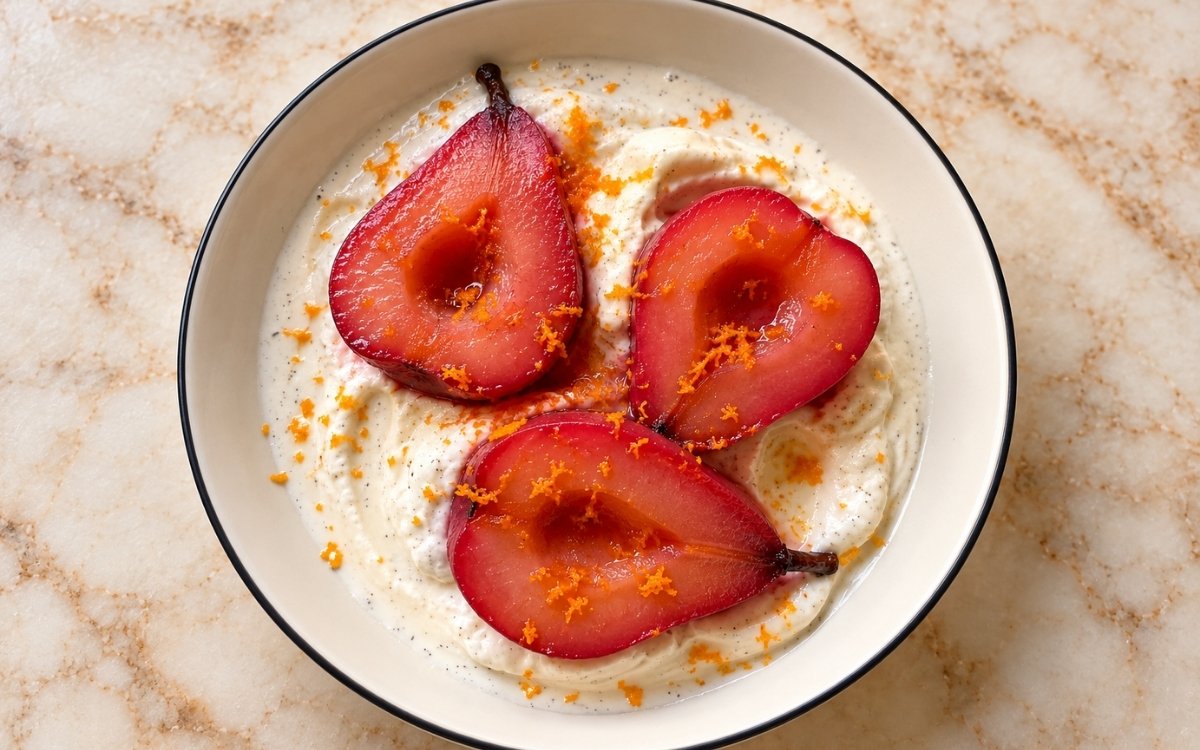
- Remove the pan from the heat and let the pears cool in the poaching liquid. For the best colour, transfer the pears and liquid to a container and chill for at least 1 hour, ideally 3–4 hours or overnight. This resting step is what gives the pears that deeper magenta-pink staining and slight colour gradient from edge to centre. That extended cooling period, still fully submerged in the pigmented liquid, gives the hibiscus dye real, continued time to penetrate deeper into the fruit's own flesh, well beyond what the active poaching stage alone could achieve.
Reduce the Syrup
- Lift the pears out carefully and set aside. Strain the poaching liquid, discarding the solids, then return the liquid to the pan. Simmer until reduced to a lightly syrupy consistency, usually 10–15 minutes. It should coat the back of a spoon lightly, not become sticky like caramel. Cool the syrup. The reduced syrup should remain bright and glossy, not dull or over-thick. That specific, checkable reduction target protects the finished syrup from crossing into a heavier, caramel-like consistency — reduced past that point, it would lose exactly the bright, glossy quality that pairs so well with the pears and ice cream.
Plate the Dessert
- For each serving, spoon a generous swirl of vanilla bean ice cream into a wide shallow dessert bowl. Arrange 3 pear halves on top of the ice cream. Spoon over a little hibiscus-orange syrup if using. Finish with a generous scattering of fresh orange zest over the pears and ice cream. Serve immediately so the ice cream softens slightly at the edges but still holds shape. That immediate serving is what captures the intended contrast between the ice cream's own real, cold structure and its slightly softened edges — waiting any longer would let it melt considerably further, losing that specific balance.
Notes
Choosing genuinely firm pears, rather than ripe ones, deserves recognition as the technique most directly responsible for whether this dessert achieves clean, elegant halves. The recipe's own explicit warning that overripe pears "will collapse during poaching instead of holding clean, elegant halves" reflects a real, common failure point — that firmness is the foundational structural quality this whole dish depends on.
Poaching the pears at a genuinely gentle simmer, never a hard boil, deserves the same attention this technique receives throughout this collection's other poached fruit preparations. The recipe's own explicit warning that "a fast boil breaks the fruit and gives ragged edges" reflects real understanding of how directly the poaching liquid's own agitation affects the pears' fragile, softening structure.
Cooling the pears in their own poaching liquid for an extended period deserves genuine respect as the technique responsible for this dessert's whole vivid, characteristic colour. The recipe's own explicit note that this resting step "gives the pears that deeper magenta-pink staining and slight colour gradient" reflects real, continued dye penetration that happens well beyond the active poaching stage alone.
Reducing the finished syrup only to a specific, light consistency, rather than pushing it further, deserves attention as a real, deliberate technique protecting the syrup's own bright, glossy character. Pushed past that point, it would tighten into something closer to caramel, losing exactly the fluid, vibrant quality this dessert's finishing drizzle depends on.