Ingredients
Method
Rinse Rice
- Rinse the 280g brown rice under cold water for about 1 minute, agitating gently with your hand as the water runs through, then drain well in a fine-mesh strainer. Brown rice doesn't carry the same heavy surface starch that white rice does, and it doesn't need the aggressive multi-minute rinse that basmati specifically requires elsewhere in this collection — this shorter rinse is really about removing any dust, husk fragments, or loose bran particles left over from milling, which helps keep the finished rice's flavor clean rather than dulled by residual grit. Take the time to shake the strainer well afterward so you're not carrying excess water into the pan, which would throw off the liquid ratio for the simmer ahead.
Sauté Aromatics
- Warm the 30ml olive oil in a medium saucepan (2.5–3L) over medium heat, letting it come up to temperature gradually rather than rushing this stage. Add the minced garlic and cook for about 30 seconds until fragrant, watching closely to ensure it doesn't brown — bitterness from scorched garlic would carry through the entire pot given how long this rice needs to cook. Once the garlic is fragrant, add the rinsed, drained rice and toast for 2 minutes, stirring frequently so every grain gets coated in the oil and none of them stick to the bottom of the pan. Because brown rice's bran layer is tougher and less porous than milled white rice, this toasting stage won't produce the same visible golden color you'd see with white rice, but it still plays an important role in preventing sticking and giving the oil a chance to coat the grains evenly before any liquid goes in.
Add Liquid and Herbs
- Add the 700ml vegetable stock, 8g salt, 2g black pepper, 1 bay leaf, 8g fresh thyme leaves, and 5g fresh oregano to the pan. Stir once to distribute everything evenly and to scrape up anything that may have started sticking during the toasting stage, then bring the mixture to a full rolling boil over high heat. Introducing the sturdier herbs — thyme and oregano — at this early stage is intentional: both hold their character well under sustained heat, and infusing them throughout the entire cooking process lets their flavor work its way genuinely into the grains themselves rather than sitting only on the surface. Once the pot reaches a full boil, reduce the heat to low and cover tightly with a well-fitting lid.
Simmer Brown Rice
- Simmer for 40–45 minutes without lifting the lid at any point during this window. Brown rice's intact bran layer significantly slows the rate at which the grains absorb liquid compared to milled white rice, which is exactly why this simmering time runs nearly three times longer than the white rice preparations elsewhere in this collection — rushing this stage or checking too frequently disrupts the steady, gradual absorption process the grain specifically needs. At around the 40-minute mark, you can do a single, fast peek to check one grain for doneness — it should be tender with a slight, pleasant chew rather than a hard, chalky center. If the rice isn't quite there yet, replace the lid immediately and continue cooking for another 5 minutes before re-checking, rather than leaving the pot uncovered while you decide.
Finish and Serve
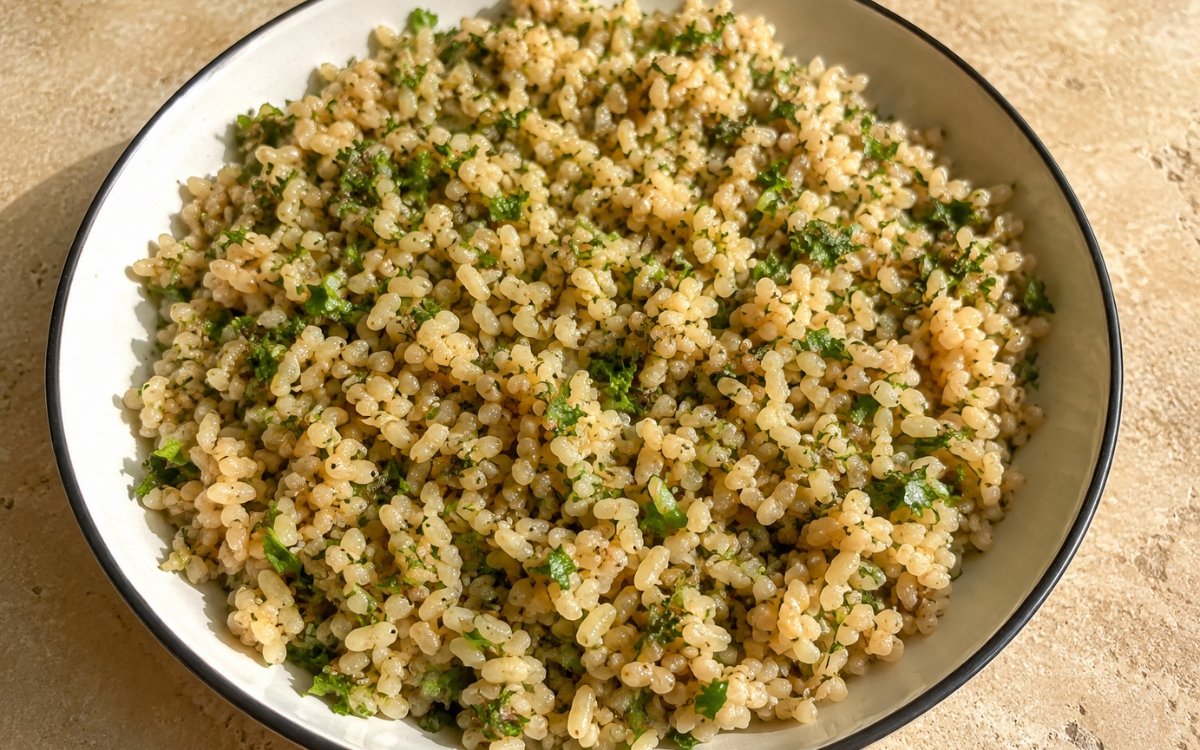
- Remove the pot from heat and let it rest, still covered, for 5 minutes. This brief rest allows any remaining trapped steam to finish softening the grains gently before you disturb them. Remove and discard the bay leaf, then fluff the rice gently with a fork to separate the grains without crushing them. Stir in the 15g fresh parsley at this stage, once the rice is off the heat entirely, so its bright, fresh character stays intact rather than wilting into the hot grains the way it would if added earlier. Taste and adjust the seasoning if needed — brown rice often needs a final salt check, since its denser structure and longer cooking time can leave the seasoning tasting slightly more muted than it would in a quicker-cooking white rice.
Notes
Splitting the herbs across two distinct stages is the defining technique in this recipe. Thyme and oregano are sturdy enough to hold their character through nearly 45 minutes of simmering, and introducing them at the very start lets their flavor genuinely infuse into the rice itself rather than sitting only as a surface garnish. Parsley, by contrast, is far more delicate and would wilt into a dull, muddy flavor if subjected to that same extended heat, which is why it's reserved entirely for the very end.
Brown rice's significantly longer cooking time compared to white rice is a genuine structural difference rather than an arbitrary variation between recipes. The bran layer that gives brown rice its characteristic nutty flavor and additional nutrition also acts as a barrier that slows water absorption considerably, and there's no way to meaningfully shortcut that process without sacrificing texture.
The final taste-and-adjust step for salt matters more here than in most other rice preparations in this collection, since brown rice's denser structure and much longer cooking time can leave seasoning tasting somewhat more muted by the time everything is finished, even when the same proportional amount of salt has been used throughout.