Ingredients
Method
Cook the Rice
- Rinse the 300g of rice under cold running water, swishing it with your fingers, until the water runs mostly clear, then drain well. Combine the rice with the 360ml of water and a pinch of salt in a pot or rice cooker. In a pot, bring to a boil, cover tightly, and cook on low for about 12 minutes until the water is absorbed and the grains are tender, or follow your rice cooker. Rest covered for 10 minutes, then fluff with a fork and keep warm. That covered rest is what lets the grains finish steaming evenly, so they stay fluffy and distinct enough to absorb sauce without turning wet or mushy.
Prepare the Chicken
- Pat the 1.1–1.2kg of chicken thighs thoroughly dry with paper towels, then trim away any excess loose fat, taking care not to over-trim since some fat keeps the meat juicy. Season lightly with the ½ tsp of kosher salt and ¼ tsp of black pepper, only enough to flavour the surface. If time allows, let the seasoned chicken sit in the refrigerator for 20–30 minutes, which is the optional marinating time in the time line. That light seasoning is what leaves room for the soy sauce, which is already the main seasoning in the pan, to do its work without making the dish too salty.
Build the Braising Liquid
- In a bowl or measuring jug, combine the 180ml of soy sauce, 180ml of water, 70g of brown sugar, 2 tbsp of mirin, and the sake and oyster sauce if using. Stir for about a minute until the sugar is mostly dissolved and the liquid looks uniform and dark. Taste it: it should seem strongly seasoned, salty-sweet, and a little intense. If it tastes only pleasantly balanced now, it will be bland once the chicken, onion, and rice absorb it. That deliberately bold seasoning is what allows the sauce to mellow into the right strength as it cooks.
Start the Chicken and Aromatics
- Set a wide skillet, sauté pan, or shallow pot over medium heat and add the 1 tsp of oil only if the pan needs it. For skin-on thighs, lay them skin-side down and cook for 3–4 minutes, just until the skin turns lightly golden, then turn once. Scatter the sliced onion, ginger, and garlic around the chicken and cook for 1–2 minutes until fragrant but not deeply browned. This is a braise, not a crust-focused dish, so stop well before hard colour develops. That restraint is what keeps the garlic sweet instead of bitter and the sauce clean.
Braise in the Shoyu Sauce
- Pour the shoyu sauce mixture over the chicken and aromatics and bring it to a gentle simmer, with only small bubbles breaking the surface, never a rapid boil. Cover the pan partially and simmer for 20–25 minutes, turning the chicken once or twice, until the thighs are tender and cooked through. Check that the thickest piece reads at least 74°C / 165°F. If the liquid reduces too fast before the chicken is done, add a small splash of water. That steady, quiet simmer is what keeps the meat tender and the sauce glossy.
Reduce and Glaze
- Remove the lid and let the sauce reduce for the final 5–8 minutes, spooning it over the chicken now and then, until it lightly coats the chicken and onions and the onions look soft and silky. For a thicker bowl-style glaze, stir the 2 tsp of cornstarch into the 2 tbsp of cold water until smooth, then add a little at a time while the sauce simmers, until it turns glossy and lightly clingy. The sauce should stay fluid and pourable, never gummy or gravy-thick. That careful reduction is what gives a sauce that coats the chicken yet still soaks into the rice.
Rest and Assemble
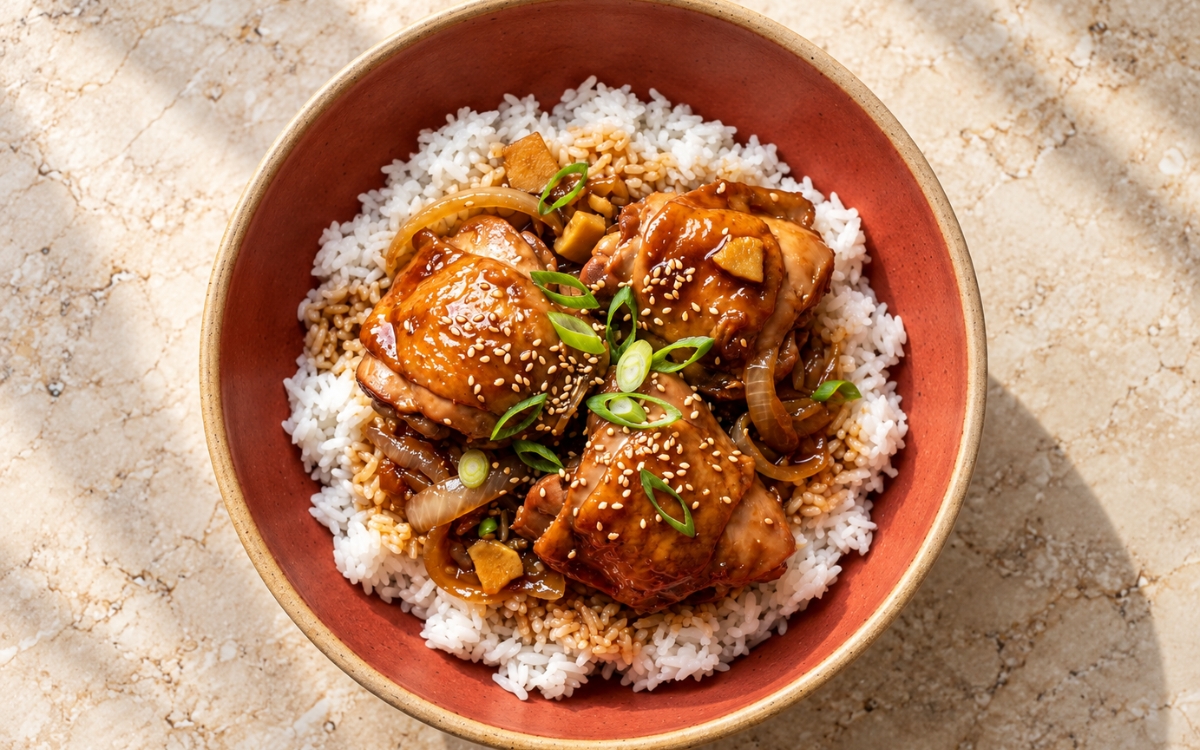
- Lift the chicken from the pan and rest it for 3–5 minutes, then leave the thighs whole or cut them into large serving pieces. Divide the warm rice among 4 bowls and spoon the softened onions and a little sauce over the rice first. Top each bowl with chicken, then spoon more sauce over the chicken and rice, leaving some white grains visible rather than drowning the bowl. Finish with the sliced scallions and toasted sesame seeds, kept light and functional. That sauce-first layering is what gives the bowl its soaked, comforting look from the very first bite.
Notes
Holding the braise at a gentle simmer deserves genuine recognition as the technique most directly responsible for whether the chicken turns out tender or tough. A rapid boil tightens the muscle fibres and drives off liquid before the connective tissue has softened, whereas small, steady bubbles let the thighs cook through slowly while the sauce stays glossy instead of scorched.
Choosing thighs over breast deserves the same attention this technique receives throughout this collection’s other braised dishes, because dark meat carries far more fat and collagen. Over 20–25 minutes in the pan those elements melt into the sauce and keep the meat juicy, while breast meat would dry out and turn stringy long before the sauce was ready.
Keeping the salt centred on the soy sauce deserves genuine respect as the detail most directly responsible for a bowl that tastes savoury rather than harsh. Because the soy already supplies most of the seasoning, a heavy hand on the chicken or an extra pinch in the sauce would push the reduced result past the point of balance, with no easy way to dilute it.
The 74°C / 165°F reading deserves attention as a genuine, checkable doneness cue rather than a guess from colour or cooking time alone. Braised thighs can look fully cooked well before they are safe and tender, and measuring the thickest piece before the final reduction tells you whether to keep simmering, so the chicken is never served undercooked or overcooked.