Ingredients
Method
Choose the Right Harissa
- Harissa is a North African chili paste made from roasted peppers, dried chilies, garlic, and warm spices such as cumin and coriander. Styles vary widely. Rose harissa is more floral and refined, pairing especially well with yogurt, while standard harissa is typically hotter and more direct. Because brands differ in intensity, taste yours first — begin with about 20 g and increase gradually if you want more heat or depth.
Combine Yogurt and Aromatics
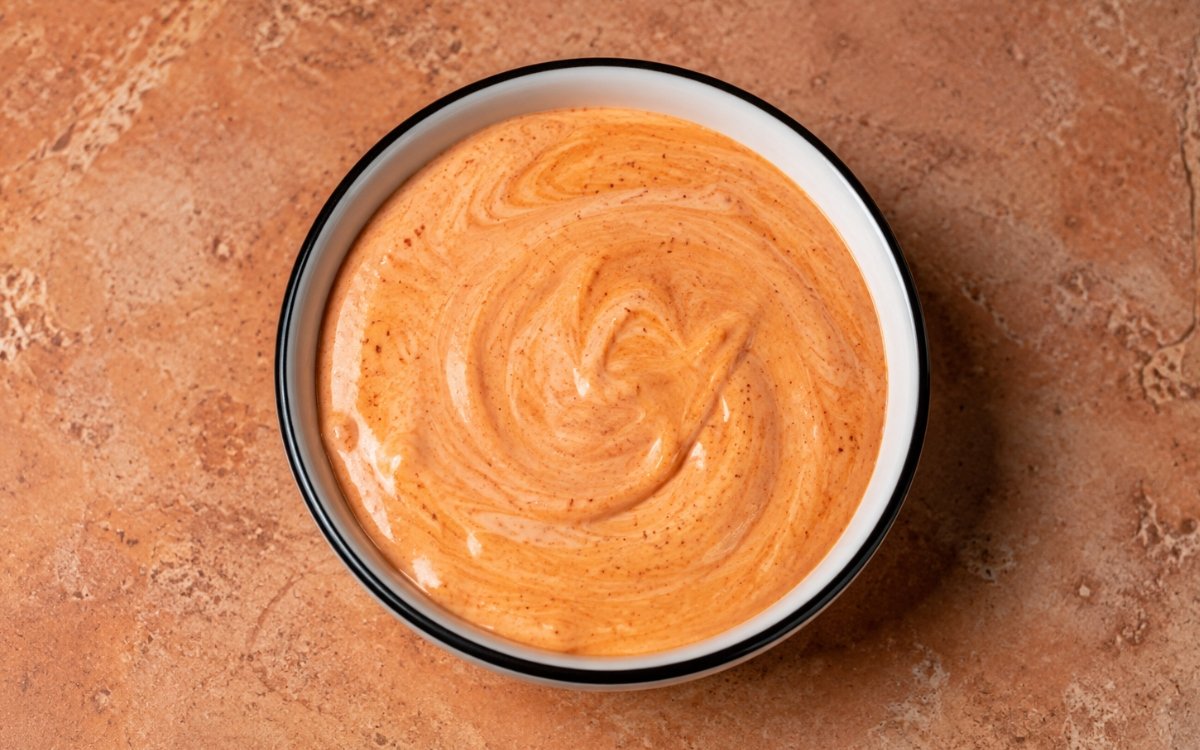
- In a medium bowl, mix the Greek yogurt with the harissa paste and finely grated garlic. Grating ensures the garlic dissolves evenly into the sauce rather than leaving sharp raw pockets. Stir until the base looks fully blended and lightly tinted from the harissa.
Reinforce the Spice Profile
- Add the ground cumin, ground coriander, and smoked paprika. These spices deepen and round the harissa’s flavor so it tastes layered rather than one-dimensional. Cumin contributes earthy warmth, coriander adds subtle citrus-floral notes, and smoked paprika brings gentle depth. Stir thoroughly to distribute the spices evenly.
Brighten with Lemon
- Add both the fresh lemon juice and zest. The juice supplies essential acidity that lifts the richness of the yogurt and the oiliness of the harissa, while the zest contributes aromatic citrus oils that enhance the sauce’s fragrance — especially noticeable when using rose harissa.
Fold in Fresh Herbs and Rest
- Gently fold in the finely chopped fresh coriander and mint. Coriander complements the North African spice profile naturally, while mint adds cooling contrast to the chili heat. Season with salt and freshly ground black pepper. Refrigerate for about 15 minutes before serving to allow the flavors to meld and settle into a more cohesive sauce.
Notes
The structural brilliance of this sauce is the temperature contrast it creates in the mouth — harissa's building chili heat paired with yogurt's cool, creamy dairy produces a sensation of simultaneous warming and cooling that is both exciting and balanced. This is the same principle that makes Indian raita paired with spicy curry so satisfying: dairy proteins and fat bind with capsaicin molecules, physically moderating the perception of heat while the chili's flavor compounds remain fully present.
Harissa is native to Maghrebi cuisine — the North African region comprising Tunisia, Algeria, Morocco, and Libya — and is one of the foundational condiments of these culinary traditions in the way that sriracha is to Southeast Asian cooking or gochujang is to Korean. Understanding its origin and intended pairings helps calibrate how to use it: it is most at home with lamb, couscous, chickpeas, roasted root vegetables, and flatbread.
Full-fat Greek yogurt is non-negotiable for this sauce. Low-fat yogurt is too thin and too sour — it lacks the creamy richness necessary to tame and balance harissa's heat. Full-fat yogurt provides the fat content that makes the cooling effect physiologically effective, since capsaicin (the heat compound in chili) is fat-soluble and is physically neutralized by the fat in dairy.