Ingredients
Method
Roast the Chickpeas
- Preheat the oven to 220°C (425°F). Drain the canned chickpeas thoroughly and spread them on a clean kitchen towel or multiple layers of paper towels. Pat the surface of every chickpea firmly and repeatedly — this drying step is the single most important factor in achieving genuinely crispy roasted chickpeas rather than ones that are soft and chewy at the center with merely a dried exterior. Moisture trapped inside the chickpea creates steam during roasting that prevents the outer shell from crisping. Allow them to dry for a full 5 minutes after patting. Transfer to a large bowl and toss with olive oil, smoked paprika, ground cumin, and salt, ensuring every chickpea is evenly coated. Spread on a rimmed baking sheet in a single layer with space between each chickpea — crowding causes steaming rather than roasting. Roast for 20–25 minutes, shaking the pan once halfway through to ensure even browning on all sides, until the chickpeas are golden, deeply colored, and audibly crisp when you shake the tray. They will crisp further as they cool. Set aside at room temperature — do not cover, as trapping steam will immediately soften them.
Cook the Lemon-Herb Quinoa
- While the chickpeas roast, rinse the quinoa thoroughly under cold running water in a fine mesh strainer for at least 60 seconds, working the grains with your fingers. Quinoa has a natural coating of saponins — mildly bitter, soapy compounds that the plant produces as a pest deterrent. Rinsing removes them and is the reason that properly rinsed quinoa tastes clean and nutty while unrinsed quinoa tastes bitter and slightly soapy. In a medium saucepan, combine the rinsed quinoa, water, and salt. Bring to a boil over high heat, then reduce to the lowest possible heat, cover tightly, and simmer for 15 minutes until all the water is absorbed and you can see the characteristic spiral germ detaching from each grain — this visible separation is the visual sign that quinoa is correctly cooked. Remove from heat and rest covered for 5 minutes. Fluff with a fork using gentle, lifting strokes. Fold in the lemon zest, fresh lemon juice, and chopped parsley immediately while the quinoa is still warm — warm quinoa absorbs the lemon and herb flavors more readily than cold, and the residual heat wilts the parsley just enough to release its aromatic oils without cooking it. Keep covered and warm.
Prepare the Vegetables
- Preheat your grill or grill pan to medium-high heat — hot enough to develop char marks and char-caramelised surfaces but not so hot that the vegetables burn on the outside before cooking through to the center. Cut the zucchini into 1cm thick rounds or lengthwise slices — rounds are easier to manage on a grill pan while lengthwise slices produce a more dramatic visual presentation. Cut the eggplant into 1cm thick rounds — eggplant at this thickness cooks through to a soft, yielding interior while the outside develops char. Cut the red and yellow bell peppers into wide strips — wide enough to lie flat on the grill surface. Halve the red onion through the root and cut each half into thick wedges, keeping the root intact to hold the layers together during grilling. Brush all vegetables generously and thoroughly with olive oil on all surfaces. The olive oil has two roles: it prevents sticking to the grill surface and it conducts heat evenly across the cut surfaces to promote even caramelisation. Season all surfaces with salt and freshly ground black pepper. Organize the vegetables by cooking time — peppers and zucchini are fastest, eggplant takes longer, onion is in between.
Grill the Vegetables
- Grill in batches, placing each type of vegetable separately so you can manage their different cooking times accurately. Lay each piece flat on the hot grill surface and leave undisturbed for 3–4 minutes — the char marks form only where the vegetable maintains direct, uninterrupted contact with the grill grates or grill pan surface. Moving them before the char has set disrupts the caramelisation and produces pale, unmarked vegetables that lack the smoky sweetness that defines this bowl's character. Flip once, cook for another 3–4 minutes on the second side, and transfer to a serving platter as each batch finishes. Eggplant requires the full 4 minutes per side to cook through completely — undercooked eggplant has an unpleasant, spongy texture. Peppers and zucchini may be ready in 3 minutes per side. While the vegetables are still hot, drizzle them with the balsamic vinegar and allow it to soak in for at least 10 minutes before assembly if time permits — the residual heat opens the surface of the vegetables and allows the balsamic's sweet-acidic depth to penetrate rather than simply coat the surface.
Make the Tahini-Yogurt Sauce
- In a medium bowl, combine the tahini paste and Greek yogurt. Whisk them together first before adding any other liquid — at this stage the mixture will be very thick and slightly grainy as the tahini's dense fat-protein structure meets the yogurt's proteins. Add the lemon juice and minced garlic and whisk to incorporate. Now begin adding the cold water in small increments — 15ml at a time — whisking vigorously after each addition. As the water is incorporated, the sauce will transform from thick and clumped to smooth, creamy, and pourable. Cold water specifically is important: warm water can cause the tahini to seize rather than emulsify. The amount of water needed depends on the specific tahini brand — thicker tahini needs more water, thinner tahini needs less. The target consistency is pourable but substantial — it should coat a spoon and flow in a steady ribbon when drizzled rather than running thin as water. Taste and season with salt. The finished sauce should taste nutty, tangy from both the tahini and the yogurt, bright from the lemon, and garlicky with a mellow savory warmth.
Assemble the Bowls
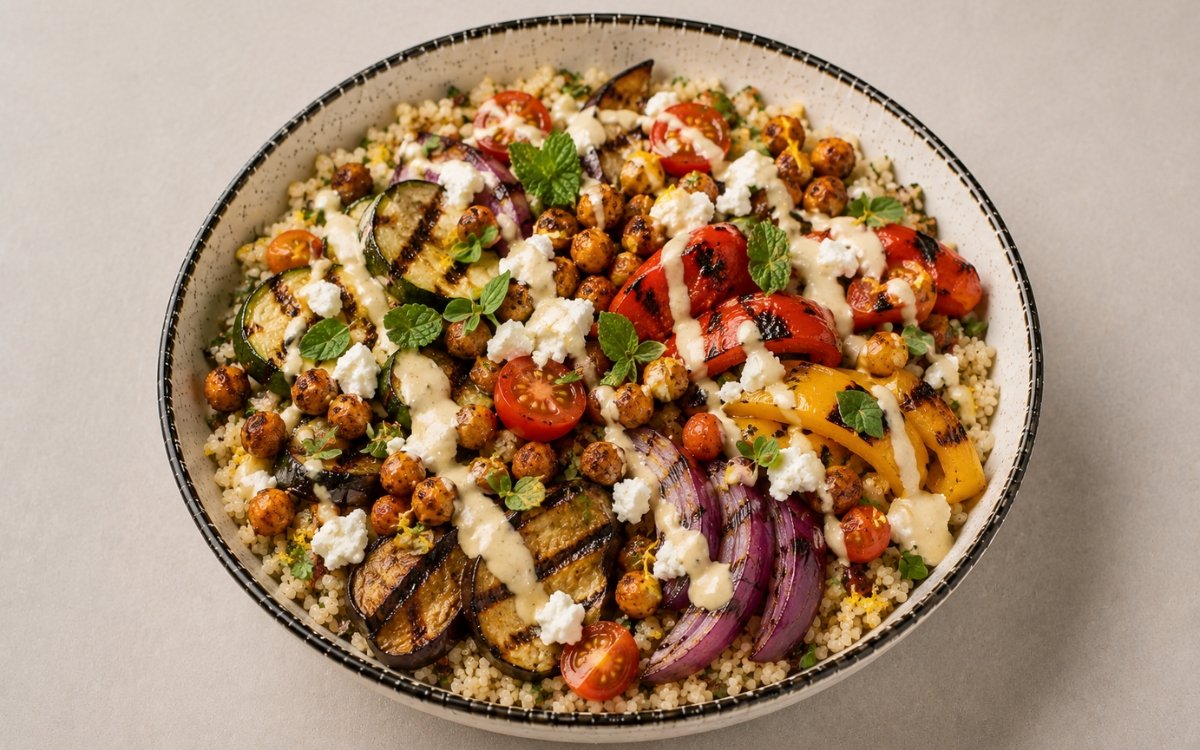
- Divide the warm lemon-herb quinoa among four wide, shallow bowls — the wide, shallow format allows all components to be visible simultaneously rather than buried under each other. Arrange the grilled vegetables over the quinoa in an attractive composition — vary colors and shapes intentionally, placing contrasting colors adjacent to each other. Add the halved cherry tomatoes in a section alongside the vegetables. Scatter the crumbled feta directly over the vegetables and tomatoes — its creamy, salty character is most effective when it makes contact with the warm vegetables and begins to soften very slightly. Add a generous portion of the roasted chickpeas across the bowl — distribute them evenly so every portion has the same crunch. Drizzle the tahini-yogurt sauce generously over the entire surface, allowing it to pool into the quinoa and coat the vegetables. Scatter the torn fresh mint and oregano leaves across the top — these fresh herbs are not garnish but essential flavor components that provide the clean, aromatic top note the bowl needs. Finish with a light drizzle of extra-virgin olive oil over everything. Serve immediately.
Notes
Eggplant requires specific attention in this recipe because it is the vegetable most often mishandled on a grill. Its high water content and dense, porous flesh mean it needs full cooking time to reach the soft, yielding, almost creamy interior texture that makes grilled eggplant exceptional. Undercooked eggplant is spongy and bitter — an unpleasant texture that no seasoning can improve. The 1cm thickness specified is important: thinner slices cook too quickly and dry out before the interior softens; thicker slices can char heavily on the outside before the center reaches the correct texture. A properly grilled eggplant round should be completely soft when pressed gently, with visible char marks on both sides and a rich, slightly smoky flavor.
The chickpea drying step deserves emphasis because it is consistently underestimated. Truly crispy chickpeas require the moisture to escape from inside the bean during roasting, and if the outside is even slightly wet when it hits the oven, the moisture creates a steam barrier that prevents the outer shell from ever crisping properly. Spending 5 minutes ensuring the chickpeas are genuinely dry is what separates properly crispy chickpeas from the soft, disappointing versions that discourage people from making them again.
Balsamic vinegar drizzled while the vegetables are hot is not interchangeable with balsamic added cold before cooking or after cooling. Hot vegetable surfaces are porous and actively absorbing — the balsamic penetrates into the flesh and melds with the caramelised sugars on the surface, creating a sweet, tangy, slightly complex glaze rather than a surface coating. This technique produces depth in the vegetables that transforms them from simply charred and oiled to genuinely complex in flavor.