Ingredients
Method
Make and Taste the Marinade
- Add the roughly chopped white onion, 5 garlic cloves, lemon juice, 2 tbsp of olive oil, and 1–2 tbsp of water to a food processor. Blend until completely smooth — no visible onion pieces or garlic chunks remaining. The complete blending is the technique step that distinguishes this marinade from a simply mixed herb-and-spice marinade: the blended onion's cell walls are fully broken down, releasing its juice, its volatile sulfur compounds, and its natural enzymes — including protease enzymes that mildly tenderise the lamb's outer layer during the marinating period. Large onion pieces in a marinade sit against the meat's surface rather than penetrating it; completely blended onion distributes its compounds through the entire liquid and contacts every part of every meat surface evenly. Add the 2 tsp of cumin, 1 tsp of paprika, 1 tsp of za'atar, ½ tsp of cinnamon, pinch of cloves, 10–12g of fine sea salt, and black pepper to the food processor. Blend again until fully incorporated and uniform. Taste the marinade before adding the lamb. It should taste aggressively seasoned — noticeably saltier than food you would want to eat directly, acidic from the lemon, warmly spiced from the cumin and cinnamon, and slightly unpleasant in its concentration. This is correct and intentional. When the lamb is added, the marinade's volume is distributed across 800g of meat surface area, and most of it will remain in the bowl rather than adhering. A marinade that tastes pleasantly seasoned before the meat is added produces bland, under-seasoned kebabs after the meat absorbs only a fraction of the available seasoning. If the marinade tastes aggressively correct, the kebabs will emerge from the grill properly seasoned throughout.
Prepare and Marinate the Lamb
- Trim the 800g of lamb shoulder of any excess silverskin — the white, opaque, tough connective tissue on the meat's exterior that does not render during cooking and remains chewy regardless of internal temperature — and hard pieces of connective tissue visible in the cut. Do not remove all fat; the lamb shoulder's intramuscular fat and the natural fat caps are what keep each cube moist and juicy through the high-heat grill. Cut the trimmed lamb into 3cm cube-like pieces — uniform enough to cook at a consistent rate on the skewer, but not perfectly geometric. Add the lamb pieces to a large bowl and pour the marinade over. Mix thoroughly with your hands, turning and pressing each piece to ensure complete, even coating on every surface. Cover tightly with plastic wrap and refrigerate for a minimum of 90 minutes. Do not marinate overnight — this is the critical time constraint for this specific marinade. The lemon juice's acid that begins tenderising the lamb's surface proteins within the first 90 minutes does not stop after that point. Extended marinating beyond 4 hours — and especially overnight — causes the acid to progressively denature the surface proteins further, producing a mushy, slightly textureless exterior that loses the specific pleasant chew of properly grilled lamb. The 90-minute-to-4-hour window is the range where the tenderising and flavour penetration are at their benefit without the texture degradation that extended acid contact produces.
Prepare the Vegetables
- Cut the 2 green bell peppers into 3–4cm square pieces — roughly matching the size of the lamb cubes so every component on the skewer cooks at a comparable rate. Cherry tomatoes are threaded whole. If the cherry tomatoes are very small, thread two per section between lamb pieces; if large, one is sufficient. Have everything organised at room temperature before threading — cold vegetables from the refrigerator produce a temperature differential on the skewer that slows the cooking of the lamb pieces adjacent to them.
Thread the Skewers
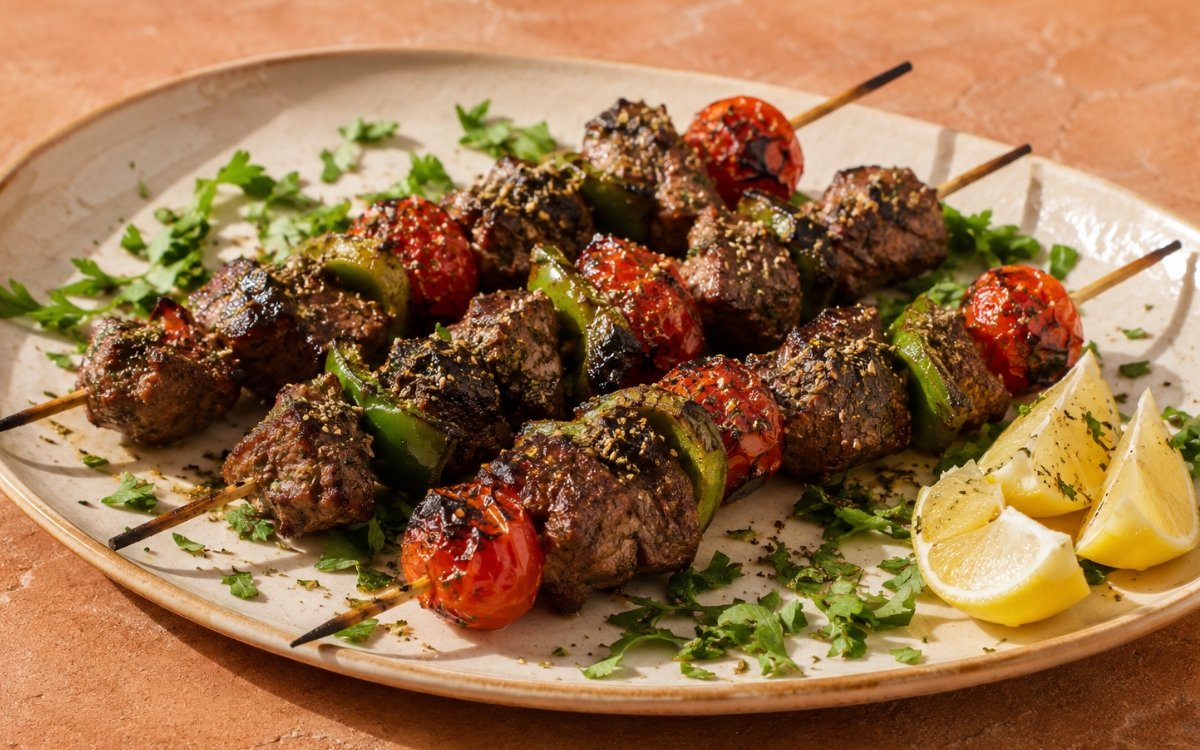
- Thread each skewer in an alternating sequence — lamb, pepper, tomato, lamb, pepper, tomato — for the length of the skewer, ending approximately 2cm from the tip. The alternating sequence serves both flavour and cooking purposes: the pepper and tomato pieces provide moisture and their own juices during grilling, which self-baste the adjacent lamb as the heat builds. The arrangement also ensures visual variety in every skewer. Leave small visible gaps between each piece rather than packing tightly — the gaps allow heat to circulate along the skewer's full length and permit each piece's exposed surfaces to develop char rather than steaming against the adjacent piece in the manner of a tightly packed skewer.
Grill Over High Heat
- For best flavour, grill over a properly preheated charcoal grill, wood fire, or gas grill. The smoke compounds produced by fat and juice dripping onto the hot coals produce the specific aromatic depth — the slight smokiness and char character — that oven or pan cooking cannot replicate and that is the defining flavour note of grilled kebabs. Preheat the grill thoroughly to high — the grate should be genuinely hot before any skewer touches it. Place the skewers on the grill. Rotate every 2–3 minutes, turning to expose each face of each lamb piece to the direct heat rather than leaving one side in contact throughout. Grill for 10–14 minutes total depending on heat intensity and cube size, until the lamb develops deep, slightly blackened charred edges on multiple surfaces while the interior remains juicy and slightly pink at medium doneness. The cherry tomatoes should blister and burst slightly, releasing their sweet juice; the peppers should develop char marks at their edges while retaining some structure rather than completely collapsing. For doneness, use an instant-read thermometer: 60–63°C for medium — slightly pink throughout, juicy and yielding; 65–68°C for medium-well — mostly cooked through with a small pink zone at the centre. Lamb shoulder's fat and connective tissue content specifically supports medium-well cooking better than leaner cuts — the fat and collagen remain in the meat and keep it moist at higher temperatures where lean leg meat would be dry.
- Indoor Alternative — Cast Iron Sear: Heat a cast iron pan or heavy stainless steel skillet over the highest available heat for 3–4 minutes until smoking. Add a high-smoke-point oil — avocado or refined sunflower. Sear the skewers in batches of 3–4, rotating every 60–90 seconds, for 10–12 minutes total until charred on multiple sides. Do not crowd — crowded skewers steam each other rather than charring.
Rest, Finish, and Serve
- Transfer the finished skewers to a plate and rest for 5 minutes — allowing the juices driven to the meat's surface by the grill's heat to redistribute through each piece before serving. Sprinkle generously with extra za'atar. Scatter fresh flat-leaf parsley over the skewers. Place lemon wedges alongside. Serve alongside warm Homemade Pita Flatbread, Homemade Lavash Flatbread, Toum, or Authentic Tzatziki.
Notes
Lamb shoulder is the specifically correct cut for kebabs rather than leg or loin for the combination of fat marbling, connective tissue, and flavour intensity that high-heat grilling requires. Lean cuts — leg, loin — lose moisture rapidly when seared at grill temperature and produce dry, slightly tough kebabs within the 10–14 minute cooking window. Shoulder's intramuscular fat renders progressively during grilling, self-basting the meat from within and keeping each cube juicy throughout. Its connective tissue — collagen-rich but in smaller concentrations than a slow-braise cut — contributes to the meat's specific richness at the eating texture rather than requiring long cooking to dissolve.
Za'atar appears in this recipe at two stages: in the marinade and as a finishing sprinkle after grilling. Both applications are intentional and produce different results. Za'atar in the marinade contributes its thyme-oregano-sesame-sumac character to the meat's surface during the marinating period — blooming into the lemon and olive oil. Za'atar sprinkled after grilling retains its volatile aromatic compounds fully, providing the fresh, herbal, slightly toasted-sesame aroma that cooked za'atar cannot provide.