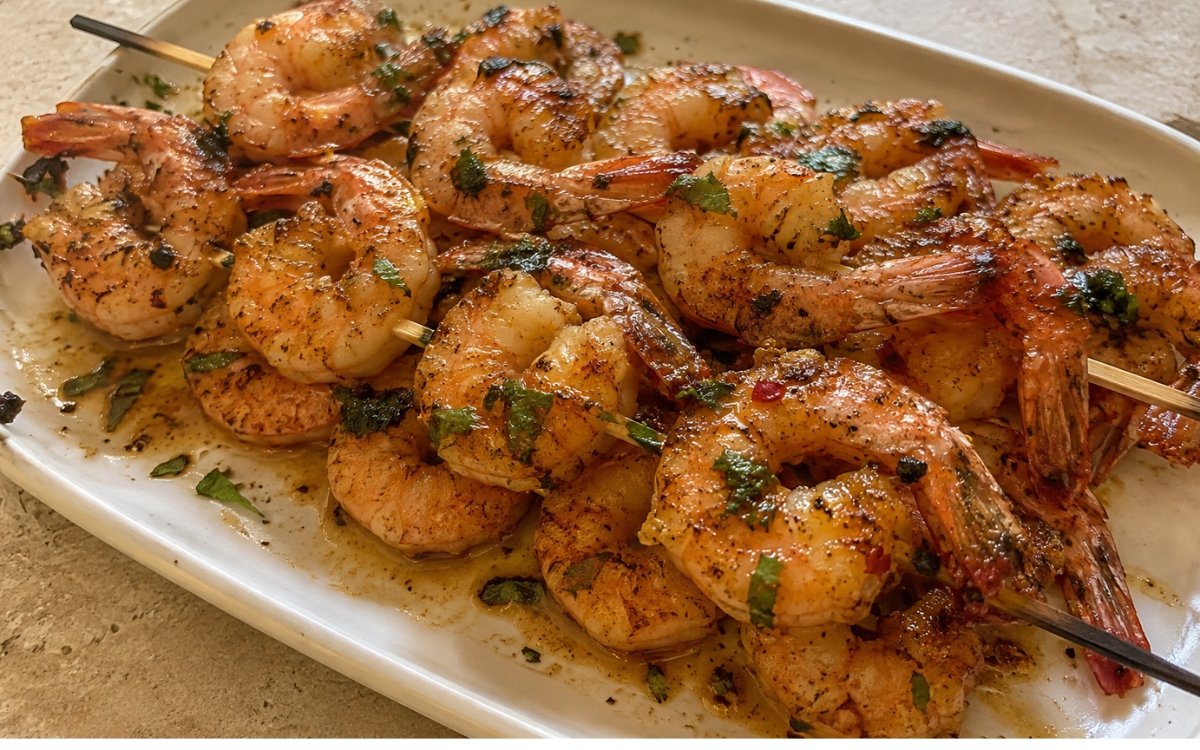
Ingredients
Method
Make the Garlic Butter
- Combine 80g melted butter, 8 minced garlic cloves, 30ml olive oil, 30ml lemon juice, 30g chopped parsley, 10g salt, 4g black pepper, 3g smoked paprika, and 2g red pepper flakes in a bowl, whisking until well blended.
Marinate the Shrimp
- Reserve half the garlic butter mixture in a separate bowl for basting. Toss 700g shrimp with the remaining half of the garlic butter until evenly coated. Cover and marinate in the refrigerator for 30 minutes.
Thread the Skewers
- Thread marinated shrimp onto skewers, piercing through both the tail end and the thick head end so each shrimp lies flat and won't spin during grilling. If using wooden skewers, ensure they've been soaked in water for 30 minutes.
Preheat the Grill
- Preheat your grill to high heat, ensuring the grates are clean and lightly oiled to prevent sticking.
Grill the Shrimp
- Place shrimp skewers on the hot grill and cook for 2-3 minutes per side until the shrimp turn pink and develop slight char marks. Baste generously with the reserved garlic butter while grilling.
Finish and Serve
- Remove skewers from the grill immediately when shrimp are completely opaque throughout—they overcook quickly and can become rubbery. Drizzle any remaining garlic butter over the skewers before serving hot.
Notes
Splitting the garlic butter into marinade and basting portions is a deliberate structural decision rather than a convenience measure. The marinade portion sets an initial flavor base during the short marinating window, while the reserved basting portion introduces genuinely fresh fat and aromatics during cooking — using only one batch for both roles would mean basting with butter that's already spent much of its potency sitting on raw shrimp.
The strict 30-minute marinating limit exists because shrimp's protein structure reacts to acid very differently than beef or pork does. Lemon juice's citric acid begins actively breaking down the shrimp's proteins well before the 30-minute mark is reached, and pushing that time longer doesn't add flavor depth so much as it compromises the shrimp's firm, snappy texture.
The shape test at the end of cooking — a loose "C" versus a tight "O" — is a genuinely reliable visual indicator of doneness that requires no thermometer. Shrimp curl progressively as they cook, and that curl is a direct, visible signal of how far along the cooking process has gone.