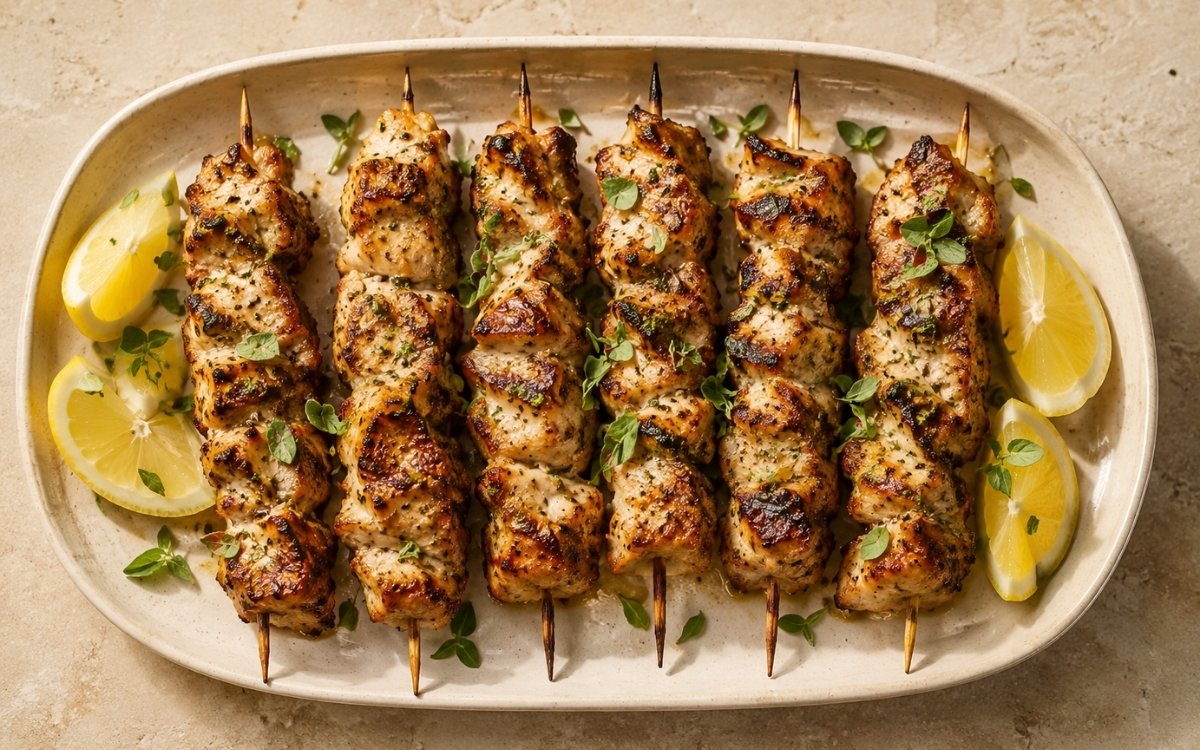
Ingredients
Method
Build the Marinade Blend
- This marinade is built in two stages — a blended herb-spice paste first, then a full marinade assembled in a bowl. Start with the blender or food processor: add the fresh sage, mint, thyme, and basil leaves, all the dry spices (smoked paprika, cumin, Za'atar, salt, pepper), the garlic cloves, the olive oil, and 2–3 tablespoons of the Greek yogurt taken from your 200g. The yogurt here serves a purely mechanical purpose — it provides enough moisture and fat to help the blender catch and process the herbs and spices into a smooth, cohesive paste without the mixture constantly riding up the sides. Blend until smooth but stop before it becomes completely uniform — a few small flecks of herb are fine and preferable to over-processing, which heats the herbs and dulls their volatile aromatics. The result should be a thick, intensely green-speckled, deeply fragrant paste.
Assemble the Full Marinade
- In a large bowl, add the remaining Greek yogurt, the fresh lemon juice, and the lemon zest. Spoon the herb-spice paste in and mix thoroughly until everything is fully incorporated into a uniform, aromatic marinade. The yogurt does two things simultaneously in this recipe. As a marinade base, its lactic acid gently tenderizes the chicken's proteins over the marinating period without the harsh denaturing that pure citrus marinades cause with extended time. As a coating, it forms a thin layer on the chicken surface that protects the meat from direct heat during cooking — it chars before the meat does, creating the caramelized, slightly blistered crust characteristic of authentic souvlaki. A marinade built on yogurt is always going to produce more tender, more complexly flavored results than an oil-and-acid marinade alone.
Cut and Marinate the Chicken
- Cut the chicken thighs into approximately 1.5-inch pieces — slightly irregular cubes and flat rectangles are both fine and both authentic to how souvlaki is actually prepared. Thigh meat is forgiving in shape precisely because it is forgiving in cooking. Add the cut chicken to the marinade bowl and mix thoroughly with your hands, pressing the marinade into every surface and ensuring no pieces are left uncoated. Cover the bowl tightly with cling film or transfer everything into a sealed ziplock bag, pressing out any excess air. Refrigerate for a minimum of 2 hours. Overnight is genuinely better — not marginally, but noticeably. After 8 hours, the herb and spice compounds have fully penetrated the meat, the yogurt has done its tenderizing work completely, and the garlic and Za'atar have moved from surface flavors to internal ones.
Prepare Your Cooking Station
- Remove the chicken from the refrigerator while you heat your cooking surface — 15 minutes at room temperature takes the worst of the cold off the meat and helps it cook more evenly. The cooking surface choice matters enormously in this recipe. A charcoal or gas grill is the ideal — open flame and radiant heat produce the char marks and smoke character that define souvlaki at its best. A cast iron grill pan is the best indoor alternative, followed by a carbon steel pan or a heavy cast iron skillet. Whatever you use, the principle is identical: the surface must be screaming hot before the chicken goes on. If it is not hot enough, the yogurt marinade — which contains significant moisture — will cause the chicken to steam in its own liquid rather than sear. Steaming chicken in a pan is how you get grey, dry, flavourless pieces with no crust and no character. Heat the pan for a full 3–4 minutes over high heat. It should be hot enough that a drop of water evaporates instantly on contact.
Skewer and Cook
- Thread the marinated chicken pieces onto stainless steel or wooden skewers — if using wooden skewers, soak them in water for 30 minutes first to prevent charring. Do not pack the pieces too tightly; leave a small gap between each piece so heat circulates around the meat rather than trapping moisture between pieces. If cooking in a pan rather than on skewers, work in batches and do not crowd — overcrowding drops the pan temperature rapidly and immediately turns a searing operation into a steaming one. Cook the first side without moving for 3–4 minutes until a deep golden-brown crust has formed and the meat releases naturally from the surface. Flip and cook the second side for another 3–4 minutes. Chicken thigh is a genuinely forgiving cut — it is difficult to truly dry out — but watch the edges. When the thinnest edges of the pieces start looking very dark and crisp, the meat is at the outer boundary of its ideal window. Pull at that point.
Rest and Serve
- Transfer all cooked skewers to a plate or board and rest for 5 minutes before serving. The rest allows the juices that were driven toward the center during high-heat cooking to redistribute throughout the meat. Serve on the skewers with warm flatbread or pita, tzatziki, and fresh lemon wedges — or slide the meat off the skewers and use it as the protein component of a grain bowl, rice bowl, or salad. This chicken works in every context you put it in.
Notes
Chicken thighs are specified and non-negotiable for this recipe. Chicken breast on skewers dries out quickly at the high heat required to develop proper char, and the lack of fat in breast meat means it has no buffer against over-cooking. Thigh meat has the fat content and connective tissue that keeps it moist under aggressive heat, and it tolerates a wider internal temperature range without deteriorating. Every authentic souvlaki preparation uses thigh. If breast is the only option, reduce cooking time by 1–2 minutes per side and pull at the first sign of golden color.
The overnight marinade is worth planning for. The difference between 2-hour and overnight marinated chicken is substantial enough to be worth building the recipe into your weekly meal prep rhythm — marinate on Sunday evening, cook on Monday. The yogurt's lactic acid works slowly and cumulatively, and the herbs and spices need time to move beyond the surface.
Za'atar in this recipe carries significant flavor weight — it is not a background spice but one of the defining character notes alongside cumin. The specific blend in your Za'atar matters: a good Za'atar should be predominantly dried thyme with sumac's tartness and sesame's nuttiness clearly present. A weak or old Za'atar produces a flat result. Use the best quality you can source.
Do not wipe the excess marinade off the chicken before cooking. The yogurt coating on the surface is precisely what creates the charred, slightly blistered exterior — it burns before the meat does, acting as a sacrificial layer that develops extraordinary flavor while protecting the meat beneath.