Ingredients
Method
Prepare the Grapefruit Pulp
- Section 1 grapefruit, removing all seeds, all tough membranes, and — specifically — all white pith from the segments. The pith note from the recipe brief is precisely correct: grapefruit pith's bitterness is not the clean, specific, characteristically grapefruit bitterness that makes this preparation specifically interesting. The pleasant bitter dimension of grapefruit comes from naringenin in the juice-sac liquid and nootkatone in the aromatic compounds — compounds present in the pulp and peel. Grapefruit pith's limonoid compounds produce a separate, harsher, more specifically unpleasant bitterness that is categorically different from the flavour-defining grapefruit character. Remove every white piece completely. Add the clean grapefruit pulp to the large pitcher and mash gently — enough to release juice and begin breaking down the segment structure. The grapefruit base provides the immediate aromatic and flavour foundation; the sliced grapefruit rounds added in the final build contribute progressive surface aromatic release and visual presence.
Lightly Crush the Rosemary
- Take each rosemary sprig and roll it firmly between the palms for 2–3 seconds — a deliberate pressing motion that releases the aromatic oils from the surface of the leaves without stripping the leaves from the stem or grinding the sprig into pieces. Add the lightly crushed sprigs to the pitcher immediately. The aromatic oils released by the rolling motion — primarily the pleasant 1,8-cineole (eucalyptol) and the lighter α-pinene fractions responsible for rosemary's specifically fresh, clean herbal character — begin infusing into the surrounding medium. The harsher camphor and more resinous compounds require more sustained mechanical disruption or heat to release at significant concentrations; the light roll produces the pleasant fraction ahead of the harsher ones. The rolling technique produces a clearly perceptible aromatic oil release — the hands smell specifically of fresh rosemary immediately after. Add to the pitcher without further handling.
Optional Honey
- Pre-dissolve any honey in warm water. For a true infused water without any sweetness, skip the honey entirely — grapefruit and rosemary is a specifically adult combination that the sweetness of even 15g of honey in 3 litres perceptibly softens toward a more approachable character. The preparation's specific appeal is the combination of grapefruit's clean bittersweetness and rosemary's piney depth at full, unsweetened character.
Build and Infuse
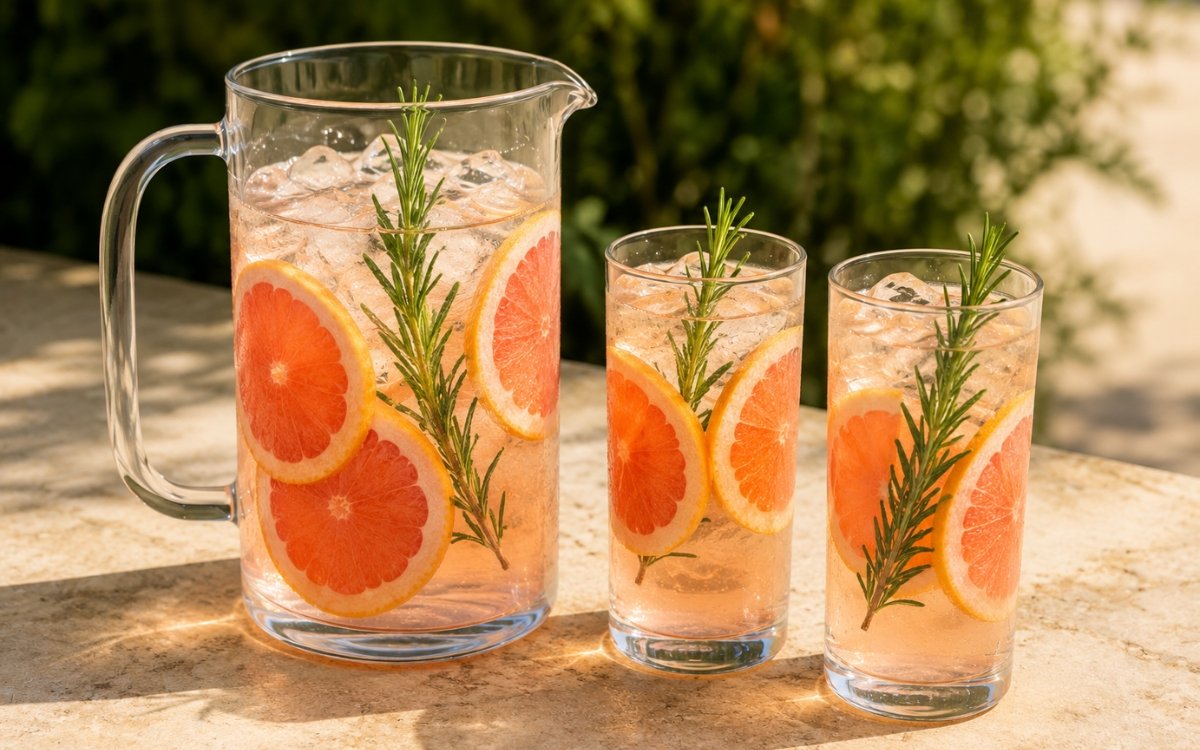
- Pour the 3 litres of ice-cold water into the pitcher. Add the thinly sliced grapefruit rounds — these slices include the white pith as part of the whole-round slice, but at 1–2 hours of contact the pith's limonoid contribution from the sliced surface is minimal and the visual appeal of the whole grapefruit rounds in the pitcher is the primary purpose. At the full 4-hour infusion, the pith in the sliced rounds begins contributing more meaningfully — another reason the 4-hour removal is specifically appropriate. Stir gently once or twice. Cover and refrigerate for 1–4 hours. At 1 hour: a subtle, specifically clean grapefruit brightness with a barely present herbal rosemary note. At 2 hours: both flavours more specifically present. At 4 hours: the maximum of the pleasantly infused range — grapefruit's clean bitter-sweet character and rosemary's piney herbal depth at their most specifically present while both remain refreshing rather than overwhelming. After 4 hours, remove all grapefruit slices and rosemary sprigs. The grapefruit peel's limonoid bitterness accumulates progressively; the rosemary's resinous, camphor-dominant compounds continue extracting toward the pine cleaner character. Always remove both at the 4-hour point. Serve well chilled.
Notes
Grapefruit variety selection produces meaningful differences. Pink grapefruit — the most common commercial variety — has a slightly less bitter, slightly more specifically fragrant character than white grapefruit, with a more vivid colour contribution to the sliced garnish. White grapefruit is the most characteristically bitter and most specifically adult. Ruby Red grapefruit has the highest natural sweetness and the lowest bitterness of the commercially available varieties — the most accessible for those who find grapefruit's bitterness challenging. All three work in this preparation; the choice reflects the desired bitterness level.
Rosemary variety matters less than freshness and handling. Fresh rosemary sprigs from a living plant or recently cut store-bought sprigs are dramatically more aromatic than dried rosemary for this cold-infusion application. Dried rosemary releases its aromatic compounds at a different rate in cold water and produces a more specifically dusty, less fresh character that is less appropriate here. Always fresh rosemary.