Ingredients
Method
Understand the Role of Gochujang
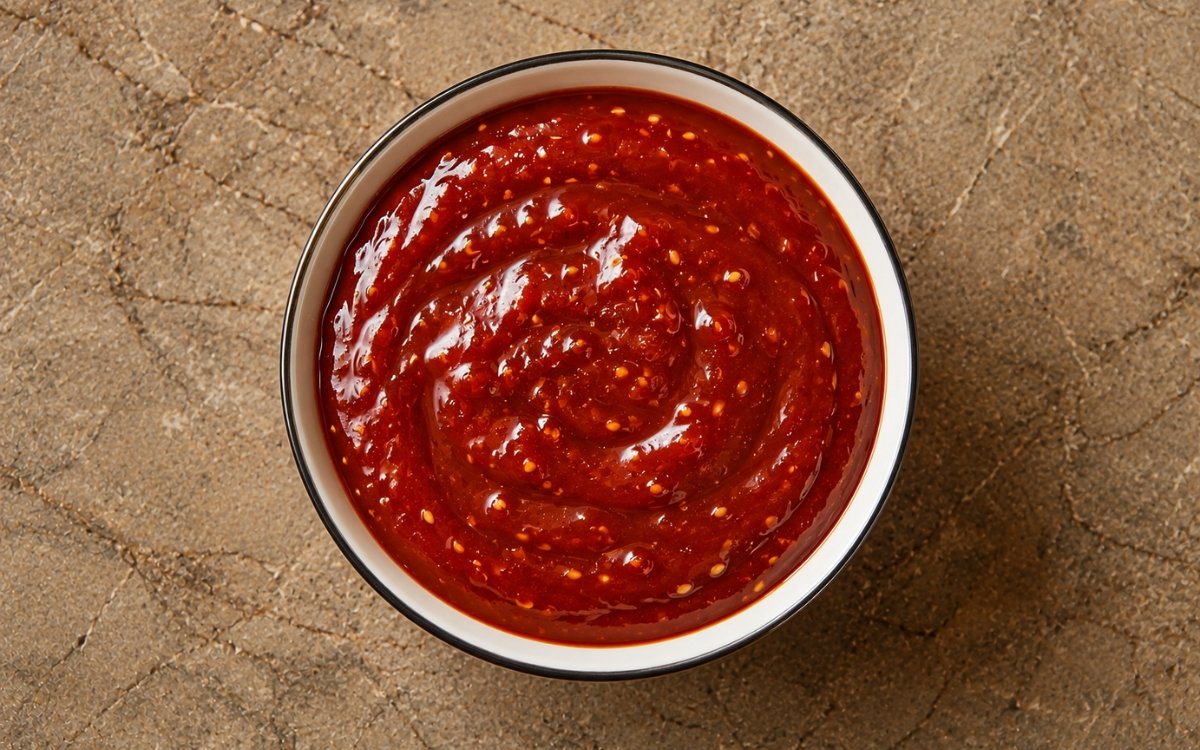
- Gochujang is a Korean fermented chili paste made from dried red chilies, glutinous rice, fermented soybeans, and salt; many commercial brands also contain wheat or barley malt.. Its character is layered — spicy, savory, slightly sweet, and deeply umami from fermentation. Good gochujang is thick, glossy, brick-red, and complex rather than sharply hot or one-dimensional. Choosing a quality Korean brand makes a noticeable difference because the paste itself is the structural backbone of the sauce.
Combine the Base Ingredients
- In a small bowl for a raw sauce — or a saucepan for a cooked glaze — combine the gochujang, honey, soy sauce, rice vinegar, toasted sesame oil, grated garlic, and grated ginger. Whisk thoroughly until completely smooth and uniform with no streaks of paste remaining. At this stage the sauce should already taste bold, intense, and slightly thick.
Optional Warm Reduction for Glazing
- For a glaze that clings better to proteins, place the mixture over medium-low heat and cook for about 3–4 minutes, stirring constantly. The sauce will darken slightly, become glossier, and thicken as moisture evaporates. This gentle reduction deepens the fermented sweetness and improves caramelization when brushed onto chicken, pork, or wings.
Adjust Consistency Gradually
- Add water one tablespoon at a time until the sauce reaches the intended texture. Keep it thicker for dipping or grain bowls; thin it to a pourable consistency for marinades or drizzling. Because gochujang brands vary in thickness, this step ensures predictable results.
Finish, Taste, and Balance
- Stir in toasted sesame seeds just before serving for nuttiness and texture. Taste carefully and adjust: more honey softens heat, more rice vinegar sharpens brightness, and more soy sauce deepens umami and salt. The final profile should feel sweet-spicy-savory and cohesive, with no single element dominating.
Notes
Gochujang's heat level varies significantly between brands and product lines. Some gochujang products are marketed specifically as 'mild', 'medium', or 'hot', and within these categories there is still further variation. A gochujang that seems moderately spicy when sampled straight from the tub will produce a noticeably spicier sauce than expected when combined with only honey and vinegar. Calibrate the quantity to your specific product and heat preference.
Rice vinegar is the correct acidic element in this sauce — its mild, slightly sweet acidity has a natural affinity with fermented Korean ingredients that sharper vinegars like white wine vinegar or apple cider vinegar lack. It brightens without competing. If rice vinegar is unavailable, a small amount of fresh lemon juice is an acceptable substitute that shifts the flavor slightly but maintains the required brightness.
This sauce doubles as an excellent marinade for chicken and pork. Marinate for 2–4 hours in the refrigerator, then grill, bake, or pan-sear. The natural sugars in the honey and gochujang will caramelize beautifully during cooking, creating a lacquered, sticky exterior with remarkable depth of flavor.