Ingredients
Method
Poach the Chicken Gently
- Place the chicken thighs in a saucepan or shallow pot in a single layer if possible. Add the water, sliced ginger, scallion pieces, salt, white pepper, and Shaoxing wine if using. Bring the liquid just to a gentle simmer over medium heat. Do not let it boil hard. Once the liquid reaches a gentle simmer and the chicken turns opaque on the outside, lower the heat so the broth stays at a very gentle poach, around 80–90°C. Poach for 12–18 minutes, depending on thickness, until the chicken is just cooked through. The thickest part should reach about 72–74°C. The meat should feel springy and the juices should run clear, but the chicken must still look juicy, pale, and silky. Turn off the heat, cover, and let the chicken rest in the hot broth for 5 minutes to finish gently and stay moist. Remove the chicken and let it rest. Reserve the poaching broth. For the glossiest skin and cleanest slices, let the chicken cool just enough to handle before slicing. That genuinely gentle poach, held well below a boil throughout, is exactly what protects the chicken's own skin from tightening and roughening — a hard boil would agitate both meat and skin considerably more than this delicate cut and texture can tolerate.
Prepare the Rice
- Rinse the jasmine rice until the water runs almost clear, then drain well. Heat the chicken fat or oil in a saucepan or rice-cooker insert. Add the garlic and minced ginger and cook over medium-low heat for 30–60 seconds until fragrant, without browning. Add the drained rice and stir for 1–2 minutes so every grain is lightly coated in fat. This is a key step for distinct, fragrant rice. Add 450ml strained hot poaching broth and the salt. Cook in a rice cooker or on the stovetop until tender. Once done, rest the rice covered for 10 minutes, then fluff gently. The rice should be aromatic, lightly savory, and separate rather than wet or mushy. Coating every grain in fat before any liquid is added is what lets the rice actually cook up distinct and separate, rather than the grains clumping together the way uncoated rice tends to.
Make the Ginger-Scallion Sauce
- Place the chopped scallions, minced ginger, salt, sugar, and a pinch of white pepper in a heatproof bowl. Heat the neutral oil until shimmering hot, then pour it directly over the scallion-ginger mixture. It should sizzle immediately. Stir well. Add 1–2 tablespoons hot chicken broth to loosen it slightly if needed. The sauce should be glossy, spoonable, and vivid green, with visible minced ginger and scallion suspended in the oil. Add the sesame oil only if using, and keep it light so it does not overpower the clean Hainanese profile. Taste and adjust the salt. The sauce should taste punchy and savory because it seasons both the chicken and the rice. That immediate, audible sizzle when the hot oil hits the raw aromatics is a genuine confirmation the oil is actually hot enough to properly cook and release the ginger and scallion's own flavour, rather than simply warming them through.
Slice the Chicken
- Slice the rested chicken into wide, neat pieces across the grain, keeping the skin attached. If any juices collect while the chicken rests, reserve them and spoon them back over the sliced meat. The chicken should look moist and lightly glossy, not dry or shredded. Slicing specifically across the grain, rather than with it, is what keeps every piece genuinely tender to bite through, cutting across the meat's own muscle fibers rather than leaving them intact.
Assemble
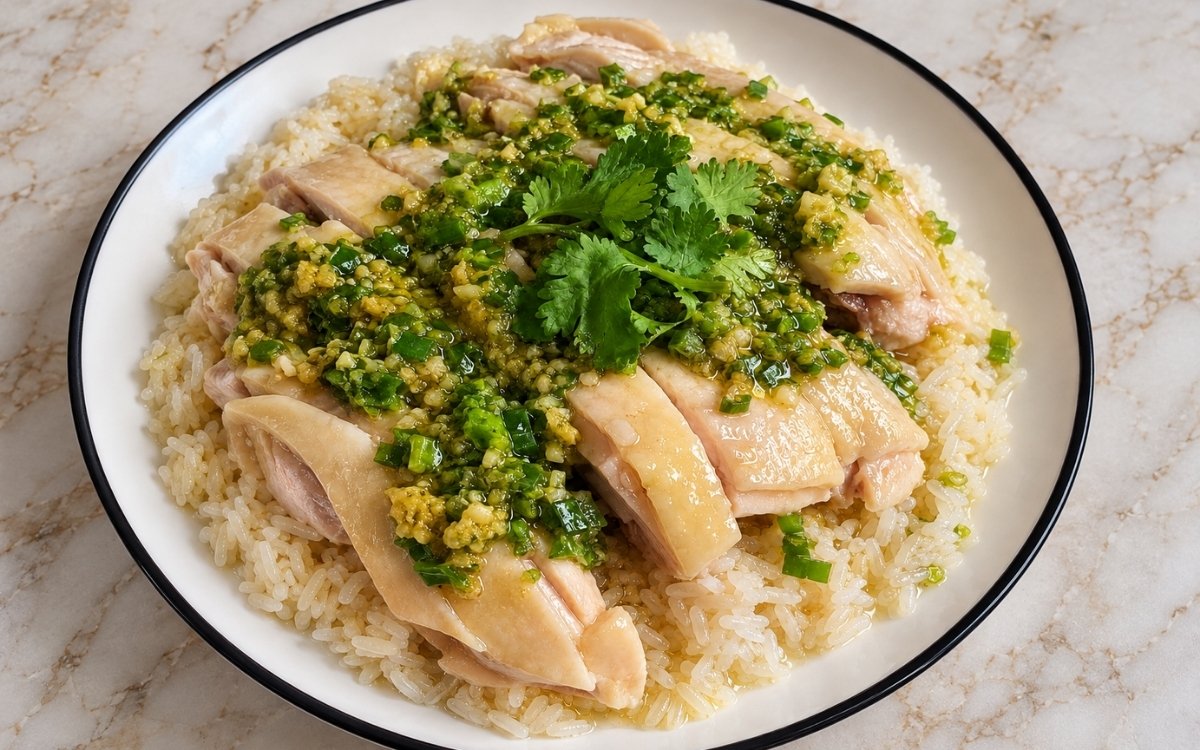
- Divide the rice among 4 plates or shallow bowls. Fan the sliced chicken over the rice. Spoon a little reserved hot broth or chicken juices over the rice and chicken to keep everything visibly moist. Spoon the ginger-scallion sauce generously over the chicken so some runs down into the rice. Finish with a small amount of fresh cilantro. Spooning the sauce specifically over the chicken, rather than mixing it in beforehand, is what lets it run down naturally into the rice below, seasoning both components together right at the moment of serving.
Notes
Poaching the chicken at a genuinely gentle simmer, never letting it reach a hard boil, deserves recognition as the technique most directly responsible for this dish's whole defining texture. The recipe's own explicit warning that boiling aggressively "keeps the meat tender and the skin smooth instead of tight and rough" reflects exactly what's at stake — that patient, low-temperature poach is what protects both the meat's tenderness and the skin's own silky surface.
Cooking the rice in the chicken's own strained poaching broth, rather than plain water, deserves the same attention this technique receives throughout this collection's other broth-enriched grain dishes. That reused liquid carries real, concentrated chicken flavour directly into every grain, building depth a plain-water version simply couldn't achieve on its own.
Pouring genuinely hot, shimmering oil directly over the raw ginger and scallion deserves genuine respect as the technique responsible for this sauce's whole vivid character. That immediate, audible sizzle confirms the oil is actually hot enough to properly cook the aromatics on contact, releasing their full flavour and colour rather than merely warming them through with insufficiently hot oil.
Resting the poached chicken in its own hot broth for a brief window after the heat is turned off deserves attention as a real, deliberate technique rather than a passive pause. That residual, gentle heat lets the chicken finish cooking through completely without ever needing to return to more aggressive direct heat, protecting its own tenderness right through to the final stage.