Ingredients
Method
Preheat and Prepare
- Preheat your oven to 200°C (400°F). Trim the silver skin from the pork tenderloin by sliding a sharp knife underneath it and angling the blade upward to remove it completely—this prevents the meat from curling during cooking.
Make the Herb Paste
- Combine 6 minced garlic cloves, 30g rosemary, 20g thyme leaves, 15g sage, 30ml olive oil, 10g sea salt, and 4g black pepper in a small bowl. Mix thoroughly to form a thick, aromatic paste.
Coat the Tenderloin
- Brush the trimmed pork tenderloin evenly with 30g Dijon mustard on all sides. Press the herb mixture firmly all over the mustard-coated surface, creating an even coating that adheres well.
Sear for Color
- Heat 15ml olive oil in an oven-safe skillet over high heat until shimmering. Carefully place the herb-crusted tenderloin in the hot skillet and sear for 2 minutes per side, turning gently, until the herb crust is golden brown.
Roast to Perfection
- Transfer the skillet directly to the preheated oven. Roast for 15 to 18 minutes until the internal temperature reaches 63°C (145°F) when measured with an instant-read thermometer at the thickest part.
Rest and Slice
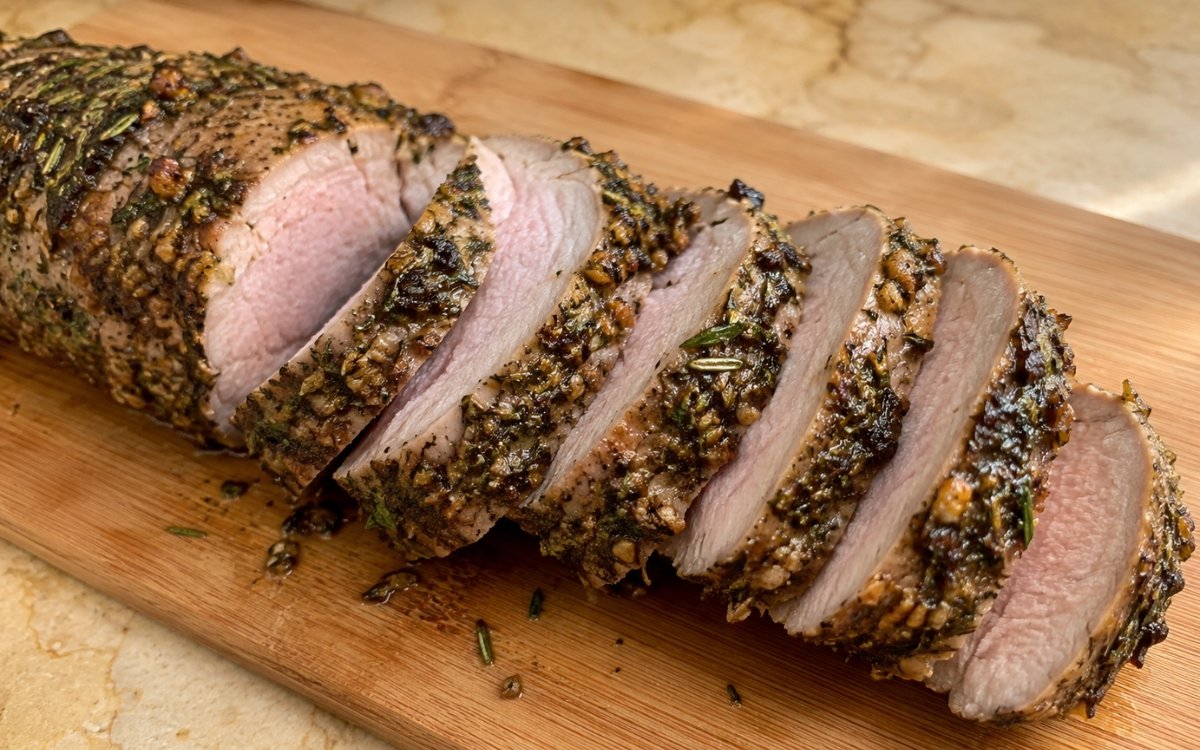
- Remove from the oven and let the tenderloin rest on a cutting board for 8 minutes to allow the juices to redistribute. Slice crosswise into medallions and serve immediately.
Notes
Removing the silver skin is a step that's easy to skip but genuinely affects the final result. This thin, silvery membrane doesn't break down during cooking the way fat or connective tissue in a slower-cooked cut would — it simply contracts under heat, pulling the tenderloin into an uneven curl that cooks inconsistently along its length.
Dijon mustard's function here is specifically adhesive rather than purely flavor-based, though it contributes both. Its texture is tacky enough to hold the coarsely chopped herb mixture in place through both the sear and the roast, where a plain oil coating would let much of that herb paste slide or fall away before the crust has a chance to set.
Tenderloin's naturally lean, quick-cooking structure means the sear-then-roast timing here is considerably shorter than a thicker cut like a pork chop — 15 to 18 minutes in the oven is enough to bring even a larger tenderloin to temperature, and pulling at 63°C followed by a genuine rest is what keeps the meat from drying out given how little fat this cut carries.