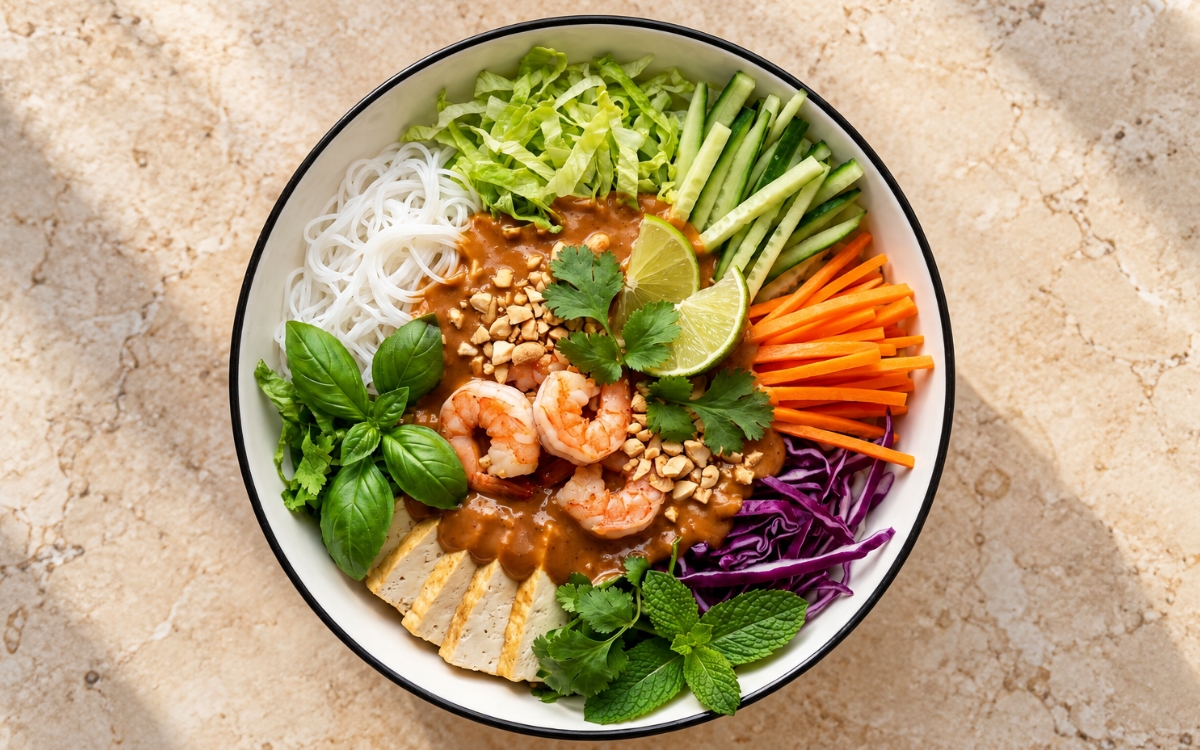
Ingredients
Method
Press and Cook the Tofu
- Drain the 300g firm tofu well and pat it thoroughly dry. Wrap it in paper towels or a clean kitchen towel, set a light weight such as a plate on top and leave it to press for 15 minutes so the excess moisture is drawn out. Slice the block into neat slabs about 1cm thick and season both sides lightly with the ¼ tsp salt and ¼ tsp black pepper. Heat the 1 tbsp neutral oil in a nonstick skillet over medium heat, add the slabs in a single layer and cook for 2–3 minutes per side, until the surfaces are pale golden with clean edges and the inside is still genuinely soft. Avoid deep crusting; if the slabs spit hard and stick, they were not dried enough. Transfer to a plate and let them cool slightly. That thorough drying is what lets the tofu brown lightly instead of steaming in its own water.
Cook the Shrimp
- Pat the 320g shrimp dry with paper towels and season them with the ¼ tsp salt and ¼ tsp black pepper. Wipe out the skillet if needed, add the 1 tsp neutral oil and heat it over medium-high heat until it shimmers. Lay the shrimp in a single layer and cook for about 1–2 minutes per side, just until they turn pink, opaque all the way through and curled into a loose "C" shape. Transfer them to a clean plate immediately so the heat of the pan does not keep cooking them. If any shrimp have closed into a tight ring, they have gone too far, so lift the rest out sooner. That instant removal is what keeps the shrimp sweet, slightly firm and genuinely tender rather than rubbery.
Cook the Rice Vermicelli
- Bring a large pot of water to a rolling boil. Add the 220g rice vermicelli and cook according to the packet directions, usually 3–5 minutes for thin noodles, stirring gently once or twice so the strands do not clump. Taste a strand: it should be tender but still springy, never soft or mushy. Drain immediately and rinse under cold running water, lifting and loosening the noodles with your fingers, until they are completely cool. Shake off as much water as possible in the colander. If the noodles still feel sticky, toss them very lightly with a few drops of neutral oil. They should separate easily and hold their shape in loose coils. That cold rinse is what halts the cooking and washes off the surface starch that would otherwise glue the strands together.
Prepare the Vegetables and Herbs
- While the noodles drain and cool, finely shred the lettuce, cut the 2 cucumbers into thin batons and julienne the 3 peeled carrots into fine matchsticks. Thinly shred the 180g red cabbage. Pick the 20g cilantro leaves and tender stems, the 15g mint leaves and the 15g basil leaves, discarding any tough stalks, and set a small handful of cilantro and mint aside for finishing. Cut the 2 limes into wedges and roughly chop the 40g roasted peanuts. Keep every element in its own pile or small bowl so the bowls can be built in clean sections. Each vegetable should be thin, crisp and easy to pick up with the noodles, and everything should be ready before the sauce is made. That spring-roll-style cutting is what makes the raw vegetables eat as lightly as the inside of a fresh summer roll.
Make the Peanut Sauce
- In a medium bowl, whisk together the 120g smooth peanut butter, 2 tbsp hoisin sauce, 1½ tbsp soy sauce, 1 tbsp fish sauce, 1½ tbsp lime juice, 1 tbsp rice vinegar, 1 tbsp honey or brown sugar, the finely grated garlic and the 1 tsp grated ginger. The mixture will look thick and tight at first. Add the 120–180ml warm water gradually, whisking constantly, until the sauce turns smooth, glossy and spoonable, medium-thick enough to sit on the bowl without running everywhere. Taste and adjust only if needed: a little more lime juice for brightness, more water for a looser sauce, a little more peanut butter if it is too thin, or a little more soy sauce or fish sauce if it needs depth. It should coat a spoon in a glossy layer and fall in a thick ribbon. Keep a little extra warm water ready, because the sauce thickens as it sits. That gradual whisking is what keeps the sauce silky rather than lumpy or split.
Assemble the Bowls
- Check the peanut sauce first and whisk in a little extra warm water if it has thickened while standing. Divide the rice vermicelli between 4 bowls. Arrange the shredded lettuce, cucumber batons, julienned carrots, shredded red cabbage, tofu slabs, shrimp, basil, cilantro and mint in separate, visible sections around or over the noodles, giving each bowl a quarter of the tofu and about 4–5 shrimp. Spoon the peanut sauce over part of each bowl, mainly over the shrimp and the central noodles, leaving the vegetables clearly on show. Finish each bowl with the chopped peanuts, at least 1 lime wedge and the reserved cilantro and mint leaves. Do not toss the bowls before serving; each person can squeeze over the lime and toss lightly at the table. That composed, sauce-as-accent finish is what keeps every component crisp, fresh and distinct until the first bite.
Notes
Pressing and drying the tofu deserves genuine recognition as the technique most directly responsible for whether the slabs turn pale golden or soft and grey. The recipe's own warning that "Tofu must be dried well before cooking or it will steam instead of lightly browning" explains why — surface water flashes into steam in the hot oil, keeping the pan too cool to colour the tofu and leaving it to stick and tear when turned.
Lifting the shrimp out the instant they turn opaque deserves the same attention this technique receives throughout this collection's other quick-cooked seafood, because a few extra seconds decide the texture. The recipe's own instruction that "Shrimp should be removed as soon as they turn opaque" reflects how fast the flesh tightens — a loose "C" shape means it is just set and juicy, while a tight ring means it has squeezed out its moisture and turned rubbery.
Keeping every vegetable raw and cut into thin, crisp shapes deserves genuine respect as the detail most directly responsible for the bowl's spring-roll character. The recipe's own note that "Mint and basil especially help the bowl read as fresh spring-roll-inspired rather than just a noodle salad" makes the same point about the herbs — thin batons, fine julienne and generous whole leaves give the clean, crunchy freshness of a rice paper roll in every forkful.
The texture of the peanut sauce deserves attention as a genuine, checkable readiness cue rather than a loose approximation. The recipe's own reminder that "Peanut sauce thickens as it sits" sets the test — the sauce should coat a spoon in a glossy layer and fall in a thick ribbon, so a little warm water needs whisking in just before serving if it has tightened into a paste.