Ingredients
Method
Make the Cranberry Syrup: Extraction, Not Reduction
- Combine the 250g of cranberries, 150g of white sugar, and 240ml of water in a medium saucepan. Place over medium heat and bring to a gentle simmer, stirring occasionally to begin dissolving the sugar. Cook for 8–12 minutes, stirring occasionally. The visual and aromatic indicators of the correctly made cranberry syrup require specific attention because the preparation error in the opposite direction is easy to make. The cranberries should burst progressively during the cooking period — each one splitting and releasing its intensely coloured juice and concentrated acids into the surrounding sugar-water. By 8 minutes most berries should have burst; by 12 minutes all should be fully collapsed and the surrounding liquid should be a vivid, deeply ruby-red, specifically fluid liquid. The specific instruction — extraction, not reduction — describes the fundamental difference between the correct approach and the common error: the syrup should remain relatively fluid and flowing throughout, maintaining approximately the volume added at the start minus minimal evaporation. If the liquid is reducing meaningfully — visibly thickening, the volume dropping significantly below the starting amount — the heat is too high or the cooking time is too long. Reduced cranberry syrup concentrates the sugar disproportionately, producing a preparation that is sweet-forward and thick rather than specifically tart, bright, and clean. The cranberries' natural acidity — primarily citric and malic acids, with some quinic acid — is the preparation's primary contribution; a reduced, concentrated syrup has a different acid-to-sugar ratio than the extraction approach produces. Remove from the heat. Strain through a fine-mesh sieve into a clean bowl or measuring jug, pressing firmly on the cranberry solids to extract the maximum vivid ruby liquid. Press firmly — the burst cranberry skins retain a meaningful proportion of the coloured juice — but do not force the dry pulp and skin fragments through the sieve, which produces a cloudier result. The finished cranberry syrup should be a clear, vivid ruby-red and specifically tart when tasted directly. Allow to cool completely.
Build the Lemonade
- In a large pitcher, combine 120ml of the cooled cranberry syrup, 240ml of fresh lemon juice, 750ml of ice-cold water, and the ⅛ tsp of fine sea salt. Stir thoroughly until completely combined. The salt functions as the sub-threshold amplifier used throughout this collection — specifically sharpening both the cranberry's tart acidity and the lemon's citric brightness at below-detection concentration. Taste deliberately and assess each register separately. The drink should taste specifically tart from the combined cranberry and lemon acid, visibly pink rather than pale pink, and refreshing rather than sweet or diluted. If the colour is too pale — suggesting the cranberry's flavour depth is also too subtle — add more cranberry syrup in 30ml increments up to 180ml total. If additional brightness is needed, add more lemon juice up to 300ml total. If the combined acidity is more aggressive than intended — which can happen with particularly tart lemons or a particularly concentrated cranberry syrup — add the optional simple syrup in tablespoon increments, tasting between additions, until the acidity is specifically tart-refreshing rather than aggressively sour. Do not add plain sugar directly.
Chill and Serve
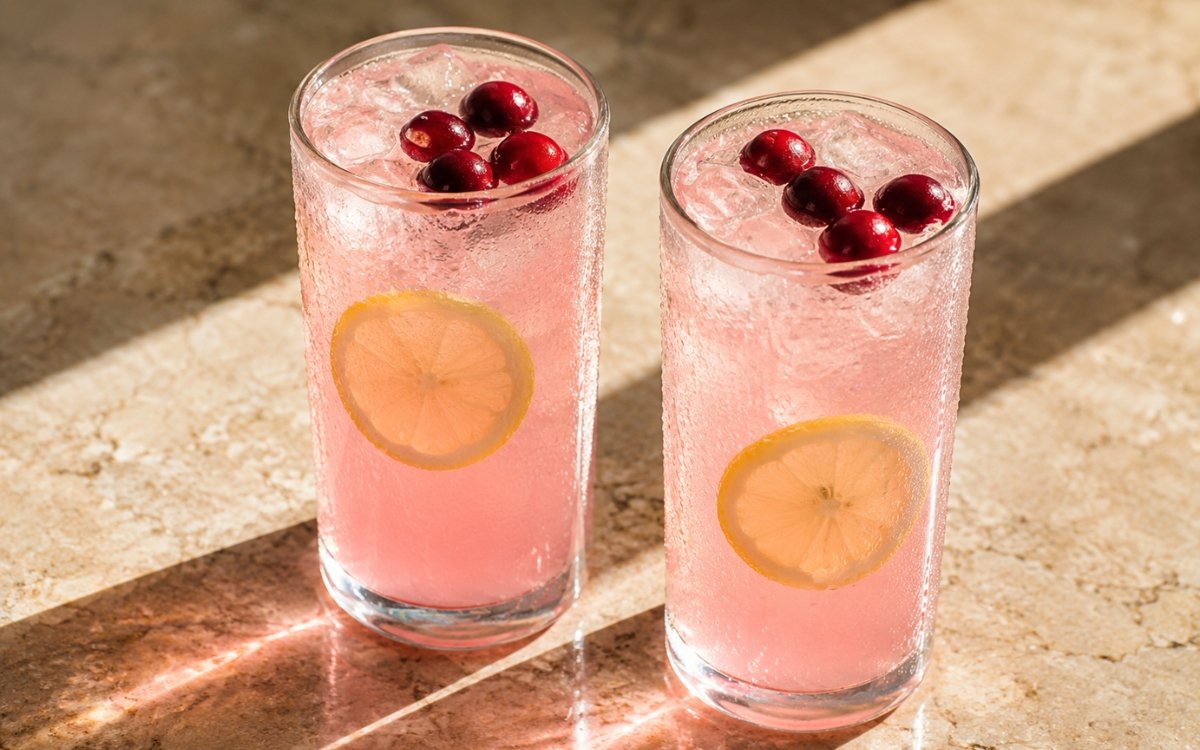
- Cover the pitcher and refrigerate for 1–2 hours until completely cold and the cranberry and lemon flavours have integrated. The 1–2 hour chill is specifically valuable here because cranberry's complex acid profile — the combination of citric, malic, and quinic acids — integrates with the lemon's simpler citric acid character during the cold rest, producing a more cohesive, more specifically flavoured result than immediately served. Fill glasses generously with ice. Pour the chilled pink lemonade over the ice. Garnish with a lemon slice and several fresh cranberries or a twist of lemon peel. Serve very cold — the specific sharpness and colour clarity of the lemonade are both at their best at the lowest serving temperature.
Notes
Cranberry's specific acid profile sets this lemonade apart from all other preparations in this collection. Unlike the simple citric acid of lemon, raspberry, or strawberry, cranberry contains three distinct acids: citric acid (the sharp, immediate tartness); malic acid (the slightly softer, rounder tartness found also in apple); and quinic acid (a specifically unusual acid found in very few foods, responsible for a slightly astringent, specifically dry finish that is characteristic of cranberry and makes cranberry-based preparations taste specifically more adult). The combination of all three in the cranberry syrup, combined with the lemon's citric acid, produces the most specifically complex acid profile of any lemonade in this collection.
Fresh cranberries and frozen cranberries produce equally good results in this syrup — frozen cranberries are specifically slightly more efficient at releasing their juice because the freezing process pre-ruptures the berry's cell walls, producing faster and more complete juice extraction during the simmer. If using frozen, add directly from frozen without thawing.