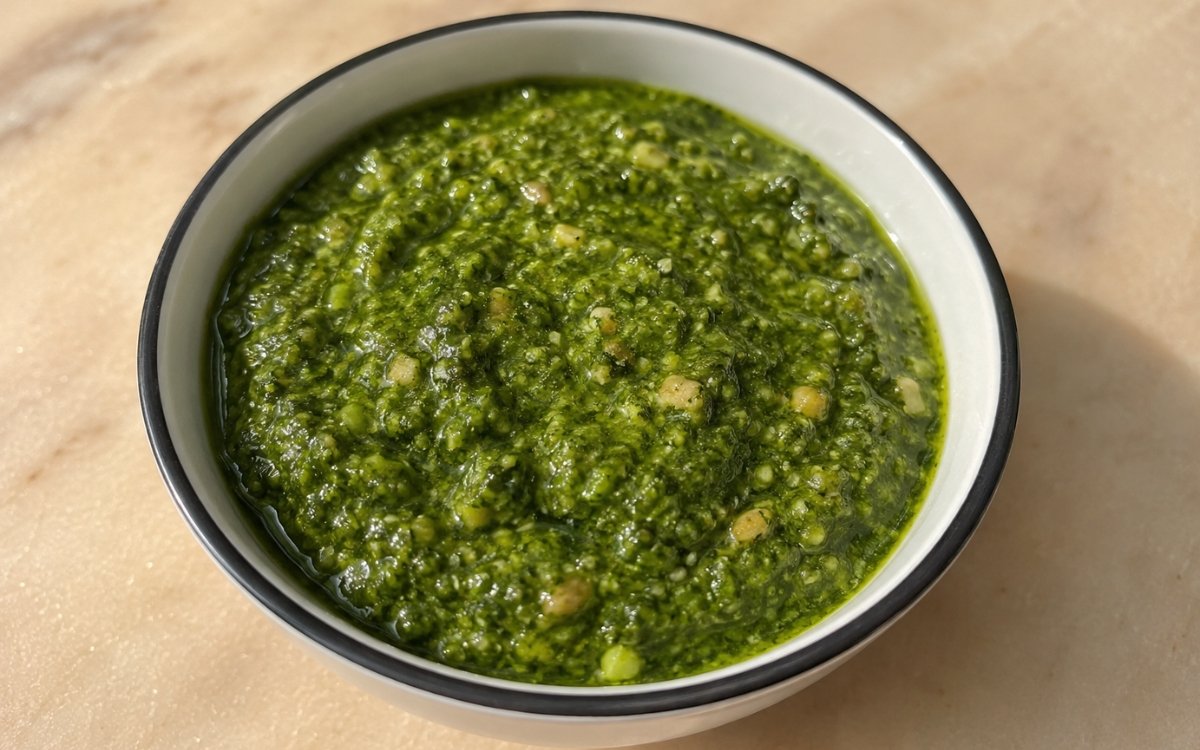
Ingredients
Method
Dry-Toast the Pine Nuts
- Place pine nuts in a dry skillet over medium heat. Toast without oil, stirring or shaking constantly for 2–3 minutes until golden and fragrant. The change from pale to perfectly toasted happens quickly. Remove immediately and transfer to a plate to stop further cooking. Let them cool completely before processing.
Wash and Dry the Basil Thoroughly
- Rinse basil leaves in a bowl of cold water, then lift out to drain. Dry very well using a salad spinner and paper towels. Excess moisture dilutes flavor and accelerates oxidation. Remove thick stems and keep leaves loose and unbruised.
Pulse the Aromatics First
- Add garlic cloves to the food processor and pulse 5–6 times until finely minced. This creates an even flavor base before adding the other ingredients.
Add Nuts and Cheese
- Add cooled pine nuts and Parmesan, pulsing 6–8 times until finely chopped and crumb-like. This ensures proper texture before the basil is introduced.
Incorporate Basil and Emulsify with Oil
- Add basil leaves and pulse until roughly chopped. With the processor running, slowly drizzle in olive oil in a thin stream to form a smooth, cohesive pesto. Scrape down the bowl and process briefly to finish. Add lemon juice if using, then season.
Store with a Protective Oil Layer
- Transfer pesto to a container and smooth the surface. Drizzle a thin, continuous layer of olive oil over the top to prevent oxidation and preserve color. Seal airtight and refrigerate.
Notes
The sequential blending order — garlic first, then pine nuts and cheese, then basil, then oil — is not arbitrary. Starting with garlic and the harder ingredients ensures they are finely processed before the more delicate basil is added, preventing the basil from being over-processed while the other components catch up.
Freshly grated Parmesan from a block produces dramatically better pesto than pre-grated cheese from a container. Freshly grated Parmesan has more moisture, stronger flavor, and a finer texture that integrates smoothly into the sauce. Pre-grated Parmesan is often dried out and may contain cellulose additives that affect the pesto's texture.
The olive oil layer on top of stored pesto is the single most important step for preserving the vibrant green color. Pesto turns brown through enzymatic oxidation when basil's cell walls are broken during processing and exposed to air. The oil barrier prevents this contact and keeps the pesto looking fresh for days longer.