Ingredients
Method
Brew the Espresso
- Brew 120ml espresso total, equal to 4 standard 30ml shots. If using sugar, stir it into the hot espresso immediately until fully dissolved. The espresso must be fresh and hot before shaking. Sugar dissolves properly only while the espresso is hot. Adding sugar after chilling gives gritty, uneven sweetness. Dissolving sugar into the espresso while it's still genuinely hot takes advantage of sugar's much greater solubility at higher temperatures — the same sugar added after the drink is cold and shaken would dissolve far more slowly and incompletely, leaving undissolved granules rather than sweetening evenly.
Shake the Espresso with Ice
- Pour the hot espresso into a shaker, drink mixer cup, or sealed jar. Add the shaking ice. Shake hard for 10–15 seconds, until the espresso is fully chilled, slightly aerated, and capped with a light tan foam. Weak shaking gives you cold espresso with no body. Proper shaking chills, lightly dilutes, and aerates the espresso so it becomes glossy and café-style. That vigorous, sustained agitation does two things a gentle stir over ice never would — it chills the espresso rapidly through direct, forceful contact with the ice, and it physically whips air into the liquid, building the base's own light foam before the milk foam is ever added on top.
Prepare the Glasses
- Fill 2 tall glasses with fresh ice. Do not use the half-melted shaking ice for serving. That is lazy and waters the drink down faster. Divide the shaken espresso evenly between the glasses. Ice used in the shaker has already absorbed heat from the hot espresso and begun melting during the vigorous shake — using that same ice for serving would start the drink's presentation with ice that's already working against its concentration and temperature.
Make the Cold Milk Foam
- Pour the very cold milk into a milk frother, drink mixer, French press, or tall container with a handheld frother. Froth until thick, cold, and stable, with a dense foam texture that can sit on top of the espresso instead of disappearing into it. The foam should be thick and spoonable but still smooth. If it is thin and bubbly, it will collapse. If it is dry and stiff like shaving foam, you overdid it. Genuinely cold milk holds air more stably than milk at any warmer temperature, which is exactly why this foam needs to start from milk that's fully chilled — that stability is what lets the finished foam sit as a distinct, structured cap rather than sinking or dissolving into the espresso beneath it.
Top the Drinks
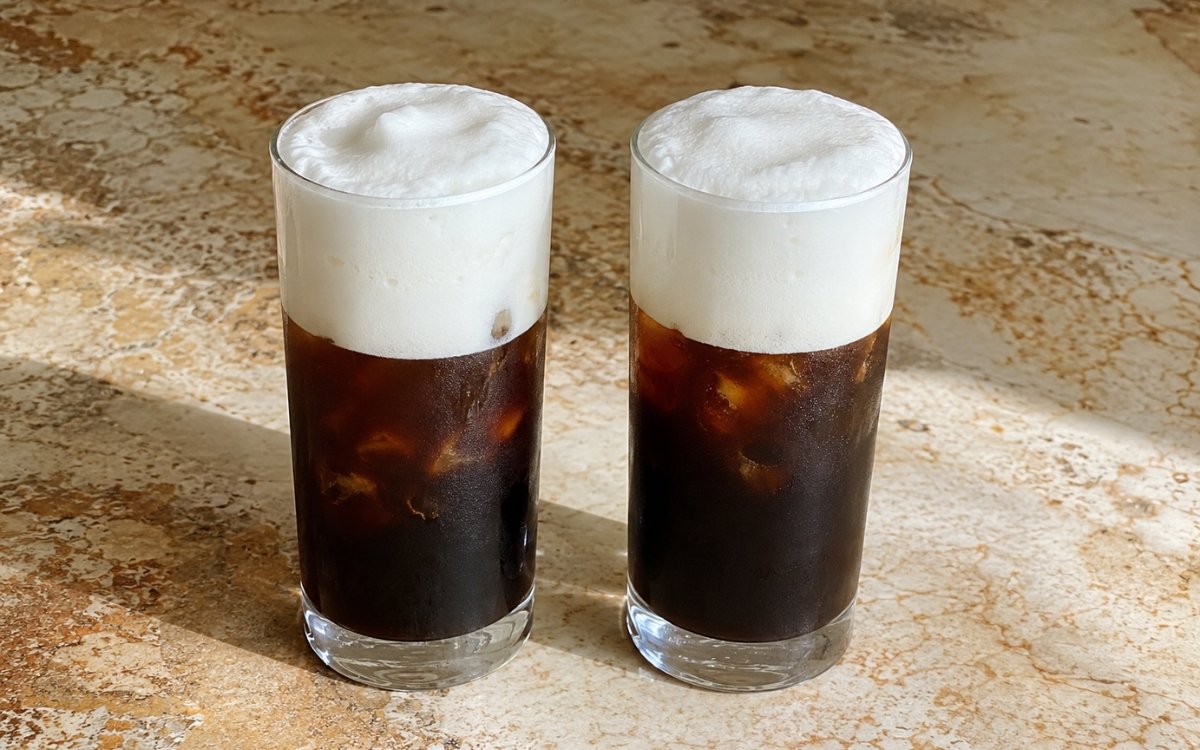
- Spoon or pour the cold milk foam over each espresso base, dividing it evenly. The finished drink should have a dark chilled espresso layer underneath and a clear thick white foam cap on top. Serve immediately. Building this drink in two clear, separate stages — espresso base first, milk foam added only afterward — is what preserves that defining two-layer structure, distinct from a drink where milk and espresso are combined and stirred together from the start.
Notes
The hard shake given to the espresso before it ever meets the milk is worth understanding as the foundation this entire drink's texture is built on, distinct from simply pouring hot espresso over ice. That vigorous agitation accomplishes real chilling and real aeration simultaneously — the espresso base itself develops a light foam from the shake alone, before the separately made milk foam is ever added as a second, distinct layer on top.
The specific target for the milk foam — thick and spoonable, but still smooth, sitting somewhere between a thin, collapsing froth and an overworked, stiff, shaving-foam texture — is worth checking for carefully rather than frothing on autopilot. Foam that's too thin lacks the structural stability to hold its place as a distinct cap and will sink or dissolve into the espresso base beneath it. Foam that's overworked past that ideal point, while technically stable, produces a texture that reads as heavy and dry rather than the smooth, dense result this drink calls for.
Starting from genuinely cold milk, rather than milk that's merely refrigerated but has been sitting out, matters more here than it might seem given how briefly it's actually being frothed. Cold milk holds incorporated air considerably more stably than warmer milk does, which is directly responsible for how long the finished foam cap holds its shape and structure once poured over the espresso base.
Using separate ice for shaking versus serving, the same principle that governs a straight Freddo Espresso, remains just as important here despite the milk foam layered on top. The shaking ice's partial melt during the vigorous agitation stage means it's already working against the drink's concentration by the time shaking is finished — starting the serving glass with genuinely fresh ice protects the whole drink's structure and temperature through to the last sip.