Ingredients
Method
Select and Prepare the Figs
- The fig variety and its ripeness are as critical here as the honeydew in the agua fresca or the apricots in the apricot vanilla sparkler — this preparation has no heat concentration to amplify a mild or under-ripe fruit's flavour. A perfectly ripe fig yields completely to gentle pressure, has skin that is beginning to split or wrinkle at the stem, and produces a specifically sweet, wine-adjacent, deeply fruity aroma. Black Mission, Brown Turkey, Kadota, or any variety at peak ripeness will produce good results; the variety matters less than the ripeness stage. Under-ripe figs have a green, slightly astringent, latex-flavoured interior that is specifically unpleasant in a drink preparation and that no technique can correct. Halve each fig and use a small spoon to scoop the flesh and seeds from the skin — the flesh's interior is where the specific aromatic compounds concentrate. The skin is specifically excluded here, unlike the kiwi and apple preparations in this collection: fig skin's slightly leathery, tannin-adjacent character would add astringency to the finished base at the gentle cooking temperature without contributing the fig's characteristic warm sweetness. Including only the flesh produces a cleaner, more specifically fig-forward base.
Cook at the Lowest Possible Heat
- Combine the scooped fig flesh, 80g of honey, 200ml of water, and the lemon zest in a small saucepan. Place over the absolute lowest available heat. The temperature target — below approximately 40°C throughout the cooking period — is the same as the apricot vanilla preparation. At this temperature the fig's flesh softens progressively as its pectin structure relaxes and the cells release their juice into the surrounding honey-water medium. The honey dissolves quickly in the warm water. The lemon zest's aromatic oils infuse into the honey's sugar matrix during the 10-minute period. Cook for 10 minutes, stirring occasionally and pressing the fig pieces gently with the back of the spoon to begin breaking them down. The liquid should feel warm but not hot — no visible steam, no simmering movement, no bubbles from the pan surface. At the end of 10 minutes the figs should be noticeably softer, their edges beginning to dissolve into the surrounding liquid, and the mixture should be a warm amber-pink.
Remove from Heat, Add Lemon Juice, and Mash
- Remove the saucepan from the heat. Allow to cool for 5 minutes. Stir in the 45ml of fresh lemon juice — the off-heat addition preserving the lemon's bright, aromatic acidity that the heat would dull. Using a potato masher or the back of a large spoon, mash the softened figs thoroughly into the syrup — pressing firmly until each piece has broken down completely and the mixture appears uniformly textured with no whole fig pieces remaining. The mashing at this post-cooking stage extracts the remaining juice and aromatic compounds from the softened flesh more completely than the gentle cooking alone achieves — the same combined cook-then-mash approach applied throughout this collection's fruit preparations.
Strain and Chill
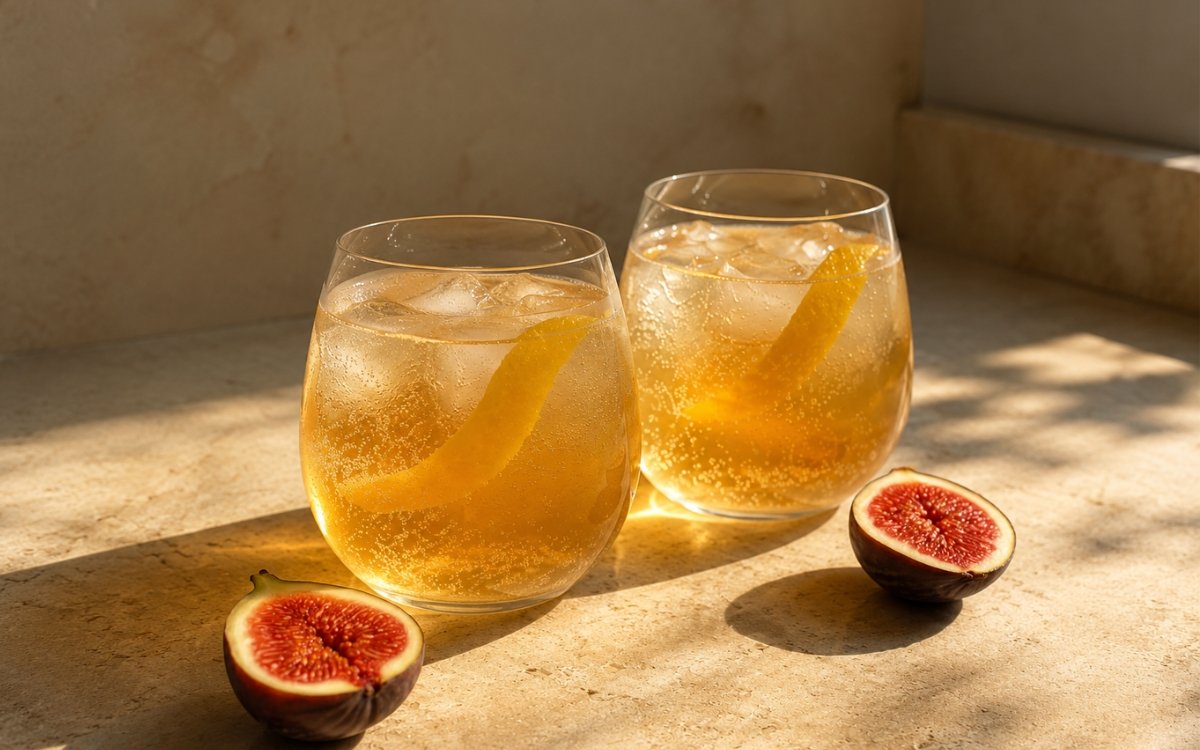
- Strain through a fine-mesh sieve over a clean jug, pressing firmly on the mashed fig solids to extract as much of the amber, aromatic base as possible. Fig has a moderate pectin content — the pressing will require sustained pressure but is more manageable than very high-pectin fruits. The finished strained base should be a clear, warm amber colour — the specific golden-pink of ripe fig juice — and specifically fragrant: honey's floral warmth, lemon's aromatic brightness, and fig's distinctively warm, wine-adjacent fruitiness all present simultaneously. Discard the strained solids. Transfer to the refrigerator and chill completely — a minimum of 30 minutes.
Prepare the Lemon Peel Garnish and Assemble
- Using a vegetable peeler, cut 4 long strips of lemon peel — each approximately 12–15cm — pressing firmly against the lemon's surface and following its curve in a continuous motion. The strips should have primarily yellow zest with minimal white pith. Curl each strip loosely — they will hold a partial curl naturally. Fill four wine glasses generously with ice. Divide the chilled fig-honey base evenly — approximately 70–75ml per glass. The wine glass format is specifically correct for this preparation's warm, slightly formal autumn character — the wide bowl showing the amber colour and allowing the lemon peel's expressed oils to rise with the carbonation at each sip. Top each glass with approximately 125ml of chilled club soda, poured gently. Stir once or twice. Curve the lemon peel strip through the drink, tucking one end under an ice cube and allowing the other to rest against the glass rim. Serve immediately.
Notes
Fig season is brief — in the Northern Hemisphere, peak fresh fig availability is typically August through October, with a smaller early-summer crop in some varieties in June–July. Outside of fresh fig season, high-quality dried figs can be substituted: soak 60g of dried figs in 150ml of warm water for 30 minutes to rehydrate before using the soaked figs and their soaking liquid in place of fresh figs and water. The dried fig preparation produces a slightly more concentrated, slightly more caramelised result — darker in colour, warmer in sweetness, with less of the specifically fresh fig fruitiness but more of its warm earthiness.
The honey-and-fig combination is one of the most ancient and specifically Mediterranean flavour pairings — appearing in Greek, Italian, and Middle Eastern food traditions from antiquity. The specific aromatic resonance between honey's floral volatile compounds and fig's warm, wine-adjacent aromatic esters is not accidental: both attract pollinators through overlapping aromatic profiles, producing an affinity in flavour that has been observed by cooks for millennia.