Ingredients
Method
Build the Black Bean Base
- Heat the oil, lard, or bacon fat in a medium saucepan over medium heat. Add the chopped onion and cook for 4–5 minutes until softened and lightly translucent. Add the garlic and cook for 30–60 seconds until fragrant. Add the black beans, 500ml of the liquid, the salt, several grinds of black pepper, and the epazote if using. Bring to a gentle simmer and cook for 8–10 minutes so the beans absorb the onion-garlic flavor and the liquid takes on a richer bean taste. The mixture should look brothy at this stage, not dry. If it reduces too much before blending, add a little more liquid. This preliminary simmer, before anything is even blended, gives the beans real time to absorb the onion and garlic's flavour directly, building depth into the base before the blender ever gets involved.
Blend the Sauce
- Remove the epazote if used. Transfer the bean mixture to a blender and blend until completely smooth. Add more liquid gradually as needed. The finished sauce should be thick enough to coat a spoon and cling to the tortillas, but loose enough to pour and spread easily. Think of a smooth soup-sauce consistency rather than a dense refried bean paste. This specific target consistency — considerably looser than a refried bean paste — matters directly for how the sauce is used next; a thicker blend wouldn't let the tortillas dip and coat evenly the way this recipe's assembly stage depends on.
Fry the Sauce Until Glossy
- Return the blended bean sauce to the saucepan over medium-low heat. Simmer 6–8 minutes, stirring often, until the raw blended flavor cooks out and the sauce turns glossy and cohesive. Taste and adjust salt. If the sauce becomes too thick, add a splash of water or stock. If it is too thin, simmer another few minutes. The final sauce should leave a smooth coating on the back of a spoon and settle into a glossy layer when spooned onto a plate. Keep the sauce warm over very low heat. This active frying stage is what actually transforms the blended purée into something genuinely finished — a sauce straight from the blender, however well the beans were simmered beforehand, would still taste distinctly raw without this dedicated cooking time.
Prepare the Tortillas
- Heat a thin layer of oil in a skillet over medium heat. Briefly fry each tortilla for about 8–12 seconds per side, just until softened and pliable. They should not become crisp or browned. Transfer to a tray lined lightly with paper towel. This step is important: lightly frying the tortillas prevents them from tearing once dipped in the bean sauce and keeps their flavor richer and more traditional. This brief fry gives the tortilla real, if modest, structural resistance and flavour before it ever meets the hot bean sauce — a completely unfried tortilla would have far less tolerance for the dipping and folding stage that follows.
Assemble the Enfrijoladas
- Dip one tortilla at a time into the hot black bean sauce, coating both sides fully. Let the excess drip off, then place it on a plate or work surface. Scatter about 15g of crumbled queso fresco along one side or down the center, then fold the tortilla in half. Repeat with the remaining tortillas, arranging 3 folded enfrijoladas per serving. Work quickly so the tortillas stay warm and supple. If the sauce begins to thicken as you work, loosen it with a little hot water and stir well. Working through this stage quickly, rather than pausing between tortillas, keeps each one warm and genuinely pliable right up until it's folded — a tortilla left to sit and cool partway through this process becomes considerably harder to fold cleanly without cracking.
Finish and Serve
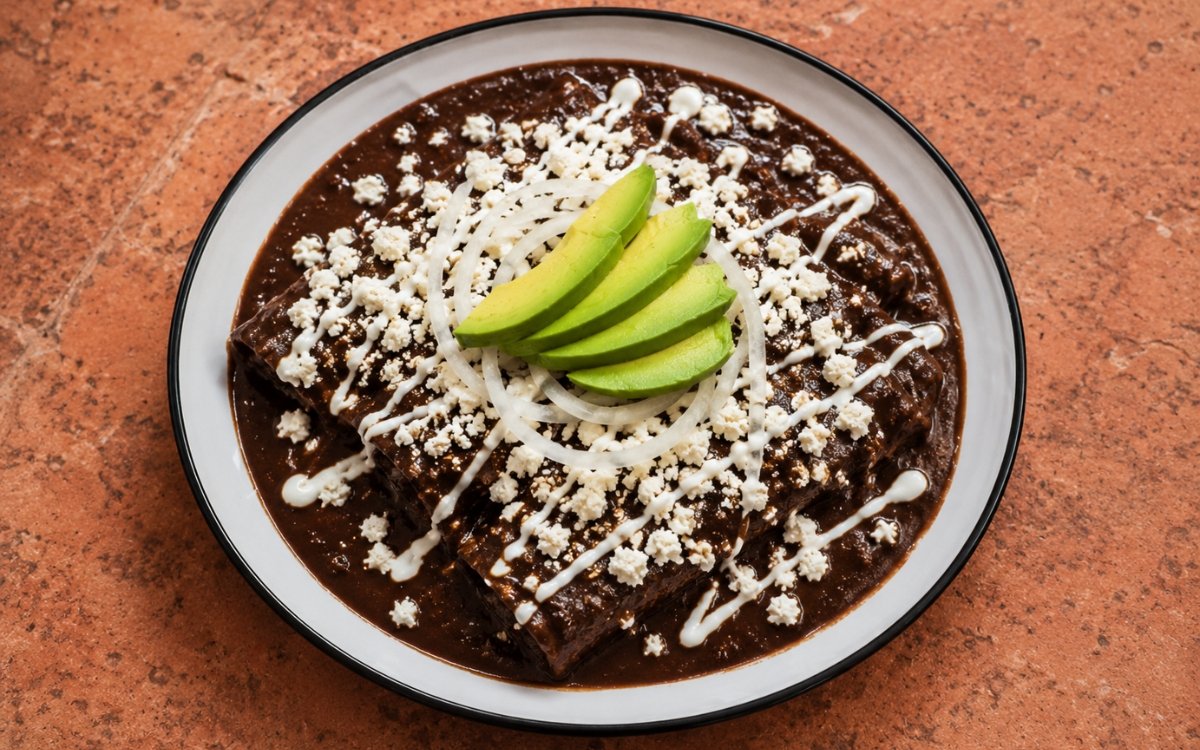
- Spoon more hot black bean sauce generously over the folded tortillas so they are well coated. Top with the remaining queso fresco, drizzle over the crema in thin lines, scatter the thin onion slices, and finish with sliced avocado. Serve immediately while the sauce is hot, the tortillas are soft, and the contrast between the creamy beans, salty cheese, cool onion, and avocado is at its best. This final generous sauce spoon-over, added right before serving, ensures the plated dish arrives properly hot and glossy rather than relying entirely on the earlier dipping stage, which may have cooled slightly during assembly.
Notes
Frying the blended bean sauce until it turns genuinely glossy deserves recognition as the step most responsible for whether this dish tastes properly finished or merely like seasoned bean purée. A blender, however thoroughly it processes the ingredients, can't replicate the flavour transformation that active heat and time on the stovetop produces — this stage is what concentrates and rounds the sauce into something with real body and depth rather than tasting flat and raw.
The sauce's specific target consistency — pourable and smooth, distinctly looser than a side-dish refried bean paste — is worth understanding as a genuine functional requirement rather than a loose suggestion. This sauce needs to coat tortillas evenly when dipped, something a thicker, paste-like consistency simply couldn't do. Getting that consistency right is what makes the entire dipping-and-folding assembly stage work as intended.
The brief fry given to the tortillas before dipping addresses a real structural vulnerability specific to this dish's format. Tortillas going straight from raw to a hot, wet bean sauce, then immediately folded, would have very little tolerance for that handling — the preliminary fry builds in just enough resilience to survive dipping and folding without tearing.
Working through the assembly stage briskly, rather than pausing between tortillas, reflects a genuine, time-sensitive characteristic of freshly fried corn tortillas. They're at their most pliable right after frying, and that pliability fades as they cool — moving quickly through dipping and folding is what takes advantage of that narrow window before the tortillas start resisting the fold.