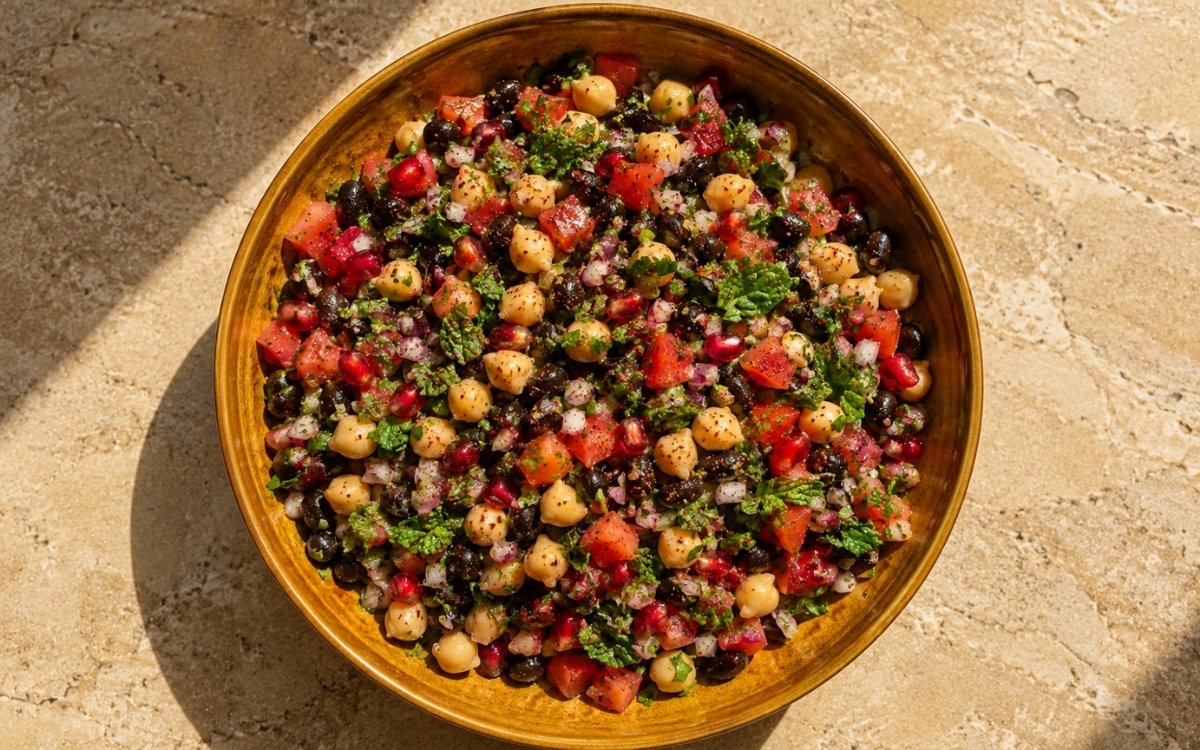
Ingredients
Method
Prepare the Beans
- If using canned chickpeas and black beans, rinse them well under cold water and drain thoroughly. Spread them on a tray or towel and let them dry for a few minutes. If using dried chickpeas, cook them until tender but not falling apart. Cool completely before using. The beans must be fully drained and fairly dry on the surface. Wet beans dilute the dressing and make the salad watery. That thorough draining and drying is what protects the finished dressing's own concentration — any residual surface moisture would work against it the moment the beans are tossed in.
Prepare the Vegetables and Herbs
- Dice the tomatoes small. If they are very juicy, remove the seeds and watery pulp first. Finely dice the red onion. Finely chop the parsley and mint. Collect the pomegranate seeds and keep them separate for the final mix. Keep all cuts fairly small and even so the salad eats as a balanced mix, not as large chunks scattered through beans. That consistent, small dice matters directly for how the finished salad actually eats — evenly sized pieces let every bite carry a genuine mix of components rather than landing on one ingredient at a time.
Make the Dressing
- In a large mixing bowl, whisk together the lemon juice, olive oil, garlic, cumin, sumac, salt, and black pepper. Add the sugar or honey only if needed to round the acidity. Taste the dressing. It should be bright, lemony, slightly earthy from cumin, and lightly tangy from sumac. Season the dressing strongly enough before adding the beans. Chickpeas especially need assertive seasoning or the salad will taste flat. That deliberately bold early seasoning accounts for real, predictable dilution once the beans, tomato, and herbs all join — a milder dressing would read as noticeably flat by the time everything is actually combined.
Briefly Soften the Onion
- Add the diced red onion to the dressing and let it sit for 10 minutes. This takes the raw harsh edge off the onion and lightly pickles it. This step makes a noticeable difference. Skipping it can leave the onion too aggressive compared with the delicate herbs and beans. That brief soak in the dressing's own acidity genuinely mellows the onion's sharpest, most sulfurous notes, letting it sit comfortably alongside the salad's more delicate components rather than overwhelming them.
Assemble the Salad
- Add the chickpeas, black beans, and tomatoes to the bowl with the dressing and onions. Toss gently until evenly coated. Fold in most of the parsley, most of the mint, and most of the pomegranate seeds. Reserve a little of each for finishing. Taste and adjust with more salt, lemon juice, or sumac as needed. Toss gently. Overmixing can break the chickpeas and make the salad cloudy and heavy. That deliberately gentle tossing protects the beans' own distinct, whole shape — vigorous mixing would begin breaking them down, clouding the dressing and working against the salad's whole intended texture.
Finish and Serve
- Transfer to a wide shallow serving bowl. Scatter over the reserved herbs and pomegranate seeds. Dust lightly with extra sumac. Serve immediately, or let it sit for 10–15 minutes at cool room temperature so the beans absorb the dressing. Reserving a final portion of herbs and pomegranate specifically for this finishing stage keeps those elements genuinely vivid and visible right at the surface, rather than buried throughout the tossed salad beneath.
Notes
Draining and drying the beans thoroughly before they ever meet the dressing deserves genuine recognition as the technique most directly responsible for whether this salad stays properly textured or turns watery. The recipe's own explicit warning that "wet beans dilute the dressing and make the salad watery" reflects a real, common failure point — that thorough drying protects the dressing's own concentration right from the very first stage.
Letting the diced red onion sit briefly in the dressing before anything else is added deserves the same attention this technique receives throughout this collection's other salads built around raw onion. The recipe's own explicit note that skipping this step "can leave the onion too aggressive compared with the delicate herbs and beans" reflects real understanding of how directly this one stage affects the salad's overall balance.
Building the dressing deliberately strong before it ever meets the beans deserves genuine attention as a real, functional necessity rather than a matter of personal taste. The recipe's own explicit warning that chickpeas "need assertive seasoning or the salad will taste flat" reflects how much dilution this particular combination of mild beans and juicy tomato actually causes.
Tossing the finished salad only gently, rather than mixing vigorously, deserves genuine respect as the detail responsible for protecting the beans' own distinct, whole shape. The recipe's own explicit warning that overmixing "can break the chickpeas and make the salad cloudy and heavy" reflects a real, physical risk this gentle handling is specifically meant to avoid.