Ingredients
Method
Portion Without Overworking
- Divide the beef into 4 equal portions (175g each) and gently form into patties about 2cm thick. Handle the meat as little as possible — excessive handling compresses the protein structure, resulting in dense, tough patties instead of tender ones. The goal is cohesion, not compaction.
Create the Indentation
- Press a shallow indentation into the centre of each patty. This prevents doming during cooking, which happens as proteins contract and push inward. Without this step, the patty thickens unevenly and cooks inconsistently.
Season at the Right Time
- Combine the salt, pepper, garlic powder, and onion powder, then season the patties just before cooking. Salt draws out moisture — seasoning too early can lead to surface wetness, which interferes with browning and reduces crust formation.
Preheat Aggressively
- Heat a cast iron skillet over high heat until it begins to smoke. Add the oil and swirl to coat. The pan must be extremely hot — browning requires temperatures well above 150°C, where the Maillard reaction begins to develop flavour.
Sear Without Interference
- Place the patties in the pan and leave them undisturbed for 4 minutes. Do not press them. Pressing forces out fat and moisture, destroying juiciness and reducing crust quality. A proper crust forms only when the meat maintains uninterrupted contact with a hot surface.
Flip and Transition to Fat Basting
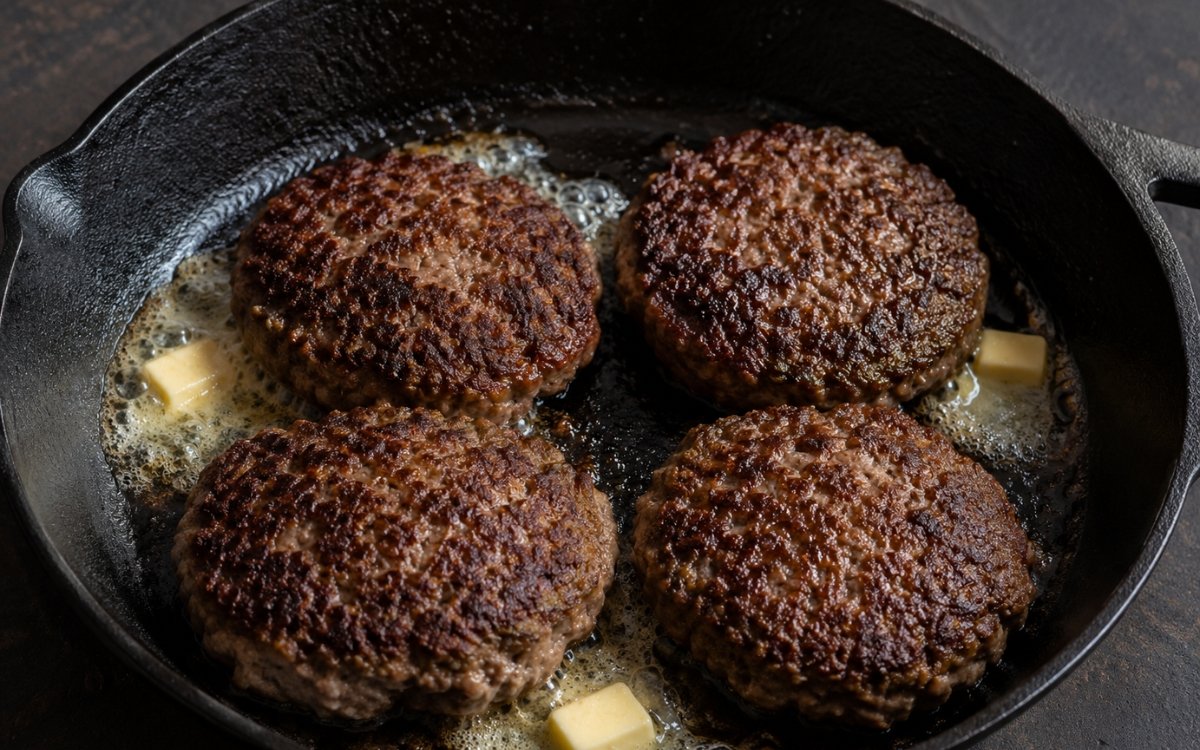
- Flip the patties once a deep brown crust has formed. Add the butter immediately and allow it to melt around the meat. Begin spooning the butter over the patties continuously — this enhances surface flavour while finishing the interior more gently.
Control the Finish
- Cook for another 3–4 minutes depending on thickness and desired doneness. For food safety, ground beef should reach 71°C (160°F), as bacteria are distributed throughout the meat rather than just on the surface, unlike a whole cut of steak.
Rest Before Serving
- Remove the patties and rest for 3 minutes. During cooking, proteins contract and push moisture toward the centre. Resting allows redistribution, preventing juices from spilling out when cut.
Notes
The 80/20 fat ratio is specifically calibrated for pan-searing rather than grilling — enough rendered fat bastes the patty from within during cooking, while the ratio still holds together well under high heat without excessive shrinkage.
The indentation technique addresses a real structural issue rather than a cosmetic one. As the patty's proteins heat and contract, they pull inward from the edges, and without a starting indentation, that contraction produces a dome that cooks unevenly — thicker at the centre, thinner at the edges.
Basting with butter during the second half of cooking serves two distinct purposes simultaneously: it adds surface richness and flavour from the browned milk solids, and it finishes the interior more gently than continued direct pan contact would, helping avoid overcooking the centre while the exterior develops further colour.