Ingredients
Method
Heat the Oven and Skillets
- Place a rack in the middle of the oven and heat to 230°C / 450°F. Put 4 small cast-iron skillets (about 15–18cm / 6–7 inches) in the oven while it heats. The oven and pans must be fully hot before the batter goes in. This initial heat is what creates the dramatic rise. That fully preheated cast iron gives the batter genuine, instant, sustained heat the very moment it makes contact — a pan only partially warmed would let the batter's own edges set considerably more slowly, missing that explosive early rise.
Make the Batter
- Add the eggs, milk, flour, sugar, vanilla, salt, and cinnamon if using to a blender. Blend until completely smooth, about 20–30 seconds. Let the batter rest for 10 minutes. If you do not have a blender, whisk very thoroughly until no flour lumps remain. Room-temperature eggs and milk help the batter puff more evenly. After resting, the batter should be smooth and fluid, like thin crepe batter, with a light foam on top. That brief resting period gives the flour genuine time to fully hydrate, which is directly what lets the batter puff more evenly rather than unevenly across the pan.
Prepare the Berry Filling
- While the batter rests, combine the blueberries, raspberries, strawberries, and blackberries with the lemon juice and lemon zest. Add 1–2 tsp sugar only if the fruit is tart. Toss gently and leave at room temperature. Do not macerate the berries too long or they will release too much juice and become soft. You want them fresh, glossy, and spoonable. That deliberately brief maceration time protects the berries from releasing too much of their own juice — held too long, they would soften considerably past the fresh, distinct, glossy texture this filling depends on.
Butter the Pans and Bake
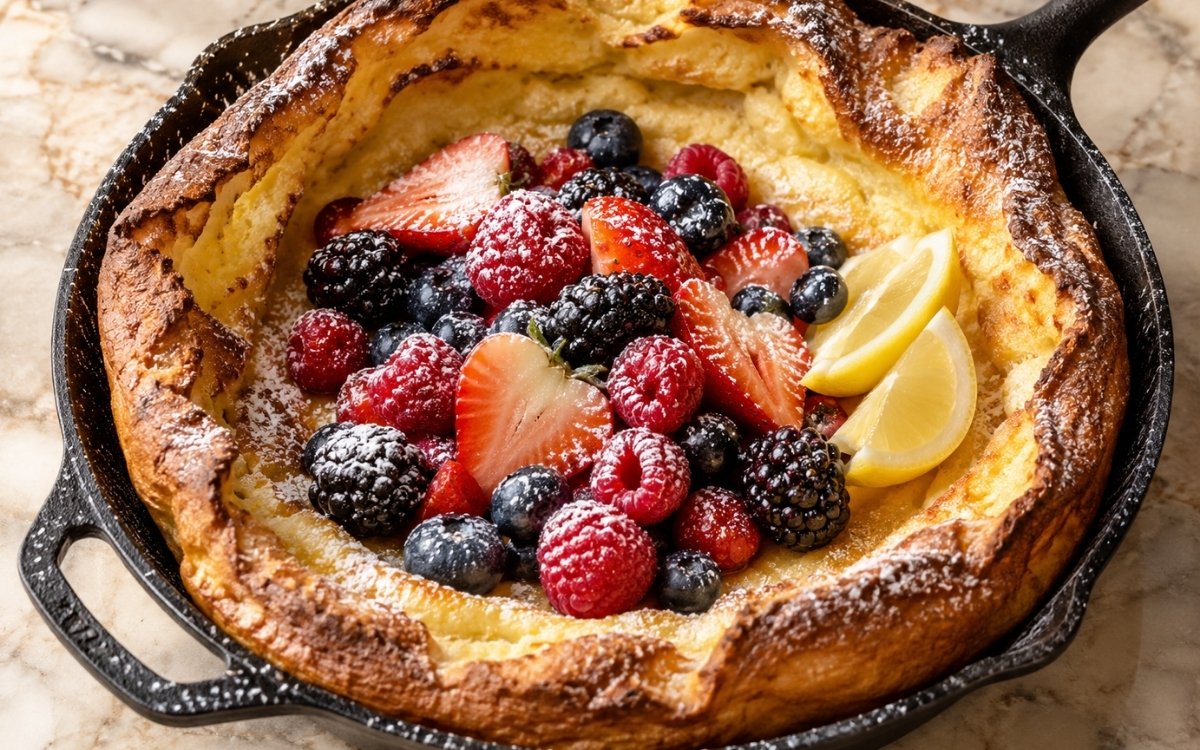
- Carefully remove the hot skillets from the oven. Add 14g butter to each skillet and swirl to coat the base and part of the sides. Immediately divide the batter evenly among the 4 skillets. Return to the oven at once. Bake for 16–20 minutes, until the edges are dramatically risen and deeply golden-brown, the peaks are lightly crisp, the center is pale golden and just set, and the pancake looks dry on the surface, not wet. Do not open the oven for at least the first 14 minutes or the pancakes may lose lift. The Dutch babies should rise high around the edges and form a natural bowl in the center. That closed-door discipline through the earliest baking stage protects the pancake's own rise from a real, sudden drop in oven temperature — even a brief door opening would let enough heat escape to deflate the batter before its own structure has fully set.
Fill and Finish
- Remove the skillets from the oven. The centers will begin to settle almost immediately. Dust generously with powdered sugar. Spoon the berry mixture into the center of each pancake, distributing it so it spreads through the collapsed middle. Add 1–2 lemon wedges to each skillet or serve wedges on the side. Fill them right after baking while the centers are warm and soft, so the berries settle into the bowl and end up in every slice. That immediate filling, right as the center is still settling, is exactly what lets the berries actually nestle into the collapsing middle rather than sitting on top of a surface that's already firmed up.
Serve
- Serve immediately, straight from the skillets or transferred carefully to plates. Cut each Dutch baby into wedges so each portion gets puffed edge, soft center, and berries. That immediate serving captures the pancake at its genuinely best moment — both the crisp edges and the soft, still-warm center begin changing noticeably within just a few minutes.
Notes
Fully preheating both the oven and the cast-iron skillets deserves genuine recognition as the technique most directly responsible for this pancake's whole dramatic rise. The recipe's own explicit note that "this initial heat is what creates the dramatic rise" reflects a real, essential foundation — a pan only partially warmed simply couldn't deliver the same instant, sustained heat the batter depends on for that explosive early puff.
Keeping the oven door closed for at least the first 14 minutes deserves the same attention this technique receives throughout classical Dutch baby and pancake baking generally. The recipe's own explicit warning that opening it early "may lose lift" reflects a real, physical risk — even a brief drop in oven temperature at this critical early stage would deflate the still-rising batter before its own structure has genuinely set.
Adding the berries only after baking, rather than into the batter itself, deserves genuine attention as a deliberate technique protecting the pancake's own rise. The recipe's own explicit guidance that berries baked into the batter "weighs it down and releases moisture" reflects real understanding of how directly that added moisture would compromise the dramatic puff this recipe is specifically built around.
Filling the pancakes immediately after baking, right as the centers begin to settle, deserves respect as a real, deliberate timing choice rather than an afterthought. That specific moment is what lets the berries actually settle into the naturally forming bowl at the pancake's center, ensuring every slice gets a genuine share of fruit.