Ingredients
Method
Make the Cold Lemon Sugar
- Zest the lemons carefully, taking only the yellow peel and avoiding all white pith. Place the zest and sugar in a bowl. Rub them together with your fingertips for 2–3 minutes until the sugar feels damp and very fragrant. Let it sit for 20–30 minutes so the sugar pulls out the citrus oils. Rubbing rather than simply mixing the zest into the sugar is what actually ruptures the peel's tiny oil glands, mechanically releasing those aromatic oils directly into the sugar without needing any heat.
Juice the Lemons
- Juice the lemons to get 320ml fresh lemon juice. Pour the lemon juice over the lemon sugar and stir until the sugar is mostly dissolved. Let stand 2–3 minutes, then stir again. Strain out the zest, pressing well to extract all the lemony syrup. The lemon juice's own acidity helps dissolve the sugar while carrying the already-released lemon oils fully into the base, and pressing the spent zest firmly before discarding it captures as much of that flavourful syrup as possible.
Prepare the Dragon Fruit Base
- Scoop out the flesh of the red dragon fruit and cut it into chunks. Blend the dragon fruit with 300ml of the cold water just until smooth. For a smoother lemonade, strain once through a fine-mesh sieve. For a more natural look, leave some of the tiny black seeds in the mixture. Using genuinely cold water at this blending stage, rather than room-temperature liquid, is what keeps the fruit's own colour and freshness intact right from this first processing step, before it ever meets the rest of the lemonade.
Build the Lemonade
- In a large pitcher, combine the lemon syrup, the dragon fruit base, the remaining 900ml cold water, and the pinch of salt, if using. Stir very well. Taste and add a little more cold water as needed to bring the total close to 2 liters and balance the sweetness, tartness, and fruit flavour. This tasting checkpoint matters directly given how much dragon fruit itself can vary in natural intensity — building in that adjustment stage accounts for that variability rather than assuming a fixed recipe always lands at the same balance.
Chill
- Refrigerate for 30 minutes until fully chilled. That resting period lets the lemon and dragon fruit components fully meld together, producing a more unified flavour than serving the drink immediately after mixing.
Serve
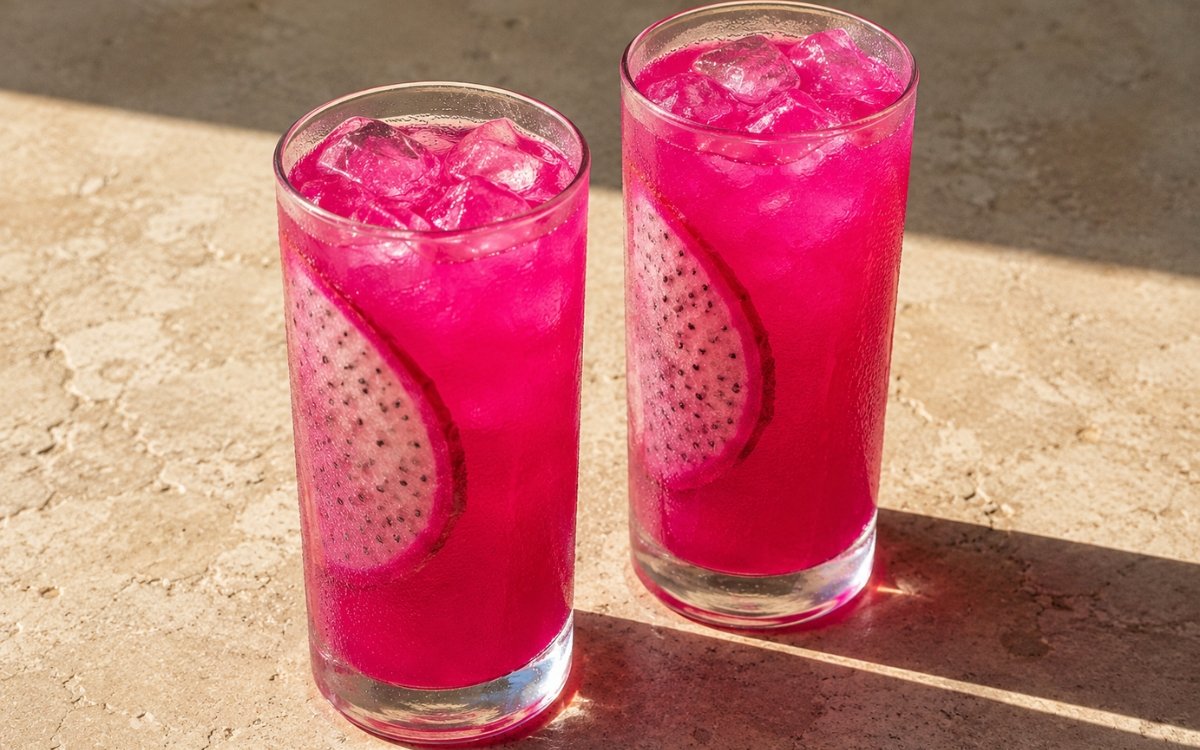
- Place a thin slice of dragon fruit inside each glass. Fill with ice, pour in the lemonade, and serve immediately. Pressing the dragon fruit slice against the glass wall before adding ice, rather than dropping it in loosely, is what keeps it visibly displayed against the glass rather than sinking or floating out of view once the drink is poured.
Notes
The strict avoidance of white pith throughout zesting deserves the same careful attention it receives across every citrus-forward drink in this collection. Lemon pith carries a real, distinct bitterness entirely separate from the fruit's natural tartness — even a small amount worked accidentally into the zest can introduce a flavour that competes directly with dragon fruit's own naturally mild, clean character.
Choosing red-fleshed dragon fruit specifically, rather than the more commonly available white-fleshed variety, deserves recognition as the single ingredient decision most responsible for this drink's entire visual identity. White-fleshed dragon fruit simply doesn't carry the same intense pigment — no amount of technique elsewhere in the recipe can substitute for starting with the correctly coloured fruit if that vivid magenta result is the goal.
Keeping every stage of this recipe genuinely cold — the blended fruit, the final water, the overall handling — protects both the drink's freshness and its colour intensity simultaneously. Dragon fruit's own vivid pigment, along with its delicate, mild flavour, can both be diminished by unnecessary warmth or extended exposure to air, which is exactly why this recipe emphasises staying cold throughout rather than treating that as a minor detail.
The recipe's own guidance about reducing added water if the dragon fruit tastes mild deserves genuine attention rather than being dismissed as a minor adjustment. Dragon fruit itself carries a naturally gentle, subtle flavour that varies from fruit to fruit — the built-in tasting stage exists specifically to let that natural variability be accounted for rather than assuming a fixed recipe always produces the same intensity.