Ingredients
Method
Season the Chicken
- Pat the chicken pieces completely dry with paper towels, then combine them in a large bowl with the 1½ tsp kosher salt, 1 tsp black pepper, 1½ tsp dried oregano, 4 minced garlic cloves, 1 tbsp lime juice, 1 tbsp white vinegar, 1 tbsp soy sauce, and 1 tbsp neutral oil. Rub the seasoning over every surface and under any folds of skin until the pieces look lightly coated and nothing pools in the bowl. Leave them at room temperature for at least 20 minutes while you slice the vegetables and rinse the rice, or cover and refrigerate for up to 4 hours. That dry, evenly seasoned surface is what lets the chicken brown instead of steam.
Cook the White Rice
- Rinse the 400g rice until the water runs mostly clear and drain it well. Bring the 650ml water to a boil in a medium pot with the 1 tbsp oil and 1 tsp kosher salt, add the rice, stir once, and cook uncovered over medium heat for 8–10 minutes until most of the water is absorbed and small steam holes appear on the surface. Stir once gently, reduce the heat to very low, cover tightly, and steam for 15 minutes, then turn off the heat and rest it, still covered, for 10 minutes before fluffing. The rice keeps its heat happily while the chicken finishes. That uninterrupted steam is what leaves the grains fluffy and separate rather than wet.
Brown the Chicken
- Heat a wide heavy pot or deep sauté pan over medium heat, add the 2 tbsp oil, then sprinkle in the 1½ tsp sugar. Let it melt and darken to a medium amber, which takes about a minute, and lay the chicken in a single layer the moment it reaches that colour. Brown for about 3 minutes per side, in two batches if the pieces crowd, until the surface is deep golden; the chicken does not need to cook through yet. If the sugar turns dark brown or smokes before the chicken goes in, wipe the pot and start again. That quick caramel is what gives the dish its deep brown colour without bitterness.
Build the Sauce
- Set the browned chicken on a plate, lower the heat slightly, and leave the rendered fat and browned bits in the pot. Add the sliced onion, the red and green pepper strips, and the 3 sliced garlic cloves, then cook for 3 minutes, stirring and scraping up the browned bits. Stir in the 2 tbsp tomato paste, 120g crushed tomato, bay leaf, and ½ tsp paprika or sazón if using, and cook for about 1 minute until the tomato darkens slightly and smells cooked. If the base looks dry, add a small splash of water before anything scorches. The vegetables should soften but keep their shape. That scraped-up fond is what carries much of the final flavour.
Braise the Chicken
- Return all the chicken to the pot, nestling the pieces into the sauce, and pour in 350ml water or light stock so the liquid comes partway up the chicken without covering it. Bring to a gentle simmer, cover, and cook over low to medium-low heat for 25 minutes, turning the chicken once halfway through. Uncover and simmer for about 5 minutes more, until the chicken is fully tender, the vegetables are soft, the sauce is glossy and lightly thickened, and a little reddish-orange oil shows at the edges. Add up to 125ml more liquid only if the sauce reduces too far, then stir in the 2 tbsp cilantro. Check breast pieces about 5 minutes earlier; every piece must read at least 74°C at the thickest part. That gentle simmer is what keeps the chicken tender and the sauce glossy instead of greasy.
Finish and Serve
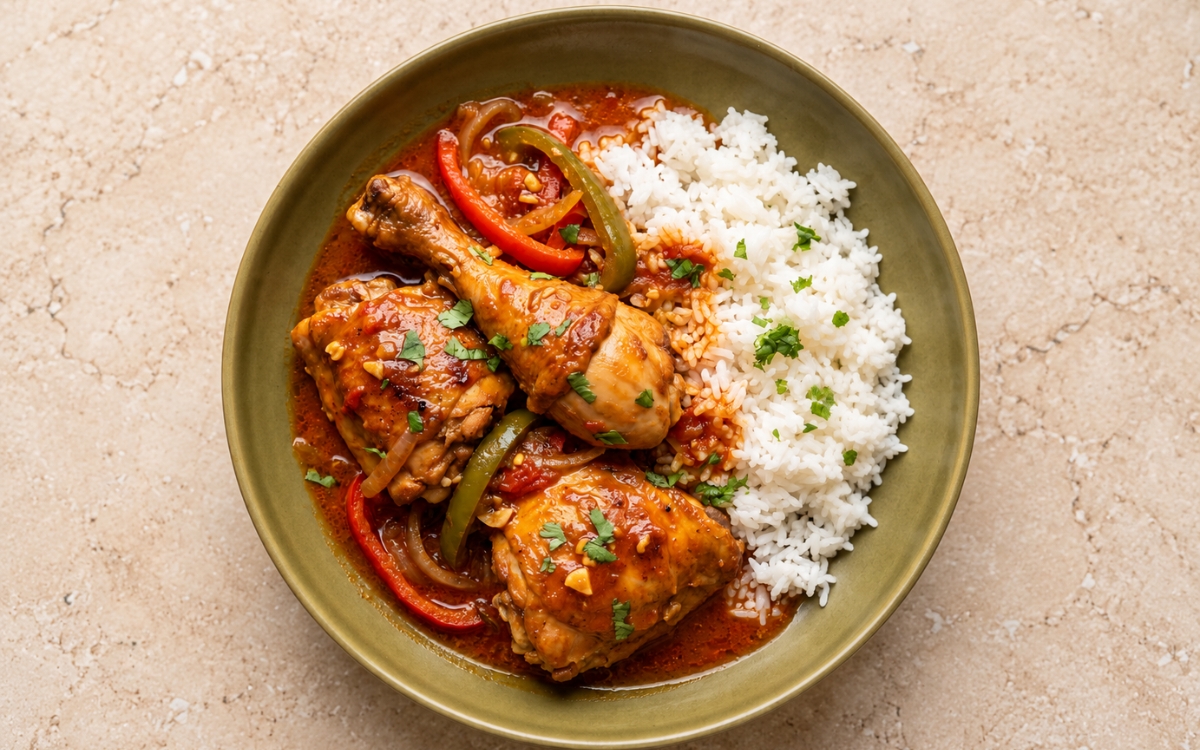
- Taste the sauce and adjust the salt if needed, then remove the bay leaf. Fluff the rested rice with a fork and plate a generous mound on each plate. Spoon 2 pieces of chicken and plenty of sauce alongside, letting a little sauce run naturally toward the rice, and garnish lightly with the extra chopped cilantro. The sauce should be spoonable and rich, loose enough to soak the rice, with the browned chicken surfaces still visible beneath it. That runoff into the rice is what makes every forkful taste of the whole pot.
Notes
The sugar caramel deserves genuine recognition as the technique most directly responsible for the deep colour of the finished guisado. The recipe’s own warning not to “let the sugar turn dark brown or black before adding the chicken, or the sauce will taste bitter” matters because sugar moves from amber to scorched within seconds, so the chicken must go into the pot the moment the caramel reaches medium amber.
Drying the chicken before seasoning deserves the same attention this technique receives throughout this collection’s other browned and braised dishes. Surface moisture turns to steam in a hot pan, so damp pieces turn grey rather than golden, and the lime, vinegar, soy sauce, and garlic coating then fails to build the browned fond that carries much of the final flavour.
The gentle simmer deserves genuine respect as the detail most directly responsible for tender chicken and a glossy, balanced sauce. The recipe’s own instruction to keep the simmer gentle, because “A hard boil tightens the chicken and makes the sauce greasy”, explains why the pot should barely bubble, so the connective tissue in the thighs and drumsticks softens slowly while the vegetables flavour the liquid.
The final sauce consistency deserves attention as a genuine, checkable readiness cue rather than a loose approximation. The recipe’s target of a sauce that is “spoonable and rich, not watery” without turning into a heavy paste is confirmed when the sauce coats a spoon glossily, a little reddish-orange oil shows at the edges, and the onions and pepper strips remain visible.