Ingredients
Method
Make the Marinara
- Heat the olive oil in a small saucepan over medium heat. Add the garlic and cook for 20–30 seconds until fragrant but not browned. Add the chili flakes if using, then pour in the crushed tomatoes or passata. Stir in the oregano. Bring to a gentle simmer and cook for 12–15 minutes, stirring occasionally, until the sauce thickens slightly and the raw tomato taste cooks out. Season with salt and black pepper, then finish with basil or parsley. Transfer to a ramekin or small serving bowl. The marinara should be bright red, lightly thickened, and spoonable — not watery. If it still tastes raw or thin, simmer a little longer. Cooking the garlic only briefly, just until fragrant, protects it from turning bitter — garlic pushed past that point and toward browning would carry an unwanted sharpness directly into the finished sauce.
Prepare the Calamari
- If needed, slice the squid tubes into rings about 1–1.5cm thick. Leave small tentacles whole and halve any very large ones. Pat the calamari extremely dry with paper towels or a clean kitchen towel. Season lightly with salt and black pepper. In a wide bowl, combine the flour and cornstarch. The calamari must be dry before dredging. Surface moisture turns the coating patchy and heavy, and it also causes more spluttering in the oil. The squid pieces should feel dry and slightly tacky, not wet or slippery. Squid naturally holds a fair amount of surface moisture, and that moisture works directly against an even, light coating — thorough drying here is what allows the flour-cornstarch mixture to adhere evenly rather than clumping unevenly against damp patches.
Heat the Oil
- Fill a deep heavy pot or fryer with neutral oil and heat to 180°C. Set a wire rack over a tray for draining the fried calamari. A wire rack is better than paper towels here because it keeps the coating crisp all around instead of trapping steam underneath. Given how quickly calamari cooks and how briefly the coating spends developing crispness, protecting that crispness immediately after frying matters more here than it might for a longer-cooked item — a rack lets residual steam escape rather than softening the coating within moments of it coming out of the oil.
Dredge and Fry
- Working in batches, toss some of the calamari in the flour-cornstarch mixture until evenly coated. Shake off all excess coating before frying. Fry in small batches at 180°C for about 60–90 seconds for smaller pieces and 1½ to 2 minutes for larger rings, just until pale golden and crisp. Do not overcrowd the pot. Transfer each batch to the wire rack and season lightly with a little extra salt while still hot. Repeat with the remaining calamari, always dredging only the batch you are about to fry. The coating should be pale golden, crisp, and dry-looking, with some lightly craggy edges. The calamari should feel springy and tender. If fried too long, it becomes firm and rubbery. Dredging immediately before frying matters. If coated too far in advance, the flour absorbs moisture from the squid and becomes gummy instead of crisp. This just-in-time dredging is a genuine technique decision rather than a convenience — squid continues releasing surface moisture even after being patted dry, and flour sitting against that moisture for any real length of time absorbs it and loses the dry, light quality needed for a crisp fry.
Finish and Serve
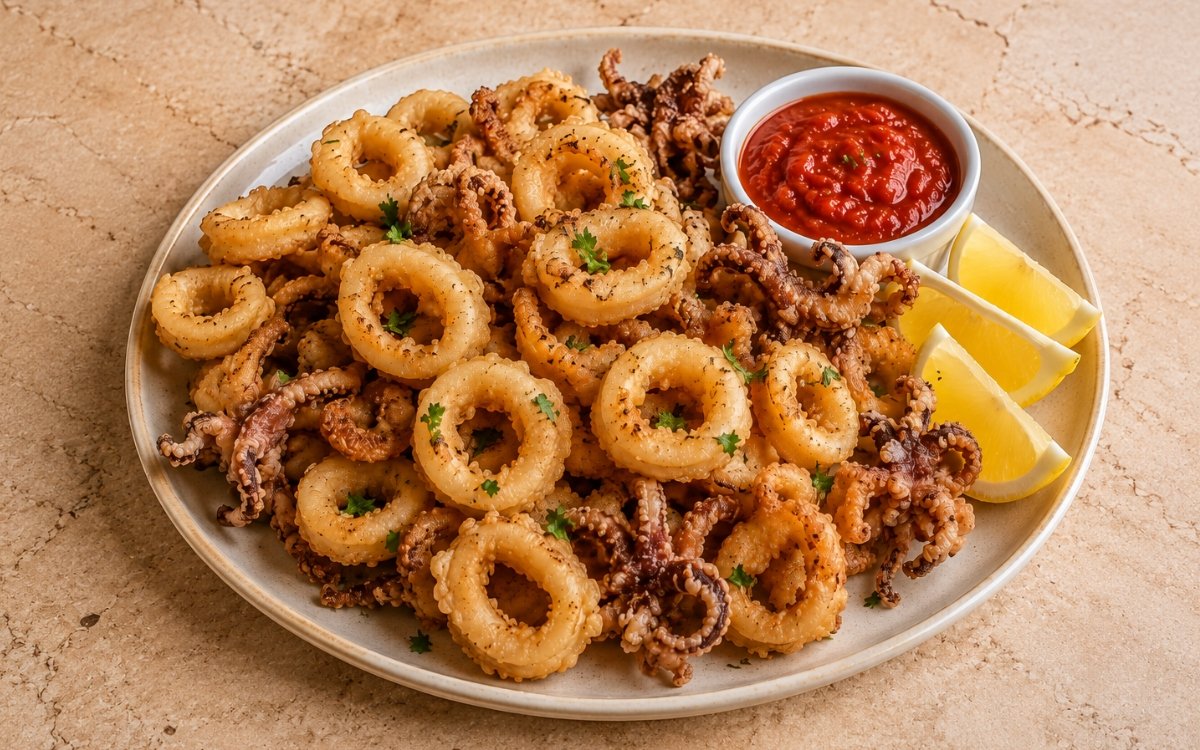
- Pile the hot fried calamari onto a serving platter. Scatter generously with chopped parsley and serve immediately with lemon wedges and the marinara alongside. Serve while hot and crisp. Squeezing lemon over the calamari only at the table, rather than well ahead of serving, keeps its acidity as a bright finishing touch rather than something that has time to soak in and soften the coating.
Notes
Calamari's specific cooking curve is worth understanding as the reason every timing instruction in this recipe is so precise. Squid's proteins tighten quickly under heat, and there's a genuinely narrow window — well under two minutes at proper frying temperature — where it stays tender before crossing into a tough, rubbery texture that doesn't reverse without a long, slow braise instead. This recipe's short fry times exist specifically to stay inside that tender window rather than accidentally crossing into the tough zone.
Drying the squid thoroughly before dredging addresses a problem that compounds through the whole frying process. Squid naturally releases surface moisture even after an initial pat-dry, and any of that lingering moisture both weakens the coating's adhesion and increases spattering once the pieces hit hot oil. The emphasis on genuine dryness here is worth taking seriously rather than treating as a routine instruction.
Dredging only the batch about to be fried, rather than coating the full quantity of squid all at once for convenience, is a small procedural choice with a real payoff in the finished texture. Flour and cornstarch sitting against squid's naturally moist surface for any extended time absorb that moisture and turn gummy rather than staying light and dry — dredging in small, immediate batches keeps every portion's coating in its ideal, freshly applied state right up until it hits the oil.
Using a wire rack rather than paper towels for draining matters more here than it might for a longer-fried item, precisely because calamari's fry time is so brief. There's very little margin to recover lost crispness once the pieces are out of the oil, and any steam trapped beneath them on a flat surface or absorbent paper works against that already-narrow window of peak texture.