Ingredients
Method
Soak the Dal and Beans
- Rinse the black urad dal and kidney beans very well, then soak them together in plenty of water for 8–12 hours, until fully hydrated and noticeably swollen. Poorly soaked lentils and beans take longer to cook and never quite reach the same creamy final texture.
Cook the Lentils
- Drain the soaked lentils and beans and add them to a pot with 1.5 L fresh water, the bay leaf, green cardamom, black cardamom, cinnamon stick, and 1 teaspoon salt. Bring to a boil, skim off any foam, then reduce to a gentle simmer. Cover partially and cook for 1½ to 2 hours, stirring occasionally, until both the urad dal and kidney beans are fully tender — the urad should squash easily between your fingers and the kidney beans should be completely soft inside with no chalky center. Add hot water as needed during cooking to keep everything submerged. Reserve the cooking liquid rather than draining the pot completely; the lentils and their starchy liquid go into the final dal together.
Build the Masala
- Heat the oil or ghee with the 40 g butter in a separate heavy pan over medium heat. Add the cumin seeds and let them sizzle briefly, then add the onion and cook for 8–10 minutes until soft and golden, neither pale nor deeply browned. Add the green chilies and ginger-garlic paste and cook 1 minute more, until the raw smell is gone. Add the tomato puree, the optional tomato paste, the salt, coriander, turmeric, Kashmiri chili powder, optional hot chili powder, and garam masala. Cook this masala over medium to medium-low heat for 10–15 minutes, stirring often, until it darkens slightly, thickens, and the fat starts separating lightly at the edges. This stage needs its full time — a tomato base that's undercooked here leaves the final dal tasting sharp and unfinished.
Combine and Slow-Cook
- Add the cooked lentils and beans along with their cooking liquid to the masala, stirring thoroughly. Use the back of a spoon or a masher to lightly mash part of the dal directly in the pot, without pureeing it, so you end up with a mix of broken-down lentils for creaminess and visible whole lentils for the classic texture. Simmer uncovered or partially covered on very low heat for 45–60 minutes, stirring often, especially along the bottom and sides so it doesn't catch, adding splashes of hot water only if needed. This long, slow stage is what turns the dish into dal makhani rather than a quicker lentil curry, and the texture should come out thick, creamy, glossy, and cohesive by the end.
Finish with Butter and Cream
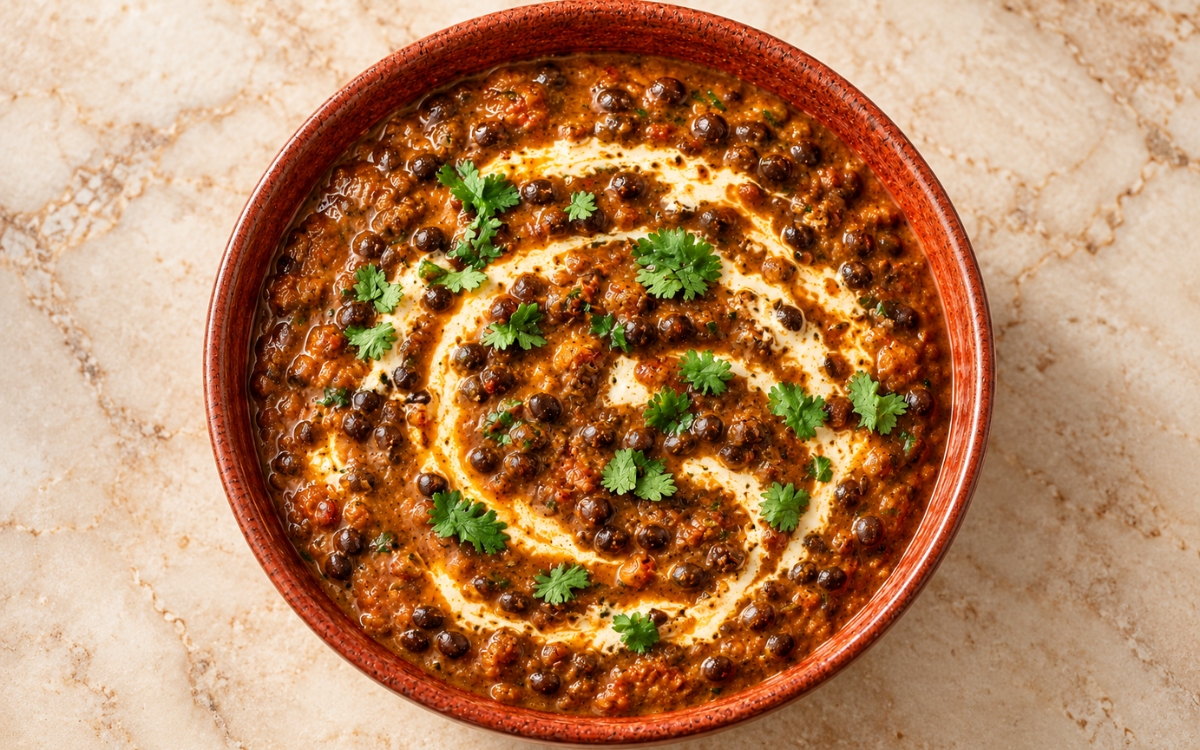
- Once the dal is thick and velvety, stir in the 30–50 g butter, the cream, crushed kasuri methi, and the final ¼ teaspoon garam masala. Simmer 5–10 minutes more on very low heat, then taste and adjust the salt, adding ½ teaspoon sugar only if the tomatoes still taste a little sharp, tasting again before adding more. The finished dal should be rich and spoon-coating, with visible whole black lentils suspended in a creamy, dark brown base.
Optional Charcoal Smoke
- For a more restaurant-style finish, heat a small piece of charcoal until red hot, place a small metal bowl in the center of the cooked dal, set the hot charcoal in it, drizzle over the ½ teaspoon ghee, and immediately cover the pot tightly for 2–3 minutes. Keep this brief — leaving the smoke too long turns it harsh rather than subtle. Remove the charcoal bowl and stir gently.
Serve
- Spoon the dal into a serving bowl, swirl a little cream over the top, and scatter lightly with cilantro. Serve hot. The finished dal should look slow-cooked, creamy, and luxurious, with a gentle sheen and visible whole lentils throughout.
Notes
Classical dal makhani is built on whole black urad dal specifically, not split black lentils, and that distinction matters for the final texture — whole urad holds its shape through the long simmer in a way split lentils can't quite replicate.
The small amount of kidney beans in this recipe adds structure and body to the dish, but urad dal should still make up most of what's in the pot; too many kidney beans shift the texture and flavor away from a classical dal makhani.
Lentils that go into the masala even slightly undercooked never become properly creamy later, no matter how much butter or cream gets added at the finishing stage — the full 1½ to 2 hours of initial cooking is what sets up everything that follows.
Dal makhani catches easily on the bottom of the pot once it thickens during the long slow-cook stage, so regular stirring through that stretch matters more here than in a thinner, quicker-cooking lentil dish.