Ingredients
Method
Prep the Yuca
- If using fresh yuca, cut away the thick brown skin and the pinkish layer beneath it completely, so only the pale cream flesh remains, then cut the roots into large 7–9cm chunks and rinse well under cold water. If a tough woody core is clearly visible at the ends, leave it in place for now and remove it after cooking, when it is far easier to pull out. Frozen yuca is usually already peeled and cut, so use it straight from the freezer without thawing. That thorough peeling is what prevents leftover skin or pink layer from staying tough and unpleasant in the finished pieces.
Boil the Yuca
- Put the 1.2kg yuca in a large pot, cover it well with cold water, and add the 2 tsp salt. Bring to a boil, then reduce the heat to a steady simmer and cook for 25–35 minutes, depending on the size of the pieces and whether they are fresh or frozen. The yuca is ready when a knife pierces it easily, the edges have begun to split slightly, and the pieces still hold their shape. Drain carefully without stirring much. That patience until the centre is fully tender is what makes the yuca creamy rather than chalky.
Remove the Fibrous Core
- Let the drained yuca stand for about 5 minutes, until cool enough to handle but still clearly warm. Split the pieces lengthwise where needed and pull out the tough, stringy woody core running through the centre of each chunk, which usually lifts out in one piece. Transfer the trimmed yuca to a wide serving bowl or platter in a loose layer so it does not steam into a pile. While you work, begin the mojo so it is ready as the yuca finishes. That removal is what leaves only soft, tender flesh in every serving.
Make the Mojo
- Heat the 80ml olive oil in a skillet or small saucepan over medium-low heat, add the sliced onion, and cook for 5–7 minutes, stirring often, until softened and lightly translucent but not deeply browned. Add the 8 sliced garlic cloves and cook gently for 30–60 seconds, just until fragrant and lightly golden in spots. Pour in the 80ml orange juice and 40ml lime juice, then add the oregano, cumin, 1 tsp kosher salt, and black pepper. Simmer gently for 1–2 minutes so the flavours come together. That low heat is what keeps the garlic sweet and golden instead of dark and bitter.
Dress and Serve the Yuca
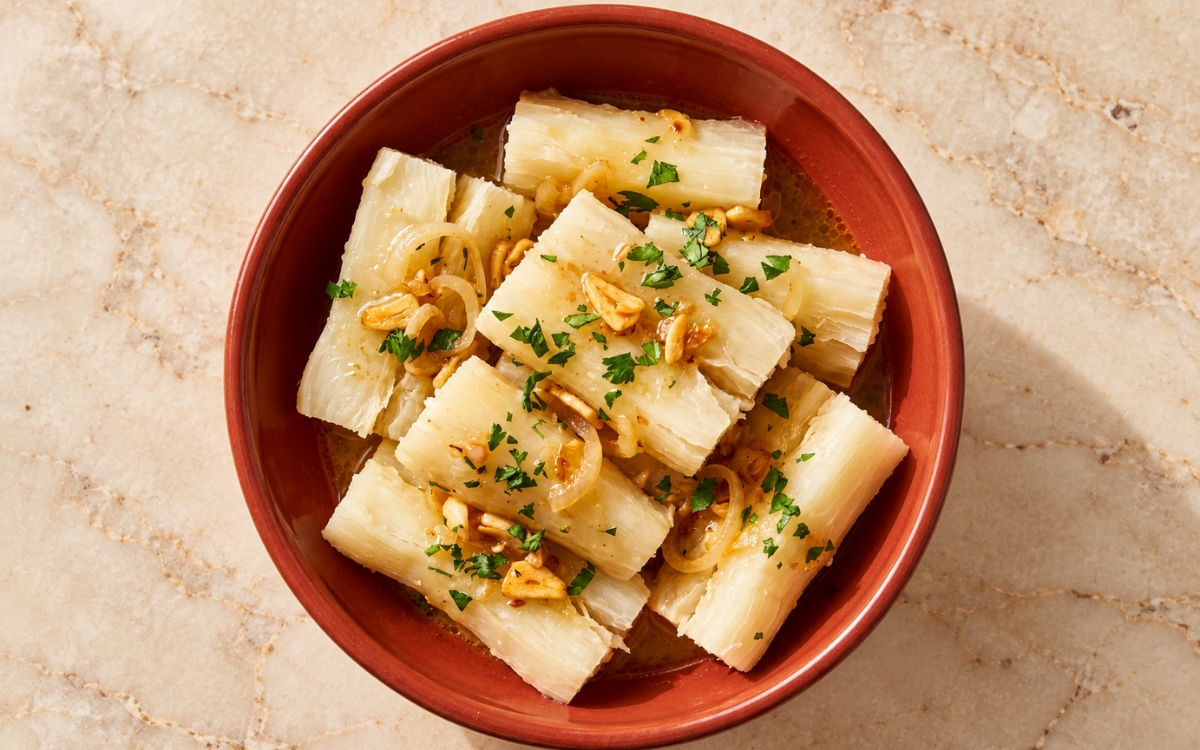
- Pour the hot mojo, with all the onions and garlic, over the warm yuca and turn the pieces very gently with a spoon until they are coated without breaking apart. Leave the dish to sit for 5–10 minutes so the yuca absorbs some of the mojo. Scatter the 2 tbsp parsley over the top, then taste and adjust with a little extra salt or lemon juice, adding the 1–2 tbsp lemon juice a spoonful at a time until the flavour tastes bright and garlicky rather than greasy or flat. That gentle turning while the cassava is still warm is what lets it soak up the sauce without breaking.
Notes
Boiling the yuca until it is completely tender deserves genuine recognition as the technique most directly responsible for whether this side dish turns out creamy or chalky. The recipe’s own explicit instruction that “Proper yuca con mojo should be creamy and tender, not chalky” reflects how the starch only softens fully once the centre is cooked, so a firm-centred piece stays dry and powdery however much mojo it receives.
Removing the woody core deserves the same attention this trimming step receives throughout this collection’s other root vegetable dishes. The recipe’s own note that “The woody center is normal and should be removed before serving” is a practical reminder that the stringy core never softens in boiling water, so leaving it in guarantees an unpleasant, fibrous bite.
Dressing the yuca while it is still warm deserves genuine respect as the detail most directly responsible for chunks that taste of mojo all the way through. The recipe’s own instruction to “Dress the yuca while it is still warm” matters because warm cassava absorbs oil and citrus readily, while cooled cassava tightens and leaves the sauce pooled underneath the pieces.
Gently cooking the onion and garlic deserves attention as a genuine, checkable cue rather than a loose approximation. The onion should look soft and lightly translucent, not caramelised, and the garlic should turn fragrant and golden in only a few spots after 30–60 seconds, because a few extra moments of heat turn it dark brown and bitter.