Ingredients
Method
Start the Rice
- Rinse the rice under cold water until the water runs mostly clear. Add the rice, water, oil or butter, and salt to a medium saucepan. Bring to a boil over medium-high heat. Once boiling, stir once, cover tightly, reduce the heat to very low, and cook for 15 minutes. Turn off the heat and leave it covered for another 10 minutes before fluffing with a fork. The finished rice should be tender, dry enough to mound on the plate, and the grains should stay separate rather than sticky. Rinsing away surface starch before cooking is what keeps the finished grains genuinely separate rather than clumping together.
Fry the Plantains
- Peel the plantains and slice them on a diagonal into pieces about 1.5cm thick. Heat the oil in a skillet over medium heat. Fry the plantains in a single layer for 2–3 minutes per side until deeply golden brown with caramelized edges. Transfer to a plate or rack. They should be soft and sweet in the center with lightly crisp browned surfaces. Sprinkle with a tiny pinch of salt if desired. Set aside and keep warm. Genuinely ripe plantains, heavily spotted with black, carry the natural sugar content this caramelisation depends on for proper browning and sweetness.
Build the Picadillo Base
- Heat the oil in a wide sauté pan or deep skillet over medium heat. Add the onion and green pepper and cook for 5–6 minutes, stirring occasionally, until softened and lightly translucent. Add the garlic and cook for 30 seconds, just until fragrant. Add the diced potatoes and cook for 3–4 minutes, stirring frequently. They do not need to brown deeply at this stage, but they should begin to take on some oil and lose their raw opaque look around the edges. Giving the potatoes this early head start in the pan, before the beef and sauce even join, matters directly for the timing that follows — potatoes need considerably longer to soften fully than the beef needs to brown, so starting them first is what lets both finish properly tender within the same simmering window.
Brown the Beef
- Add the ground beef to the pan. Break it up with a wooden spoon into small crumbles and cook for 6–8 minutes until no pink remains and the meat has lightly browned in spots. Season with the cumin, oregano, paprika, black pepper, and salt. Stir well so the spices coat the meat evenly. If the beef has released a very large amount of fat, spoon off the excess, but leave a little behind for flavor. Leaving a modest amount of rendered fat behind, rather than removing it entirely, keeps real flavour in the pan that carries directly into the sauce built in the next stage.
Simmer the Picadillo
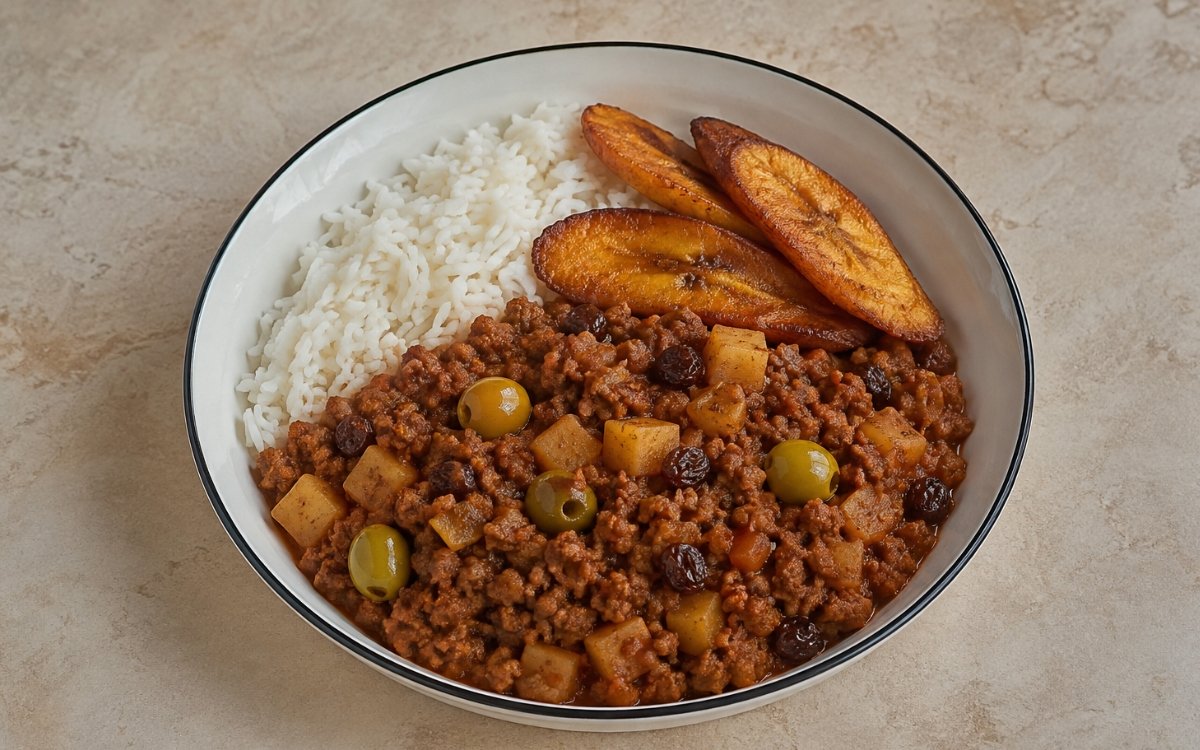
- Add the tomato paste and cook for 1 minute, stirring constantly, until it darkens slightly and smells sweeter. Add the diced tomatoes, tomato sauce, beef stock or water, and white wine. Stir well, scraping up anything stuck to the bottom of the pan. Add the bay leaves, olives, and raisins. Bring the mixture to a gentle simmer, then reduce the heat to medium-low. Cook uncovered for 20–25 minutes, stirring every few minutes, until the potatoes are fully tender and the sauce has thickened. The finished picadillo should be moist and saucy, but not watery. The potatoes should be tender all the way through when pierced with a knife, the olives should stay visible and intact, and the beef should be coated in a rich warm red sauce. Taste and adjust with a little extra salt if needed. If the tomatoes taste sharp, add the 1 teaspoon sugar and simmer for another 1–2 minutes. Cooking the tomato paste briefly before any liquid is added is what darkens and deepens its flavour — that brief step, done properly, contributes real richness that skipping straight to adding the canned tomatoes would miss.
Final Texture Check
- Remove the bay leaves. If the sauce is too loose, simmer for another few minutes until it tightens and clings to the beef. If it becomes too thick before the potatoes are fully tender, add a small splash of water or stock and continue cooking gently. You are aiming for a classic Cuban picadillo texture: juicy and spoonable, with clearly defined crumbles of beef, softened diced potatoes, visible olives and raisins, and enough sauce to sit neatly beside the rice without flooding the plate. This final check-and-adjust stage protects the dish's specific target texture — a sauce that clings rather than pools is what separates properly made picadillo from something closer to a soupy ground beef stew.
Plate and Serve
- Divide the rice among 4 plates. Spoon the picadillo alongside it and add the fried plantains on the side. Serve immediately while the picadillo is hot and the plantains are still warm and glossy.
Notes
Giving the diced potatoes a genuine early start in the pan, before the beef is even browned, deserves recognition as a deliberate timing decision rather than an arbitrary order of operations. Potatoes need meaningfully more time to soften fully than ground beef needs to brown, and starting them earlier is what lets both components reach their proper doneness within the same overall cooking window, rather than forcing a compromise between undercooked potato and overcooked beef.
Cooking the tomato paste briefly before any liquid joins it is worth respecting as a real, if quick, flavour-building step. That brief contact with direct heat darkens the paste and develops a rounder, sweeter flavour that simply adding it alongside the canned tomatoes would miss — a small step, but one with a genuine, noticeable effect on the finished sauce's depth.
The specific target texture described throughout this recipe — moist and saucy, but never watery, with a sauce that clings to the beef rather than pooling loosely — deserves to be checked for deliberately rather than assumed automatically from the specified simmering time. Given how tomatoes and stock vary in their own liquid content, the final texture check-and-adjust stage exists specifically because that target consistency isn't always guaranteed by following the timing alone.
Green olives and raisins together, as the recipe's own notes emphasise, are genuinely essential to picadillo's classic sweet-salty identity, not simply optional add-ins. Their combined presence — briny olives against sweet raisins — is what gives this dish its recognisable Cuban character; omitting either would leave the finished picadillo tasting notably less complete and less true to the classic profile.