Ingredients
Method
Prepare and Marinate the Steak
- Lay each steak portion between sheets of baking paper or plastic wrap and pound to an even thickness of about 5–7mm. The steaks should be thin and wide, not ragged or torn. If any piece becomes uneven, trim or gently flatten the thicker areas so they fry evenly. In a shallow dish, mix the garlic, lime juice, oil, salt, pepper, cumin, and oregano. Add the steaks and turn to coat thoroughly. Cover and marinate for 30 minutes at room temperature, or refrigerate up to 2 hours if needed. The marinade should lightly season the meat without making it wet for too long. Too long in strong citrus can start to cure the surface and affect the final texture. Pounding to a genuinely even thickness across the whole piece, not just thin overall, is what matters most here — an unevenly pounded steak forces a compromise where the thinnest spots overcook before the thickest sections have finished, especially given how briefly these cutlets fry.
Start the White Rice
- Rinse the rice under cold water until the water runs mostly clear. Combine the rice, water, salt, and oil or butter in a saucepan. Bring to a boil over medium-high heat. Once boiling, stir once, reduce the heat to low, cover tightly, and cook for 15 minutes. Turn off the heat and let it stand, covered, for 10 minutes. Fluff gently with a fork just before serving. The rice is ready when the grains are tender, separate, and no visible water remains at the bottom of the pan. Keep covered so it stays warm and steamy. Rinsing away surface starch before cooking is what keeps the finished grains separate and fluffy rather than clumping together into something stickier.
Cook the Black Beans
- Heat the olive oil in a saucepan over medium heat. Add the onion and cook for 4–5 minutes until softened and lightly translucent. Add the garlic, cumin, and oregano and cook for 30 seconds, stirring constantly, until fragrant. Add the black beans with their liquid, the bay leaf, vinegar, salt, and a few grinds of black pepper. Bring to a gentle simmer and cook for 15–20 minutes, stirring occasionally. If the beans become too thick before they are fully seasoned, add a splash of water. Lightly mash a small portion of the beans against the side of the pan to thicken the liquid naturally, but keep most of the beans whole. The finished beans should be glossy and spoonable, not soupy and not dry. Remove the bay leaf before serving. Mashing only a small portion of the beans, rather than the whole batch, thickens the surrounding liquid naturally while still leaving most beans intact — that's a deliberate middle ground between a fully smooth purée and a completely loose, brothy pot.
Fry the Sweet Plantains
- Peel the ripe plantains and slice them on a slight diagonal into pieces about 1.5cm thick. Heat the oil in a skillet over medium heat. Fry the plantain slices in batches for about 2–3 minutes per side until deeply golden brown with caramelized edges. Transfer to a plate lined lightly with paper towel or a wire rack. The plantains should be soft and custardy in the center with deep brown edges. If the heat is too high, they burn before the inside softens, so keep the heat at medium rather than high. Genuinely ripe plantains, heavily spotted with black, carry the natural sugar content responsible for real caramelisation during this fry — that same sugar is what lets the exterior brown deeply while the interior has time to soften into its characteristic custardy texture.
Bread the Steaks
- Remove the marinated steaks from the dish and pat them lightly with paper towel. They should remain seasoned but not dripping wet, or the breading will not adhere properly. Set up three shallow dishes: flour mixed with salt and pepper, eggs beaten with the water, and breadcrumbs with optional panko if using. Dredge each steak first in the flour, shaking off excess. Dip into the egg, letting the excess drip away, then press into the breadcrumbs until evenly coated on both sides. Place the breaded steaks on a tray and let them rest for 5 minutes so the coating hydrates and adheres better. That brief resting period lets the egg wash begin properly hydrating and binding to the breadcrumb layer before the coating faces the sudden shock of hot oil — skipping this pause is one of the more common reasons a breading sheds and slips off during frying.
Fry the Bistec Empanizado
- Pour enough oil into a large skillet to come about 1cm up the sides. Heat to 175°C. If you do not have a thermometer, test with a breadcrumb — it should sizzle immediately but not darken too fast. Fry the steaks one or two at a time depending on pan size, without crowding, for about 2–3 minutes per side. Turn carefully once the first side is deep golden and the coating feels set. Fry until both sides are evenly browned and crisp. Transfer to a wire rack, not paper towels, so the crust stays crisp. Sprinkle very lightly with a pinch of salt while hot if needed. The steaks are done when the crust is crisp and deeply golden, and the beef inside is just cooked through. Because they are pounded thin, they cook quickly — overfrying will dry them out. Any hot, freshly fried item resting on a flat surface or absorbent paper traps steam directly beneath it — a wire rack's open structure lets that steam escape freely instead, which is exactly what keeps the crust from softening within minutes of coming out of the oil.
Plate and Serve
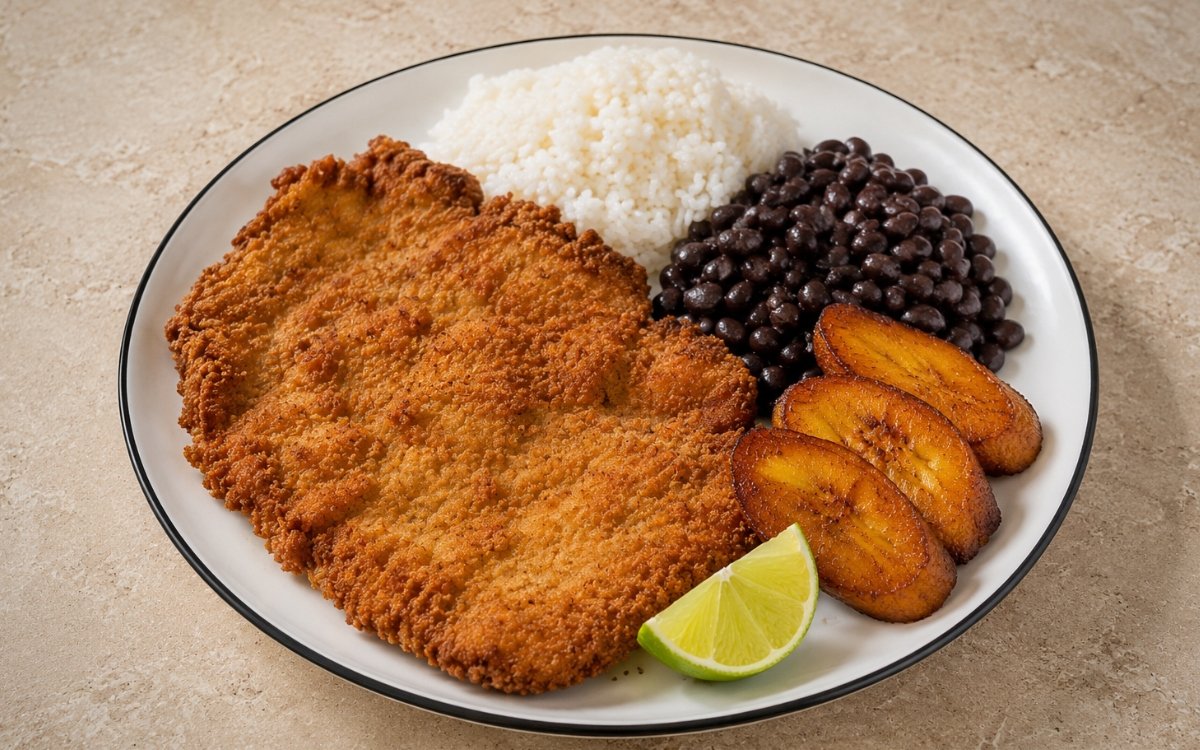
- Serve each plate with one bistec empanizado, a mound of white rice, a portion of black beans, and several fried sweet plantain slices. Add a lime wedge on the side. Serve immediately while the steak crust is still crisp, the rice is hot, the beans are silky, and the plantains are still warm and soft.
Notes
Pounding the beef to a genuinely even thickness, not merely thin overall, deserves real attention as the technique responsible for whether this dish's crust and interior finish together properly. Because these cutlets fry for such a short window, any thickness variation forces a compromise — the thinner sections finish and risk drying out before the thicker areas have even fully cooked through, undermining the whole point of pounding the meat thin in the first place.
Letting the breaded steaks rest briefly before frying is worth respecting despite how minor it looks on paper. That short window gives the egg wash time to genuinely begin binding the breadcrumb layer to the meat beneath it — a coating that goes straight from dredging into hot oil, without that pause, is considerably more likely to shed and slip loose during frying rather than staying properly attached.
Draining the fried cutlets on a wire rack rather than paper towels follows the same logic used throughout this collection's other fried, breaded proteins. Trapped steam beneath a hot, freshly fried item softens its crust from below within minutes — a wire rack's open structure is specifically what avoids that outcome, letting the crust stay genuinely crisp right up until serving.
Using genuinely ripe plantains, with real black spotting rather than just yellow skin, is worth understanding as a real ingredient requirement specific to achieving proper caramelisation. That ripeness carries the natural sugar content the frying stage depends on — plantains that are merely yellow, without much black spotting, simply won't caramelise the same way, staying starchier and less sweet regardless of frying technique.