Ingredients
Method
Cook and Season the Sushi Rice
- Rinse the 300g of sushi rice under cold running water 4–6 times until the water running through the grains is nearly clear — sushi rice has a higher surface starch content than standard rice and requires thorough rinsing to prevent the seasoned rice from becoming gluey and dense rather than slightly sticky with individual grain identity. Combine the rinsed rice with 480ml of cold water in a medium saucepan. Bring to a full rolling boil, reduce immediately to the lowest possible setting, cover tightly, and simmer for 15 minutes without lifting the lid. Remove from heat and rest covered for 5 minutes. In a small bowl, stir together the 45ml of rice vinegar, 15g of sugar, and 7g of salt until fully dissolved. Transfer the cooked rice to a large, wide, non-metallic bowl. Pour the vinegar mixture evenly over the warm rice and fold it through using a cutting-and-folding motion with a rice paddle or flat wooden spoon — the cutting-and-folding rather than stirring preserves each grain's individual integrity while distributing the seasoning evenly. While folding, fan the rice simultaneously with a hand fan, a magazine, or the pot's lid — the moving air evaporates the surface moisture that the vinegar mixture brings to each grain, creating the characteristic slightly tacky, slightly dry, glossy surface of properly seasoned sushi rice. Spread the seasoned rice in an even layer on a large baking sheet. Allow to cool completely to room temperature — a minimum of 30 minutes. Do not refrigerate; cold temperature makes the starch retrogradation too rigid for the crispy rice balls to compress properly.
Form and Bake the Crispy Rice
- Preheat the oven to 220°C. Line a clean baking sheet with parchment paper. With lightly wet hands — keeping a small bowl of cold water nearby — take approximately 2–3 tablespoons of the cooled sushi rice and compress it firmly into a compact ball or rough cube approximately 2.5cm in diameter. The key technique in this step is the firmness of compression: the rice must be pressed tightly enough that the formed shape holds together completely without any pieces separating when lifted, but not so aggressively that it becomes a dense, uniform block without any internal texture variation. Each piece should feel solid and dense when squeezed. Place each formed piece on the parchment-lined baking sheet with clear space between each — the pieces need surrounding hot air circulation to crisp on all surfaces rather than only on the tray-facing base. Spray each piece lightly and evenly with cooking spray or neutral oil — the oil coating is what produces the golden, crunchy surface during baking by facilitating the browning of the rice starch. Without oil the surface dries rather than crisps. Place in the preheated 220°C oven and bake for 25–35 minutes, turning each piece once carefully at the halfway point to expose the other faces to the oven's direct heat. The correctly baked crispy rice should feel firm and crisp across all surfaces when pressed and show a light golden colour on the exposed faces. The interior — accessed by pressing firmly with a finger — should yield slightly, indicating the remaining soft-chewy core that is the specific textural pleasure of crispy rice. Fully dried-through rice pieces without a chewy core lose the contrast that makes the preparation compelling.
Marinate the Tuna
- While the rice bakes in its final 15 minutes, prepare the tuna. In a medium bowl, whisk together the 60ml of soy sauce, 15ml of sesame oil, 10ml of rice vinegar, 5g of grated ginger, and 2 minced garlic cloves until combined. Add the 600g of cubed sushi-grade ahi tuna and gently fold to coat every piece evenly — fold rather than stir, which would bruise the delicate tuna cubes and begin to break down their clean, firm texture. Refrigerate for exactly 10–15 minutes. This marinating window is specifically controlled: the soy sauce's sodium chloride begins drawing moisture from the tuna's surface through osmosis from the moment of contact, beginning a mild curing process that firms the surface and slightly changes the texture. Within 10–15 minutes the tuna's surface has absorbed the marinade's flavour without any curing damage to the texture — it remains clean, fresh, and yielding. Significantly beyond 15 minutes the curing effect becomes noticeable — the tuna becomes firmer and the fresh, clean eating quality that makes sushi-grade tuna specifically worth using begins to be lost. Always use sushi-grade ahi tuna sourced from a reputable fishmonger for this preparation.
Prepare the Avocado
- Halve, pit, and slice each avocado thinly immediately before assembly — avocado oxidises rapidly once cut, and the clean, pale green-yellow colour is part of the dish's visual appeal. Season the sliced avocado lightly with fine sea salt and freshly cracked black pepper directly on the cutting board before arranging on the plate — seasoning the avocado separately ensures it is specifically seasoned rather than relying on the marinade's drizzle to season it from contact.
Assemble and Serve Immediately
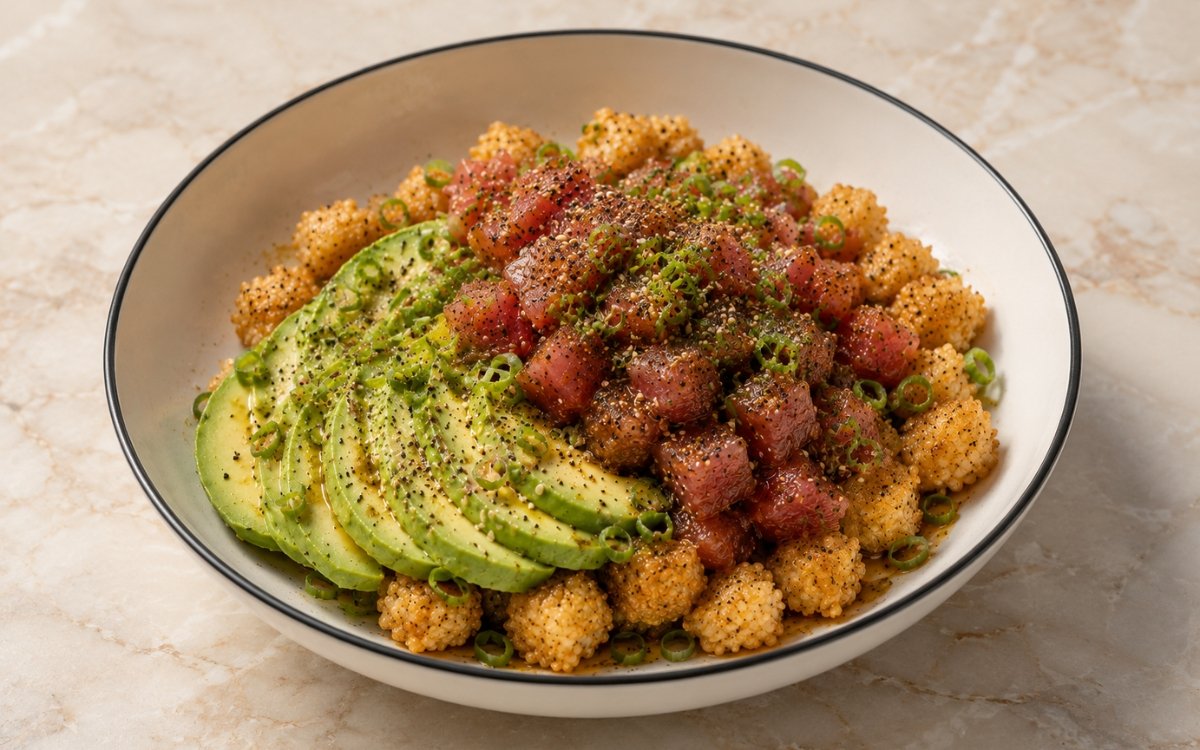
- Divide the warm crispy rice pieces among four shallow bowls or plates — 5–6 pieces per person. Spoon the marinated tuna generously over the crispy rice immediately — the warm rice beneath the cold, marinated tuna produces the thermal contrast that is one of the preparation's most pleasurable qualities. Arrange the thinly sliced avocado alongside the tuna rather than over it — the distinct placement allows each component's individual identity to be visible and for the person eating to combine them in each bite as preferred. Spoon a few tablespoons of the accumulated tuna marinade from the bottom of the marinating bowl over each portion — the marinade has absorbed some of the tuna's natural juices during the 10–15 minute rest and is more complex and specifically flavourful than it was when first mixed. Scatter the thinly sliced scallions over each bowl. Serve immediately — the window between the warm, crunchy rice and the softening that occurs as the marinade contacts the rice surface is approximately 5–10 minutes.
Notes
The crispy rice technique — sushi rice formed into compressed balls and baked or fried until crunchy — became widely associated with the omakase and Japanese-inspired small plates restaurant tradition of the 2010s and 2020s, appearing as a bite-sized appetiser at many high-end sushi and fusion restaurants. The specific pleasure it provides is textural: the crunch of the baked rice exterior against the slightly chewy compressed interior, against the silky, cold marinated tuna, against the creamy avocado. All four textures are present simultaneously in a single bite, which is why the dish requires immediate serving — any delay allows the marinade to soften the rice, the tuna to warm, and the avocado to oxidise, progressively eliminating the contrasts that make it specifically compelling.
For the crispiest baked result, the rice pieces benefit from being formed and refrigerated uncovered on the baking sheet for 30–60 minutes before baking — the refrigerated air drying the surface slightly and producing a faster, crisper crust in the oven. This also makes the pieces easier to handle during turning at the halfway point.