Ingredients
Method
Prepare the Chicken
- Cut the chicken thighs into large, even pieces around 4cm in size. Consistency matters here — uneven pieces cook at different rates and ruin texture control. Pat the chicken completely dry using paper towels. This is critical because moisture prevents the cornstarch from forming a proper coating and interferes with browning.
Coat the Chicken
- Combine cornstarch, salt, and black pepper in a bowl, then add the chicken and toss until every piece is evenly coated. The coating should be light but complete — no wet patches, no thick clumps. Cornstarch forms a dry, starchy surface that crisps quickly and creates texture for the glaze to adhere to later.
Sear the Chicken
- Heat vegetable oil in a large skillet over medium-high heat until shimmering. Place the chicken in a single layer without overcrowding. If necessary, cook in batches. Overcrowding drops the temperature and causes steaming instead of searing, which destroys the texture before you even get to the glaze stage.
Build the Crust
- Cook the chicken undisturbed for about 3 minutes until the underside develops a golden crust, then flip and repeat on the other side. The goal here is not to fully cook the chicken, but to create a stable, crisp exterior. Remove the chicken once both sides are browned — this prevents overcooking while you build the sauce.
Build the Aromatic Base
- In the same pan, reduce the heat slightly and add garlic and ginger. Cook for about 30 seconds, stirring constantly. This step releases aromatic compounds into the oil, forming the base of the glaze. Do not let them brown — burnt garlic will ruin the entire dish with bitterness.
Create the Glaze
- Add honey, soy sauce, rice vinegar, and red pepper flakes to the pan and bring to a simmer. Cook for about 2 minutes until the sauce thickens slightly and becomes glossy. This is where the balance forms — sweetness from honey, salt from soy sauce, and acidity from vinegar preventing the glaze from becoming heavy.
Coat and Reduce
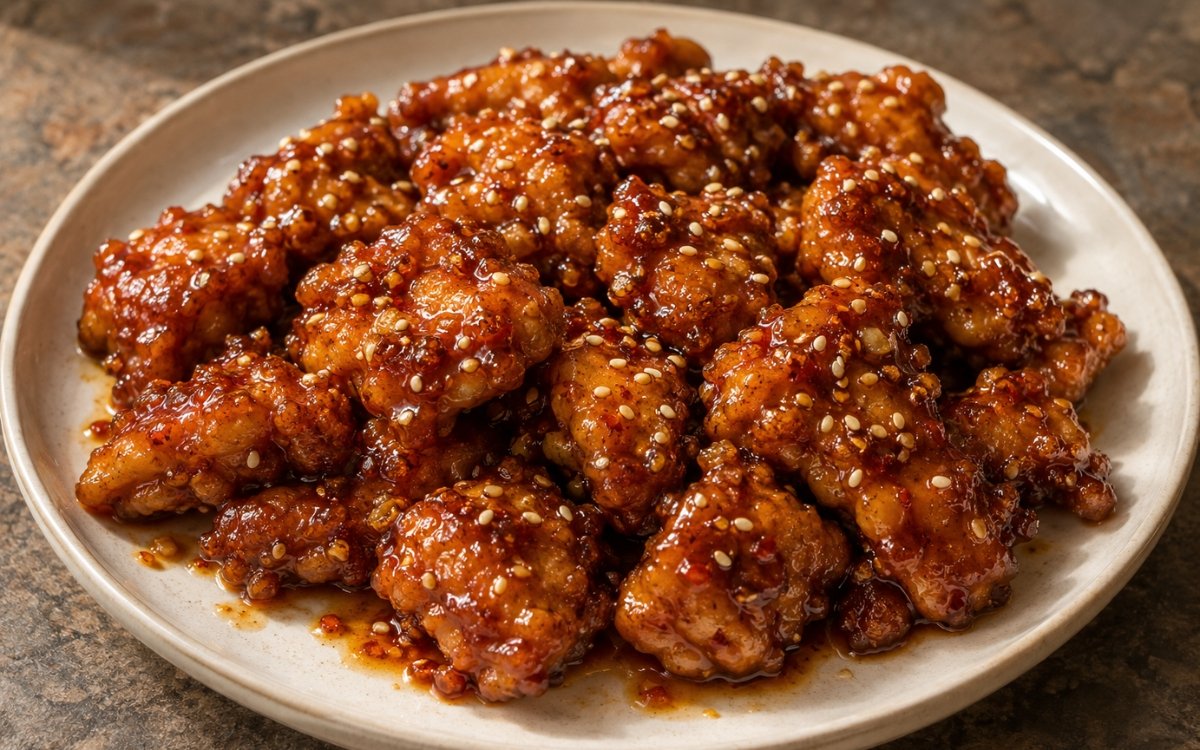
- Return the chicken to the pan and toss continuously to coat every piece evenly. Continue cooking for 2–3 minutes as the sauce reduces further and tightens around the chicken. The glaze should cling, not pool — forming a sticky, lacquered coating that holds onto the crisp surface.
Finish and Serve
- Transfer immediately to a serving plate and garnish with sesame seeds. Serve hot while the glaze is still fluid and the coating retains its structure. Waiting too long allows steam to soften the crust and dull the texture.
Notes
Consistent 4cm chicken pieces matter more than they might seem for this specific dish. Pieces of varying sizes reach the crust-forming stage at different rates during the initial sear, and that inconsistency carries through into the final glazing stage, where smaller pieces risk overcooking while larger ones are still catching up.
The two-stage cooking approach — a partial sear for crust, then finishing in the glaze — is specifically what prevents the dryness that fully cooking the chicken during the initial sear and then continuing to cook it in the glaze would cause. Removing the chicken once both sides are browned, before it's fully done, leaves room for the glazing stage to finish the interior gently.
Garlic and ginger's brief 30-second cook time protects them from the bitterness that develops quickly at sustained heat. This is a narrow window, and stirring constantly during it is what prevents any portion of the aromatics from sitting too long in one hot spot.