Ingredients
Method
Shred and Rinse Potatoes
- Peel and coarsely shred the 800g russet potatoes. Place shreds in a bowl of cold water and swish vigorously to wash off surface starch; the water should turn cloudy. Drain thoroughly, and if the water was extremely starchy, rinse once more for a cleaner, crispier fry.
Remove Moisture Completely
- Transfer the potatoes to a clean kitchen towel (or cheesecloth), wrap tightly, and squeeze firmly over the sink until you've removed as much liquid as possible. Then loosen the shreds with your fingers so they aren't packed into wet clumps. This step controls crispness — wet potatoes steam instead of frying.
Season the Potatoes
- Place the dry shreds in a bowl and toss evenly with the 6g salt, 2g black pepper, and 2g onion powder. Mix with your hands so seasoning distributes through the shreds rather than sitting in one area.
Pan Fry Until Crispy
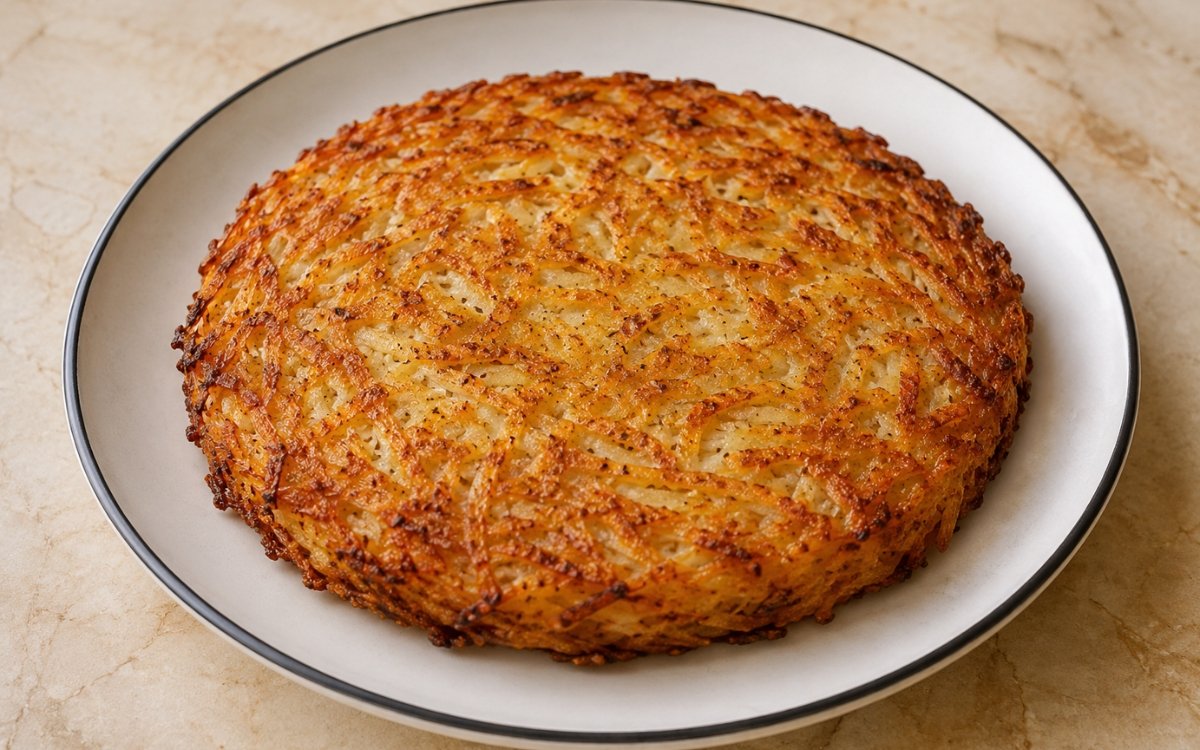
- Heat a large non-stick skillet or cast iron pan (28–30cm) over medium-high heat. Add the 40ml vegetable oil and 20g butter; once the butter foams and the fat is shimmering, add the potatoes in an even layer and press firmly with a spatula to form a flat "cake." Cook undisturbed 8–10 minutes until the bottom is deep golden and releases from the pan; flip in sections (or slide onto a plate, invert, and return) and cook another 8–10 minutes until the second side is equally crisp. Break into portions and serve immediately.
Notes
Rinsing the shredded potatoes is a genuinely different starch-removal step than the soaking used for cut fries elsewhere in this collection. Shredded potato has considerably more exposed surface area relative to its volume than a cubed or sliced piece, meaning it releases starch far more readily — a vigorous swish rather than a passive soak is what actually clears that starch efficiently.
Wringing the shreds in a towel is deliberately more aggressive than the pat-drying used for other roasted or fried potato preparations in this collection. Shredded potato holds moisture within its structure in a way that whole cubes or slices don't, and only genuine, forceful squeezing extracts enough of that internal liquid to allow real crisping.
Pressing the shreds into a single compact cake and leaving it undisturbed is what builds a connected, sheet-like crust rather than individually browned strands. Stirring or breaking up the potatoes during the cook interrupts that connection and produces a looser, less structurally satisfying result.