Ingredients
Method
Make the Brioche Buns
- Combine the flour, salt, sugar, and yeast in a bowl. Add the warm milk, warm water, egg, and softened butter, then mix into a rough dough and knead until smooth and elastic, about 8–10 minutes. Let rise until doubled, then divide into 4 equal portions and shape into smooth buns. Place on a lined tray, flatten gently, proof until puffy, brush with egg wash, and bake at 190°C for 16–18 minutes until deeply golden. Brush immediately with melted butter and cool before slicing. Brushing the buns with butter the moment they come out of the oven, while the crust is still hot, lets that butter melt in and soak slightly rather than sitting on top, giving the finished bun a softer, richer crust once cooled.
Make the Tartar Sauce
- In a bowl, mix the mayonnaise, chopped pickles, capers, Dijon, lemon juice, garlic, and herbs. Season with salt and black pepper to taste. Refrigerate until needed. The sauce should taste tangy, creamy, and sharp enough to cut through the fried fish. Finely chopping the pickles and capers, rather than leaving them whole or roughly cut, distributes their sharp, briny flavour evenly through the sauce so every spoonful carries the same balance rather than occasional concentrated bites.
Prep the Fish
- Pat the cod dry very well with paper towels. Season lightly with salt and black pepper. If the cod pieces are very thick on one side and thin on the other, trim or shape them slightly so they cook evenly and fit the buns better. Evening out each piece's thickness matters directly for the fry — an unevenly shaped fillet risks the thinner section overcooking and drying out before the thicker section is properly done.
Prepare the Dredge and Batter
- In one shallow bowl, combine the flour, cornstarch, salt, pepper, garlic powder, and smoked paprika for the dry dredge. In another bowl, whisk together the flour, cornstarch, baking powder, salt, garlic powder, and black pepper for the batter. Pour in the cold beer and whisk just until smooth. The batter should be thick enough to cling to the fish but still fluid. Keep it cold for the lightest crust. Whisking only until smooth, rather than working the batter longer, avoids overdeveloping gluten in the flour — an overworked batter fries into something denser and chewier rather than the light, crisp crust this sandwich depends on.
Heat the Oil
- Heat neutral oil in a deep pot or heavy fryer to 175–180°C. Have a rack or paper towel-lined tray ready for draining. Also preheat the oven to a very low setting if you want to hold the first fried fillets warm while finishing the batch. This temperature window is calibrated for a fillet of real thickness — hot enough to crisp the batter at a reasonable pace, but not so hot that the exterior darkens before the fish itself has cooked through.
Fry the Fish
- Dredge each cod fillet lightly in the dry flour mixture, shaking off the excess. Dip into the beer batter and let excess batter drip off briefly. Lower the fillets carefully into the hot oil and fry for about 4–6 minutes, depending on thickness, until deeply golden brown, crisp, and cooked through. The coating should be crunchy and evenly browned, and the fish should flake easily. The internal temperature should reach 63°C. Transfer to the rack, season immediately with a little extra salt, and fry the remaining fillets. The dry dredge beneath the wet batter gives it a textured surface to grip immediately on contact, which is what prevents the batter from sliding or pooling unevenly the way it would on bare, moist fish.
Toast the Buns
- Slice the brioche buns and toast the cut sides lightly in a pan or on a griddle until warm and lightly golden. They should stay soft but gain a little structure so the sandwich holds up once the sauce is added. This light toasting gives the soft brioche real, if modest, resistance against the tartar sauce spread on both sides — an untoasted bun would have considerably less tolerance for that moisture over the course of eating the sandwich.
Assemble the Sandwiches
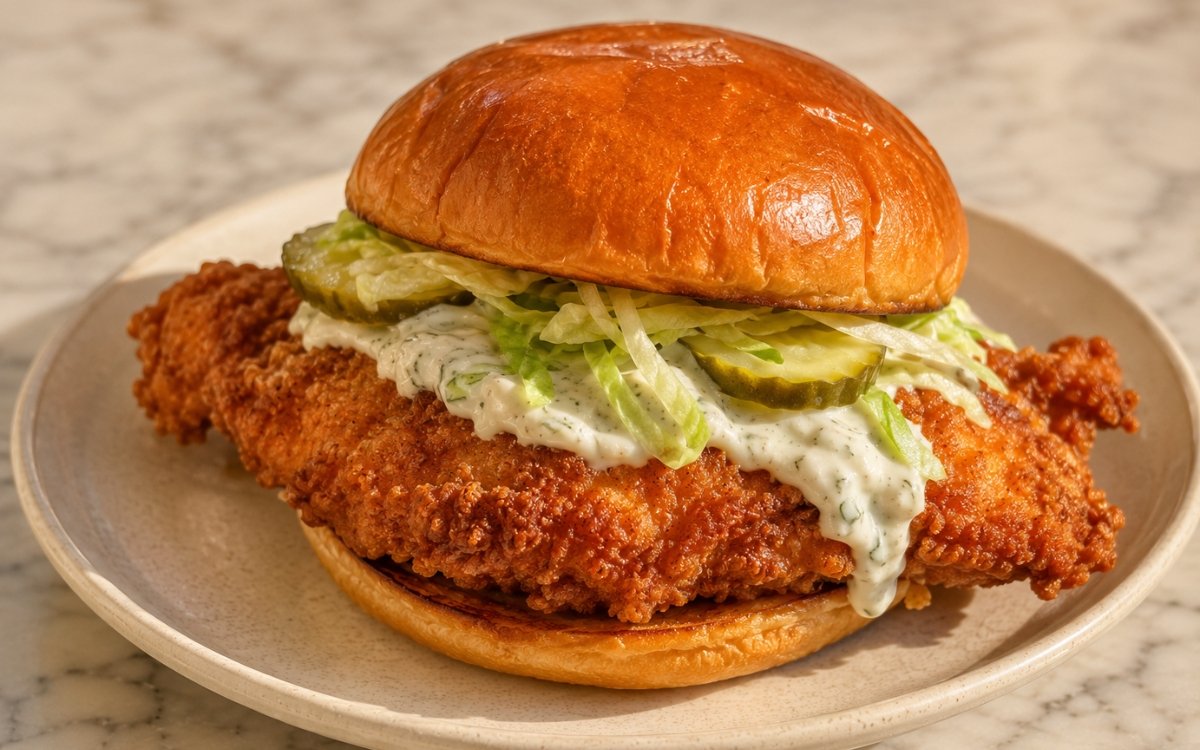
- Spread tartar sauce on both the bottom and top bun. Place one fried cod fillet on each bottom bun. Top with a small handful of shredded lettuce and 5–6 pickle slices. Close with the top bun and serve immediately while the fish is still hot and crisp. Spreading sauce on both halves rather than only one distributes its tangy flavour through every bite rather than concentrating it on a single side.
Notes
Keeping the beer genuinely cold right up until it's whisked into the batter is worth taking seriously rather than treating as a minor detail. The temperature contrast between cold batter and hot oil is part of what produces a lighter, crisper crust — batter that's allowed to warm up loses some of that advantage, and the resulting crust tends to be denser and less shatter-crisp than one built from properly chilled ingredients.
The dry-dredge-before-wet-batter sequence addresses a problem that's easy to underestimate until it goes wrong. Fish is naturally moist and somewhat slick, and wet batter poured or dipped directly onto that surface without a dry layer first tends to slide and pool unevenly rather than coating consistently. The thin flour-cornstarch dredge gives the batter something textured to grip on contact, which is the difference between an evenly, fully coated fillet and one with bare or thin patches.
Trimming or reshaping unevenly thick cod pieces before frying is a small adjustment that pays off directly at the fryer. A fillet with a thick end and a thin end forces a compromise — by the time the thick section is properly cooked through, the thin section has likely overcooked and dried out. Evening out the thickness beforehand lets the whole piece cook through at roughly the same rate.
The tartar sauce's role here is worth understanding as more than a simple condiment. Fried fish, however well executed, is rich and can taste one-dimensional without a sharp, acidic counterpoint. The sauce's combination of tangy pickles, briny capers, mustard, and lemon juice is specifically built to cut through that richness, which is why it's spread generously on both halves of the bun rather than used sparingly.