Ingredients
Method
Prepare the Tortilla Dough
- If making homemade tortillas, combine the masa harina and salt in a bowl. Pour in the warm water and mix until no dry flour remains. Knead briefly in the bowl for 1–2 minutes until a smooth dough forms. Divide into 16 equal balls, about 40g each. Keep them covered with a damp towel so the surface does not dry out. Press each ball between plastic or baking paper in a tortilla press, or flatten with a heavy pan, into small round tortillas about 13–15cm wide. Cook each tortilla on a hot dry skillet or comal until the surface looks matte and lightly set, about 30–45 seconds on the first side, 45 seconds on the second, then a brief final flip. Keep the cooked tortillas stacked and wrapped in a towel so they stay warm and pliable. The tortillas should be fully flexible and warm, not crisp or dry. If they cool too much before rolling, they will crack instead of wrapping tightly around the filling. Homemade tortillas must stay covered and warm until assembly. This matters more here than for table tortillas because rolled taquitos need maximum flexibility.
Cook the Beef Filling
- Heat the oil in a heavy pot or Dutch oven over medium-high heat. Season the beef with the salt, pepper, cumin, garlic powder, onion powder, oregano, and smoked paprika. Sear the beef in batches until well browned on several sides. Remove to a plate. Add the sliced onion to the pot and cook until softened and lightly golden. Add the garlic and cook briefly, about 30 seconds. Return the beef to the pot. Add the stock or water and the bay leaf. Bring to a light simmer, cover, lower the heat, and cook gently for 1½ to 2 hours, until the beef is fully tender and pulls apart easily with a fork. Transfer the beef to a bowl. Discard the bay leaf. Let the beef cool just enough to handle, then shred finely with two forks. Return the shredded beef to the pot with a few spoonfuls of the reduced cooking liquid and cook uncovered for a few minutes until moist, savory, and concentrated, not wet. The beef is ready when it shreds easily and stays juicy, but there should not be loose liquid pooling around it. Wet filling softens the tortillas and causes spluttering during frying.
Make the Creamy Avocado Sauce
- Add the avocados, sour cream or crema, mayonnaise, garlic, jalapeño, lime juice, cilantro, and salt to a blender or food processor. Blend until smooth. Add cold water a little at a time until the sauce is thick but drizzleable. Taste and adjust salt if needed. Transfer to a bowl or squeeze bottle and refrigerate until needed. The sauce should be thick enough to sit in soft ribbons across the taquitos, not so thin that it runs off immediately.
Fill and Roll the Taquitos
- Set up an assembly area with the warm tortillas, shredded beef, Mexican cheese blend, cotija, and a tray or plate for the rolled taquitos. For each tortilla, place a narrow line of shredded beef slightly below the center. Top with a small amount of shredded Mexican cheese blend and a little cotija. Keep the filling compact and do not overfill. Roll tightly into a cigar shape and place seam-side down. Repeat with the remaining tortillas and filling. If any tortilla resists rolling, warm it again briefly before using. The taquitos should be tightly rolled and compact. A loose roll opens in the oil, while an overfilled roll bursts at the seam before the shell crisps.
Fry the Taquitos
- Heat the frying oil to 175–180°C. Fry the taquitos in batches, seam-side down first, for 3–5 minutes, turning as needed, until evenly deep golden-brown and crisp. Transfer to a wire rack or paper-lined tray. While still hot, lightly season with a little extra salt if needed. The shell should be deeply golden and rigidly crisp, and the cheese at the ends should be visibly melted. If removed too early, the tortilla stays pale and leathery instead of shatter-crisp. Do not crowd the fryer. Overcrowding drops the oil temperature and produces greasy taquitos rather than crisp ones.
Finish and Serve
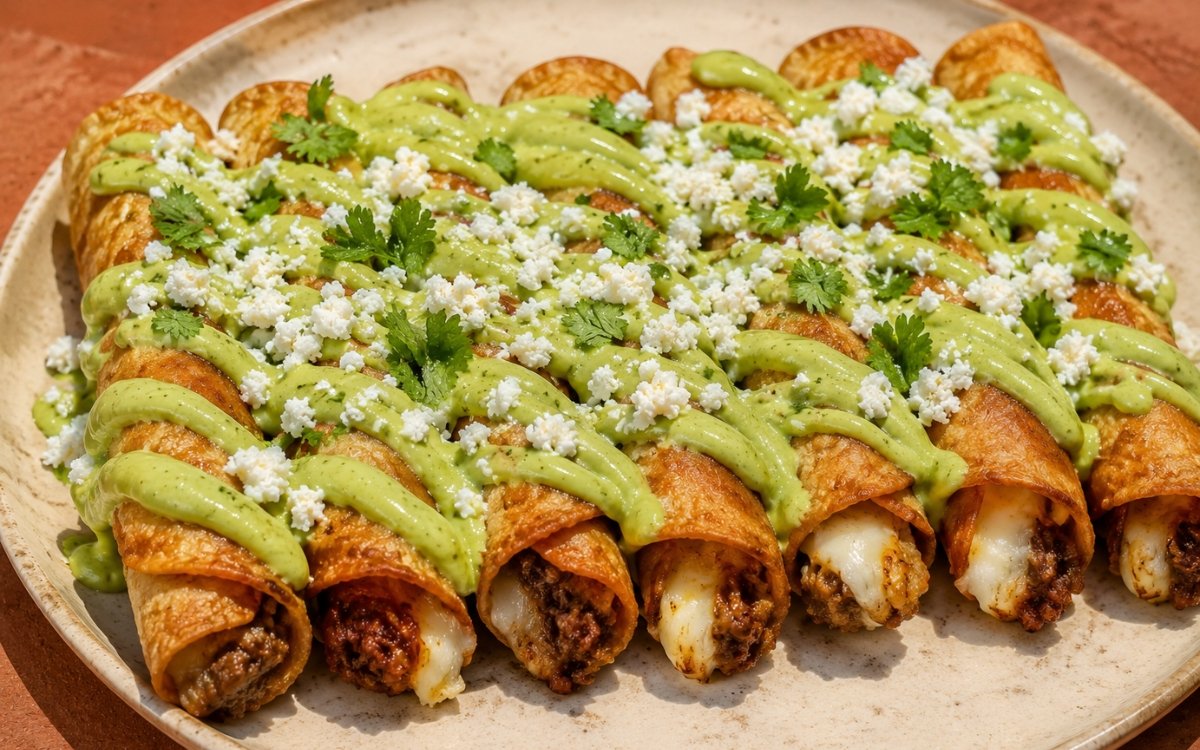
- Arrange the hot taquitos tightly on a serving plate. Drizzle generously with the creamy avocado sauce in thick ribbons. Scatter over the crumbled queso fresco and fresh cilantro. Serve immediately while the shells are still crisp and the cheese is molten inside.
Notes
Keeping the tortillas covered and genuinely warm from the moment they're cooked until the moment they're rolled is worth treating as the single most consequential handling detail in this recipe. Corn tortillas lose flexibility rapidly as they cool, and a tortilla that's even mildly stiffened will crack rather than curl cleanly around the filling — that crack is often invisible until the taquito hits hot oil and the filling begins leaking through it.
Reducing the shredded beef until it's genuinely dry rather than merely thick is worth pushing further than might feel necessary the first time through. Any loose liquid pooling around the beef does two kinds of damage at once: it softens the tortilla from the inside before the taquito ever reaches the fryer, and it causes dangerous, unpredictable spattering the moment a wet-filled taquito meets hot oil.
Frying seam-side down first is a small sequencing detail that protects the roll's integrity through the whole fry. That initial contact with the hot oil sets and seals the seam before the taquito is turned, which is what keeps a tightly rolled tortilla from beginning to unravel partway through cooking — starting seam-side up gives the roll far more opportunity to spring open before it's had any chance to set.
The two-cheese approach — a meltable Mexican blend combined with crumbled cotija — reflects a genuine division of labour rather than simply using two cheeses for variety. The blend provides the actual melt and pull that makes the filling feel cohesive once cut into, while cotija, which doesn't melt the same way, contributes a firm, salty, classic taquito flavour that a purely melting cheese blend wouldn't have on its own.