Ingredients
Method
Preheat and Prepare
- Preheat your oven to 200°C (400°F). Set a wire rack over a baking sheet and set aside — the wire rack is specifically what keeps the breading crisp during the oven finish, since resting the tenders directly on a baking sheet would trap steam underneath and soften the bottom of the coating.
Set Up Breading Station
- Arrange three shallow dishes. In the first, combine the 120g flour with 4g salt, 2g garlic powder, and 3g smoked paprika. In the second, beat the 3 eggs until smooth. In the third, mix the 160g panko breadcrumbs with the remaining 4g salt.
Bread the Tenderloins
- Pat the 700g chicken tenderloins dry with paper towels. Working one at a time, dredge each tenderloin in the seasoned flour, shaking off excess, then dip in beaten egg, and finally press into panko breadcrumbs to coat completely. The dry-flour-egg-panko sequence is what allows each layer to adhere to the one before it, building a coating that stays intact through frying rather than flaking or sliding off.
Fry Until Golden
- Heat the 80ml vegetable oil in a large skillet over medium-high heat until shimmering. Working in batches to avoid crowding, fry the breaded tenders for 2 minutes per side until golden brown and crispy. Don't overcrowd the pan — too many tenders at once drops the oil's temperature significantly, producing a greasy, less crisp result instead of a genuine golden crust.
Finish in Oven
- Transfer the fried tenders to the prepared wire rack. Bake for 8–10 minutes until the internal temperature reaches 74°C (165°F) and the chicken is cooked through. This step ensures the chicken reaches full, safe doneness without the coating over-browning or drying out from extended time in the hot oil.
Make Buffalo Sauce
- While the chicken bakes, melt the 90g butter in a small saucepan over medium heat. Whisk in the 120ml hot sauce, 15ml white vinegar, and 3g garlic powder until smooth and well combined.
Toss and Serve
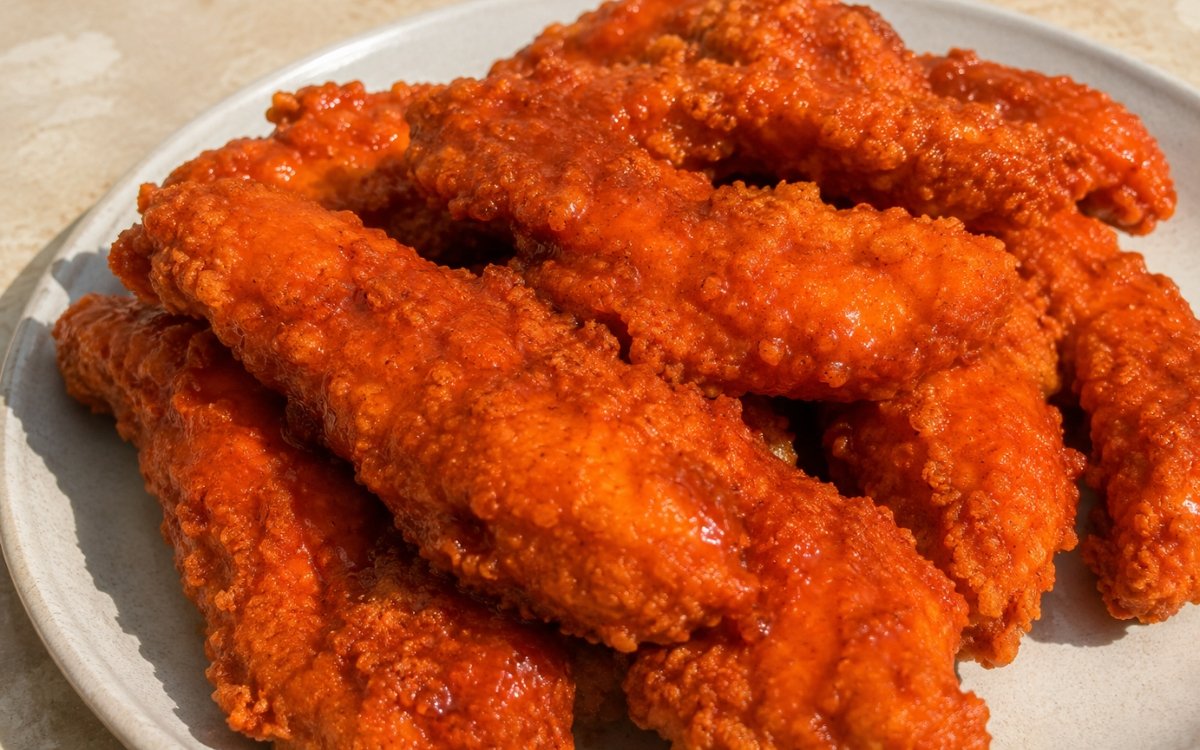
- Place the hot cooked tenders in a large bowl. Pour the buffalo sauce over top and toss gently until each tender is evenly coated. Serve immediately for best texture — the sauce goes on only at the very last moment, since the crispy panko coating begins softening as soon as it meets the sauce.
Notes
The three-stage breading sequence — flour, egg, panko — isn't arbitrary. The flour provides a dry surface for the egg to adhere to; the egg acts as the binding layer that lets the panko stick; and the panko itself provides the coarse, crunchy texture buffalo tenders are known for. Skipping or shortening any one stage weakens the adhesion of the layers above it.
Frying first and finishing in the oven specifically balances two competing needs: genuine crispness, which develops best in hot oil, and complete, even doneness, which is harder to achieve in a shallow fry without over-browning the coating. The oven finish resolves that tension by taking over the cooking once the crust is established.
Tossing the tenders in sauce only immediately before serving is the single most important timing decision for texture. Buffalo sauce is liquid, and panko, however crispy, will soften on contact — the longer the tenders sit in sauce, the less crunch remains, which is why this step happens last and the dish is meant to be served right away.