Ingredients
Method
Make the Burnt Sugar Syrup
- Add 80g sugar and 30ml water to a small saucepan. Cook over medium heat without stirring until the sugar melts and turns deep amber. Remove from the heat and carefully add 60ml hot water. It will bubble hard. Stir until smooth, then add the salt and vanilla. Let cool completely. The syrup should taste like deep caramelized sugar, not pale simple syrup. If it is too light, the drink will taste like a normal vanilla latte. If it smells burnt and bitter, start again. Cooking the sugar without stirring, letting it melt and colour through gentle swirling instead, is what allows it to reach genuine deep amber evenly rather than crystallising back into a grainy mass — a spoon dragged through molten sugar risks triggering exactly that unwanted recrystallisation.
Make the Crackled Brûlée Sugar
- Line a tray with baking paper. Sprinkle the 35–40g sugar into a thin, even layer in a small non-stick pan. Melt over medium heat until it turns amber, then pour immediately onto the baking paper. Tilt the tray slightly or spread quickly with the back of a spoon into a very thin sheet. Let it harden completely, then break into 2 large thin pieces sized to sit on top of the glasses. The sugar layer must be thin. Thick caramel is hard to crack with a spoon or straw and feels clumsy on a drink. Make the brûlée sugar separately. Do not torch sugar directly on top of a cold glass full of ice — ordinary glass can crack from the temperature shock. Building this crackled top entirely apart from the cold drink is a genuine safety measure, not simply a convenience — the temperature differential between molten sugar or a torch flame and an ice-filled glass is exactly the kind of thermal shock ordinary glassware isn't built to withstand.
Make the Vanilla Cream Cap
- Combine the heavy cream, whole milk, 15ml burnt sugar syrup, vanilla, and salt in a small jug. Froth briefly until slightly thickened and softly aerated. It should be pourable, not whipped. The cream should feel like loose crème anglaise or sweet cream, not stiff whipped cream. If it becomes too thick, the drink turns into a dessert cup instead of an iced latte. Stopping the frothing well short of anything resembling whipped cream is what keeps this layer behaving like a proper custard-inspired cream sauce — the same loose, pourable texture crème anglaise itself is known for, rather than a substantial, spoonable topping.
Brew the Espresso
- Brew 120ml espresso total, equal to 4 standard 30ml shots. Let it stand for 30–60 seconds only if extremely hot. The espresso needs to be strong and fresh. The cream and caramelized sugar are rich, so weak coffee disappears quickly. Given how much rich cream and deep caramel sit above this base, it genuinely needs real coffee strength to remain noticeable once the whole drink is finally stirred together.
Build the Latte Base
- Add 15ml burnt sugar syrup to each glass. Fill each glass generously with ice. Pour 140ml cold whole milk into each glass. Pour 60ml espresso into each glass over the milk and ice, then stir briefly. The base should taste like a strong vanilla-caramel iced latte, not plain sweet milk. The colour should be pale caramel-beige with espresso still clearly present. This stage builds a genuinely balanced latte in its own right — the drink's identity depends on this base standing up as strong coffee even before the cream cap and brûlée top are added on top of it.
Add the Vanilla Cream and Brûlée Top
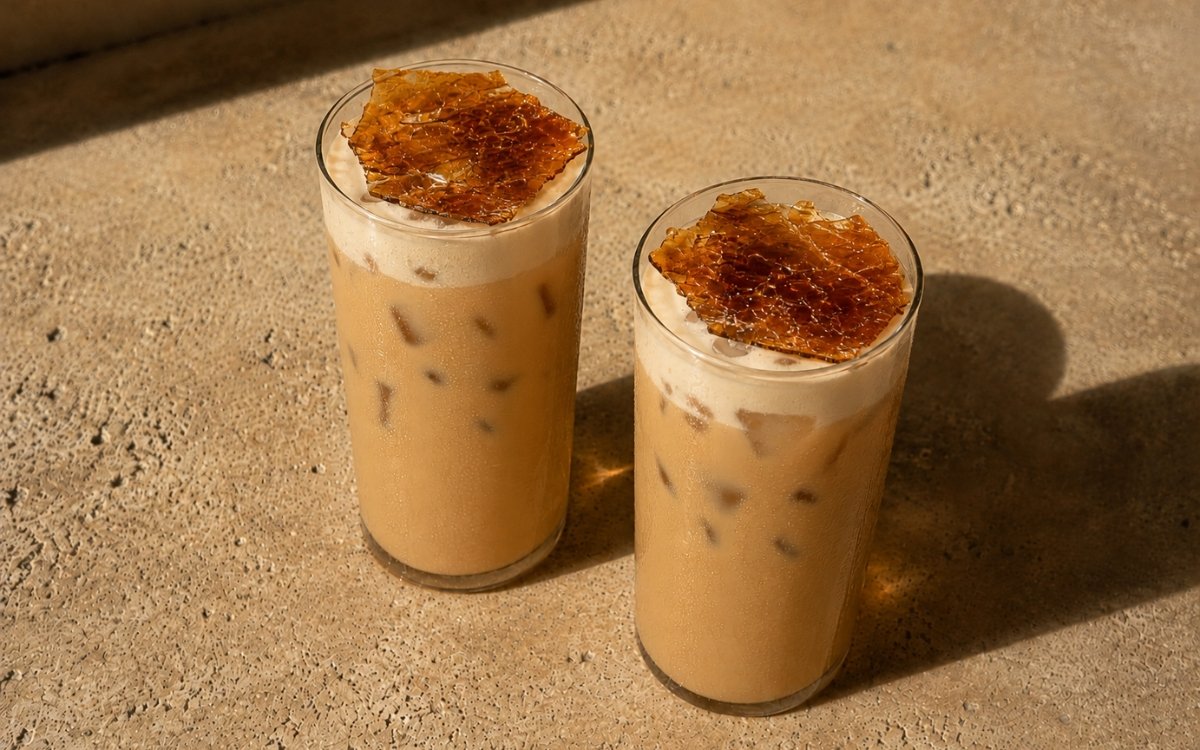
- Slowly pour or spoon the vanilla cream cap over each iced latte. Place one thin crackled caramelized sugar piece on top of each cream cap. Serve immediately. The top should crack when tapped, like crème brûlée. The sugar should sit on the cream layer long enough to serve, then break into the drink when stirred. Placing the crackled sugar directly onto the pourable cream cap, rather than floating it on the coffee itself, gives it a stable, slightly buoyant surface to rest on right up until it's tapped and broken.
Notes
The decision to build the crackled sugar sheet entirely separately from the drink, rather than torching sugar directly on top of the ice-filled glass, is worth understanding as a genuine safety requirement rather than an extra step for convenience. The thermal shock from molten sugar or an open flame meeting an already-cold, ice-packed glass is exactly the kind of sudden temperature swing that ordinary drinking glass isn't designed to survive — building the sugar sheet on its own, then simply placing the finished, cooled piece on top of the drink, sidesteps that risk entirely.
Cooking the sugar to genuine deep amber, both in the burnt sugar syrup and the crackled top, deserves the same careful attention this technique receives throughout this collection's other caramel-based recipes. A syrup or sugar sheet pulled too pale hasn't developed the complex, slightly bitter-edged flavour that actually reads as crème brûlée — it tastes like ordinary sweetness instead. This drink's entire flavour identity depends on that genuine caramelisation happening in both components, not just one.
Keeping the vanilla cream cap pourable, deliberately stopped well short of anything resembling whipped cream, protects the drink's core identity as an iced latte rather than a dessert. The specific texture target here — closer to loose crème anglaise than whipped topping — is a genuine reference point worth aiming for precisely, since overshooting it even slightly shifts the drink's whole character toward something heavier and more dessert-like.
The instruction to serve immediately after the sugar top is added reflects a real, time-limited phenomenon worth understanding. The cold cream cap beneath the crackled sugar begins softening that sugar from the moment it's placed, and the satisfying snap this drink is built around genuinely fades within a fairly short window — there's no getting that crisp texture back once the sugar has had time to soften against the cold cream underneath it.