Ingredients
Method
Bring Liquid to Boil
- In a large heavy-bottomed saucepan (3–4L), combine the 960ml milk, 240ml water, and 5g salt. Bring to a boil over medium-high heat, stirring occasionally and scraping the bottom to prevent scorching — milk can catch quickly in thin pans, since it doesn't have enough thermal mass in a lightweight pot to buffer against hot spots the way a heavier, thicker-bottomed pan does. Take the time to genuinely scrape corners and edges as you stir, not just the center of the pot, since those areas often heat slightly differently and are where scorching tends to start first. If you notice even the faintest hint of a scorched smell developing, it's worth pausing to check the bottom of the pot immediately, since catching it early is far easier than working around a burnt undertone once it's fully developed and mixed through the liquid.
Add Grits and Simmer
- Once boiling, reduce heat to low and whisk in the 200g stone-ground grits in a steady stream to prevent lumps, keeping the whisk moving continuously as the grits go in rather than pausing partway through — this is genuinely a two-handed job in spirit even if you're doing it alone, pouring with one hand and whisking without interruption with the other, since any gap in the whisking motion gives the cornmeal a moment to clump before you can fully disperse it. Reduce heat to very low, cover partially, and simmer 25–30 minutes, stirring every 5–7 minutes and scraping the bottom each time you check on it. Grits are done when tender and creamy with no hard bite; if still firm, cook 5–10 minutes longer and check again, since stone-ground grits vary somewhat in coarseness between brands and batches, and some genuinely need more time than others to fully soften. Resist the temptation to judge doneness purely by the clock — taste a small spoonful directly, since that's the only truly reliable way to know the grind has fully hydrated all the way through.
Enrich with Dairy
- Remove from heat and stir in the 60g butter, 90g Parmesan, and 60ml cream. Mix vigorously until butter and cheese fully melt and emulsify into a smooth, glossy texture, working the mixture with real energy rather than a gentle stir, since a half-hearted mix leaves streaks of unmelted fat and cheese rather than the fully unified, glossy result this dish depends on. Keep stirring past the point where it looks mostly combined, continuing until you can genuinely see the surface take on that characteristic sheen that signals the fat has fully emulsified into the starch rather than sitting separately on top. If it tightens too much, loosen with a small splash of warm milk and stir until creamy, since grits continue to thicken somewhat as they sit even after being removed from direct heat, and having a little extra warm milk on hand for this adjustment is worth planning for ahead of time.
Season and Serve
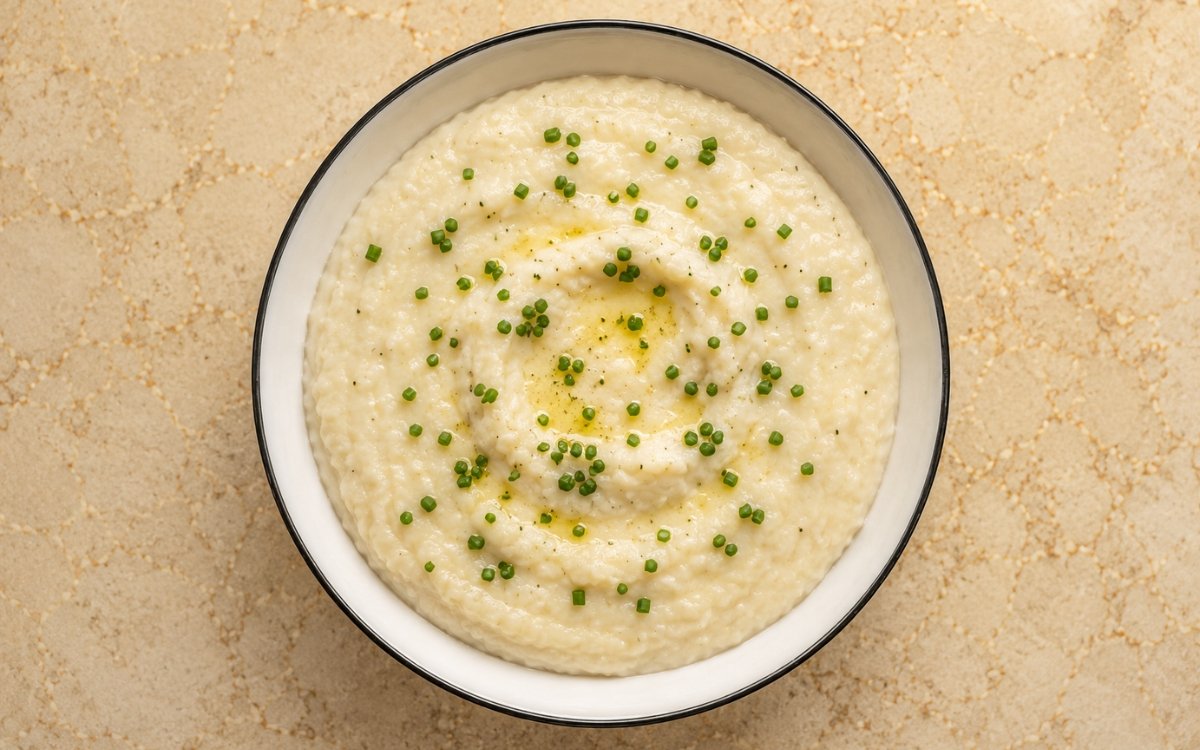
- Season with the 2g black pepper and 1g garlic powder. Taste and adjust salt if needed, since the exact amount that comes through can vary depending on how much liquid the grits absorbed and how much the cheese contributed on its own. Garnish with the 15g chives and serve immediately while creamy, since grits firm up noticeably as they cool and are genuinely at their best in the first few minutes after finishing.
Notes
Stone-ground grits' coarser, more irregular texture compared to instant or quick versions is exactly why this recipe follows the same patient simmering philosophy used for polenta throughout this collection. That coarser grind holds up beautifully once fully cooked, offering more genuine corn character and texture than a finer, more processed grits product, but it does require real time and gentle heat to soften completely — there's no way to compress that process without ending up with a gritty, undercooked result.
Milk's tendency to scorch in a thin pan is a genuine concern throughout the cooking process, not just at the initial boiling stage. A heavy-bottomed pot specifically helps distribute heat more evenly and reduces the risk of hot spots where milk proteins might catch and burn, which is why using the right pan matters here as much as the technique itself.
Mixing vigorously when adding the butter, Parmesan, and cream at the end is what produces genuine emulsification rather than just melted fat sitting on top of the grits. A half-hearted stir leaves the dairy incompletely incorporated, producing a less cohesive, less glossy final texture than the dish is capable of.